Author: Manuel Guerrero Cabrera, professor and writer
(Article published on www.lucenahoy.com in 2017)
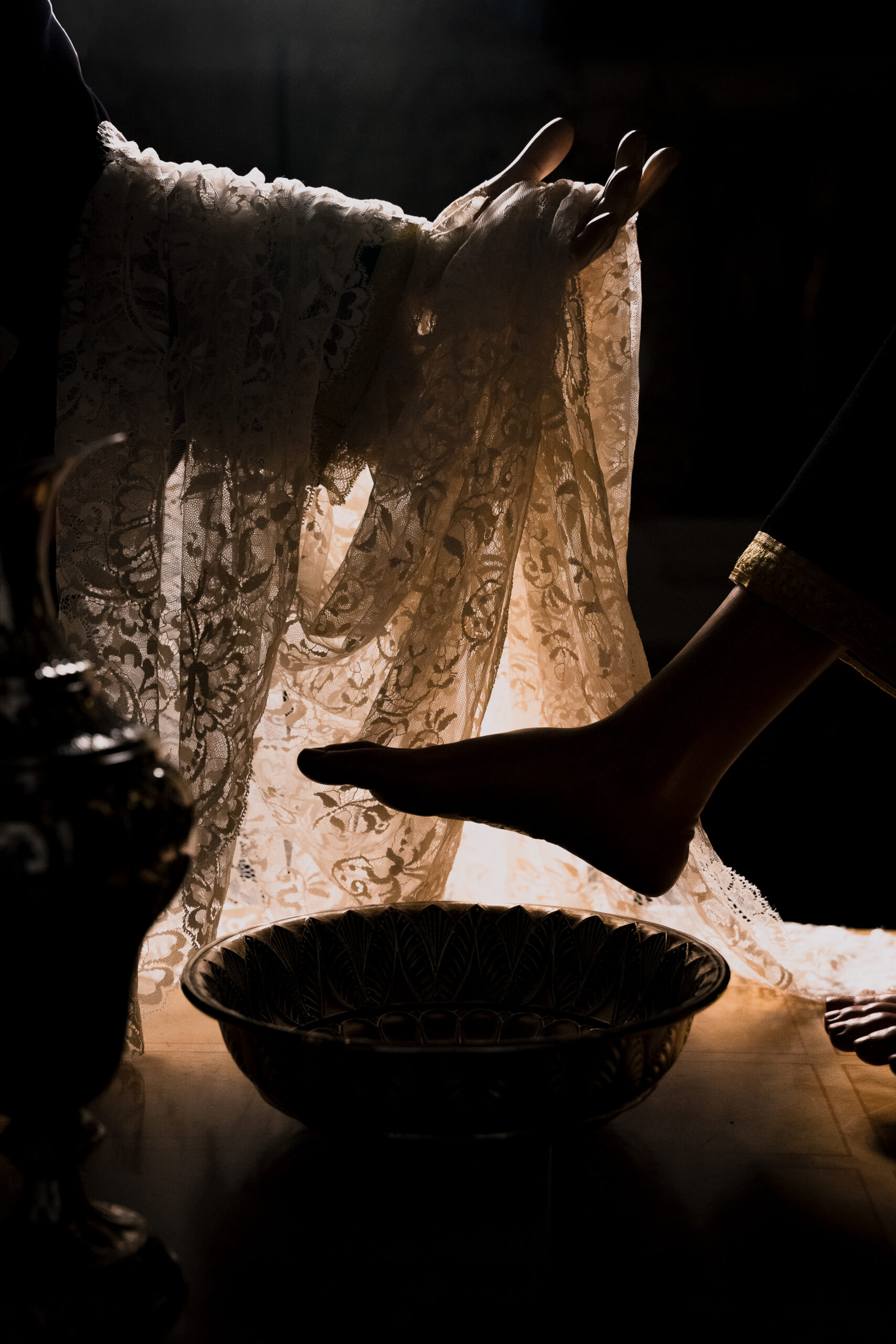
The Real Academia de la Lengua Española Dictionary gives twelve meanings for «secreto», the first of which is «something carefully kept private and hidden». In fact, however, the third definition is more illuminating for the subject of this article: «knowledge possessed exclusively by someone concerning the virtues or properties of a thing, or of a procedure useful in medicine or another science, art or trade». And so it proved, for in 2011 my friend, the young Lucena-born art historian Don Manuel García Luque, winner of the 2009 Award for Academic Excellence, gave me a transcription to read of the deed recording the assets of Don Luis de Soto y Guzmán —who, in brief, served as Senior Brother of the Archbrotherhood of the Veracruz and Peace (Archicofradía de la Veracruz y Paz) from 1674 to 1679— in which he listed his possessions. Great as my surprise was on discovering that it referred to two carvings —one of Jesus and the other of Saint Peter— made in Málaga by Pedro de Mena, how much greater must that of my namesake, the researcher, have been? «This must remain a secret until I can publish it in a specialist journal,» he confided in me. He had succeeded in establishing the authorship of The Washing of the Feet, so that, while he confirmed the third meaning of «secreto», I pledged myself to the first.
And so we come to 2014, when it was finally published in the ‘Anuario del Departamento de Historia y de Teoría del Arte’ of the Universidad Autónoma de Madrid, whose issues usually appear around the middle of the year, and the secret could therefore be revealed. I suppose that readers familiar with the brotherhood may reproach me by saying that this was already known and will take the opportunity to remind me that Pedro de Mena’s authorship was an «open secret»… Well, not exactly. Until now, everything pointed to his authorship, but there was no documentary evidence to confirm it. It was known that it had been sent to Málaga during the period when the sculptor was living there, and that the style of the images was characteristic of his work; however, no documentary evidence had survived, unlike the account book of the Brotherhood of the True Cross, which recorded that the Christ Bound to the Column was by Pedro Roldán.
As Manuel García Luque tells me, with no intention of keeping anything secret, he will discuss this discovery in greater detail in ‘Fe y Hermandad’, the bulletin of the Brotherhood of the Holy Faith ―which will be available to download from its blog― and in ‘Torralbo’, whose Lent 2014 issue will be presented at the Círculo Lucention on 3rd April. May these lines serve to congratulate him on removing the words «attributed to» from before the name of Pedro de Mena y Medrano in connection with one of our city’s finest and most original works of religious sculpture, The Washing of the Feet, and on adding the name of one of the greatest Baroque sculptors to Lucena’s artistic heritage.
Photograph of the article: Jesús Cañete Fernández

