Agrupación de Cofradías of Lucena (Lucena Association of Brotherhoods)
Holy Week Posters
For centuries, the printed poster has become a means that is both useful and economical for informing society. Its relevance and vitality have endured to the present day. However, it is its content that has evolved.
In Lucena, only a few examples of this means of communication dating back to the 18th century are known among them a poster for philosophical gatherings dedicated to Our Lady of Araceli and another for the festivities celebrating the blessing of the sacramental chapel of St. Mathew. Like these, consisting exclusively of text and sometimes illustrated with engravings, the 19th century saw a growing abundance of posters in Lucena, generally of a religious nature. Among the most common were those dedicated to the patroness religious celebraations during the May festivities, along with a smaller number announcing bullfighting events.
From the last third of the 19th century onward, with the establishment of the Tenllado printing house in the city, the poster production dedicated to Araceli themes –practically limited to the so-called announcements of religious services for the festivities, increasingly larger in format and more elaborate in typograhy and variety of inks– was joined by a wide range of posters in A4 paper and double A4 paper formats dedicated to the many devotions to Jesus and Mary, as well as to the extensive collection of saints venerated by the people of Lucena. The turn-of-the-century year (1900) marked the zenith of this remarkable profusion
It was necessary to wait until the extraordinary festivities of the coronation of María Santísima de Araceli in 1948 to find the first poster in the modern sense, created and produced specifically for Lucena: the one designed by the painter Joaquín Pérez Arroyo.
Regarding Holy Week in Lucena, before it began to be systematically promoted through posters, the celebration was publicized through the local press or, very occasionally, by means of the first two known pocket-sized programs.
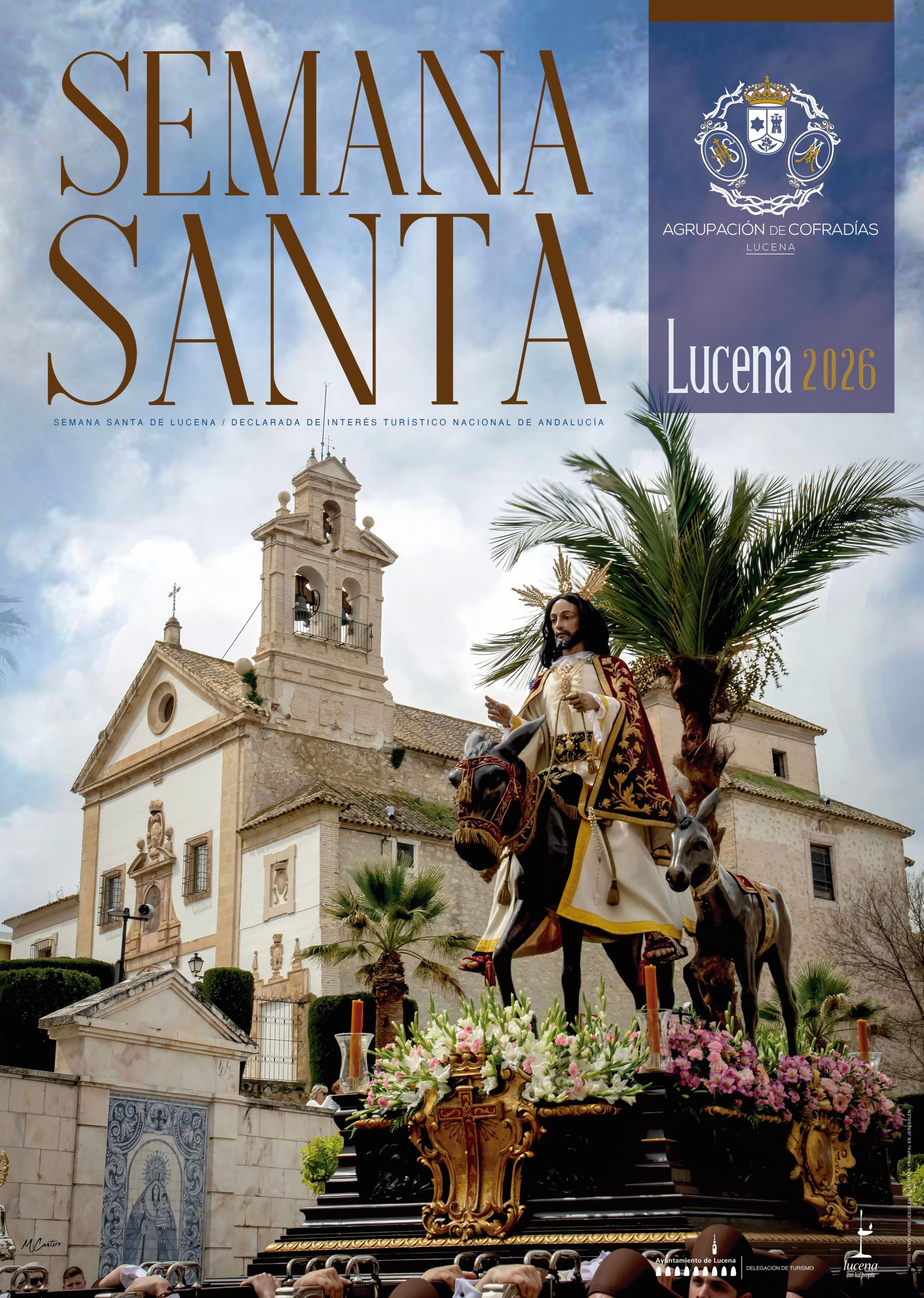
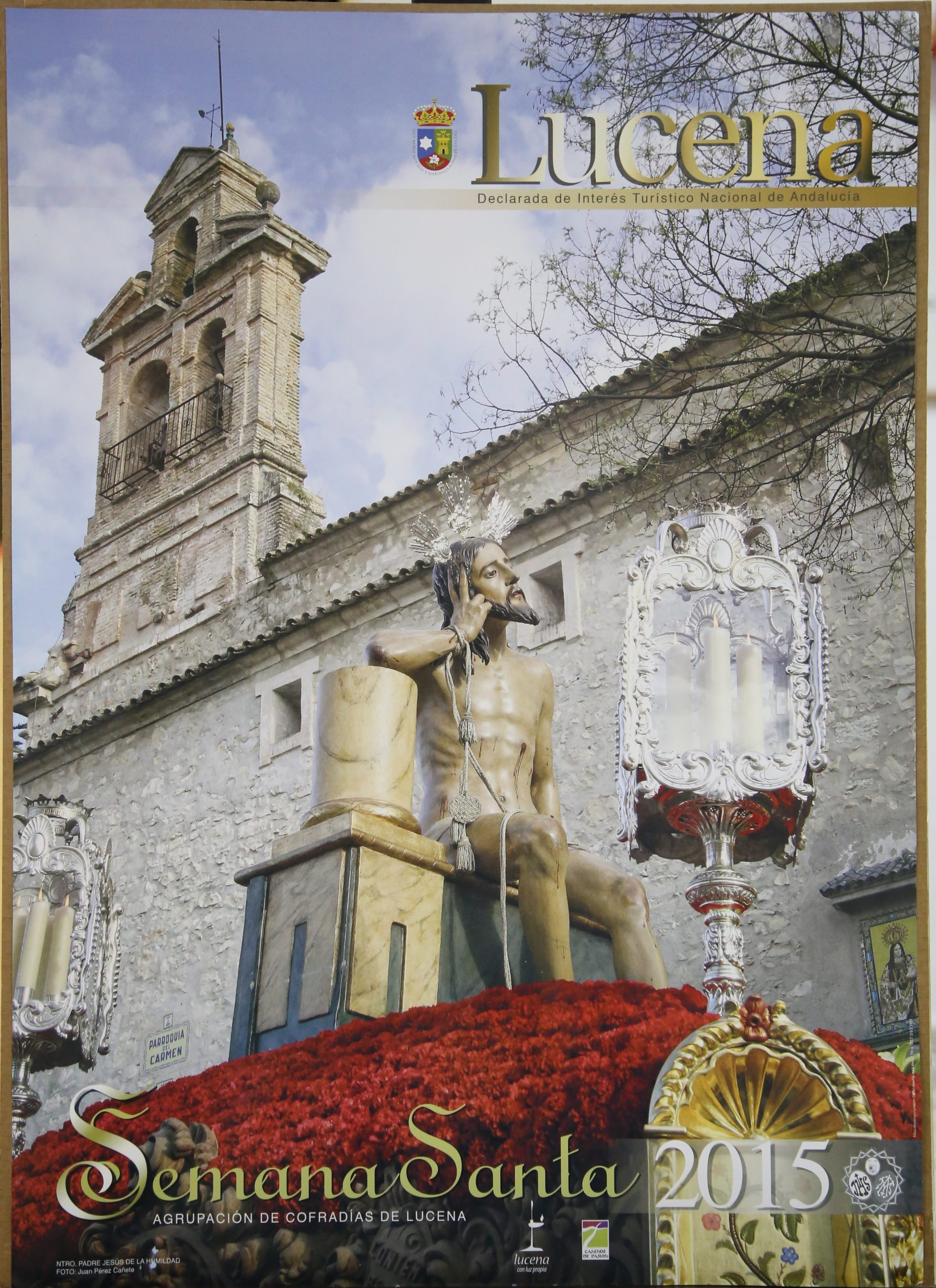
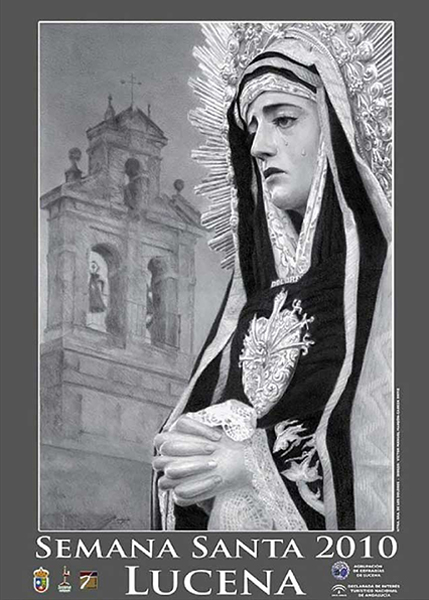
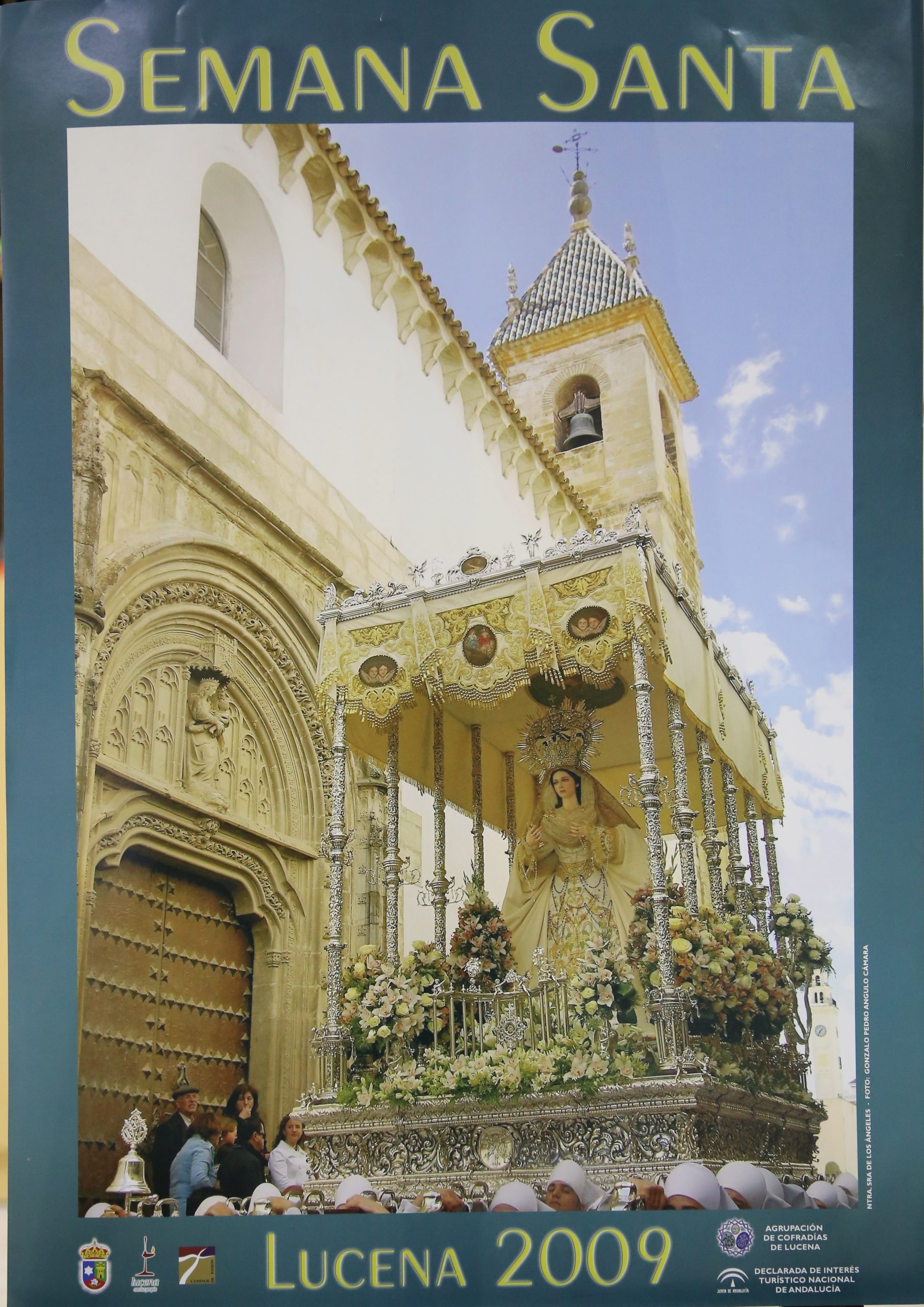
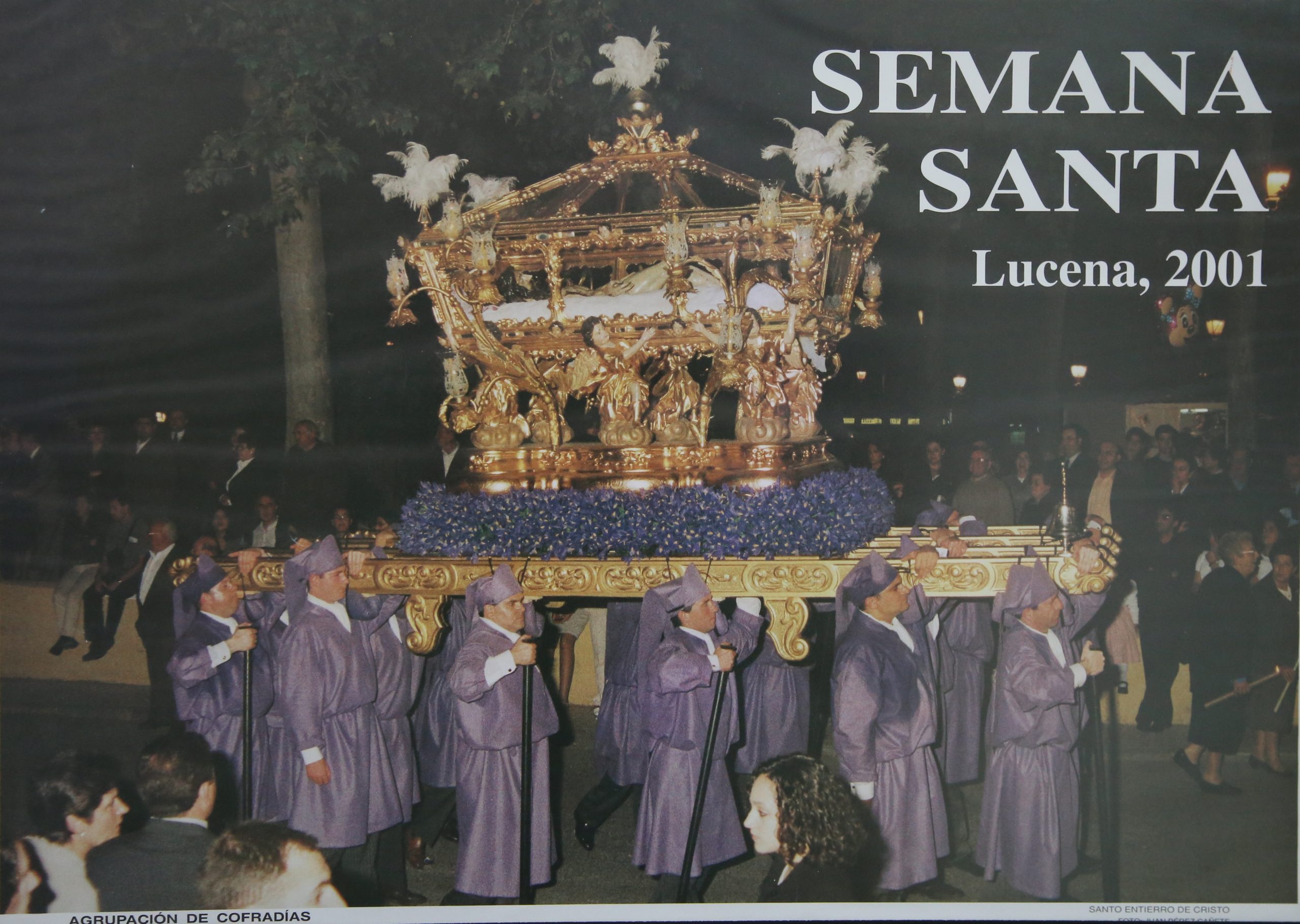
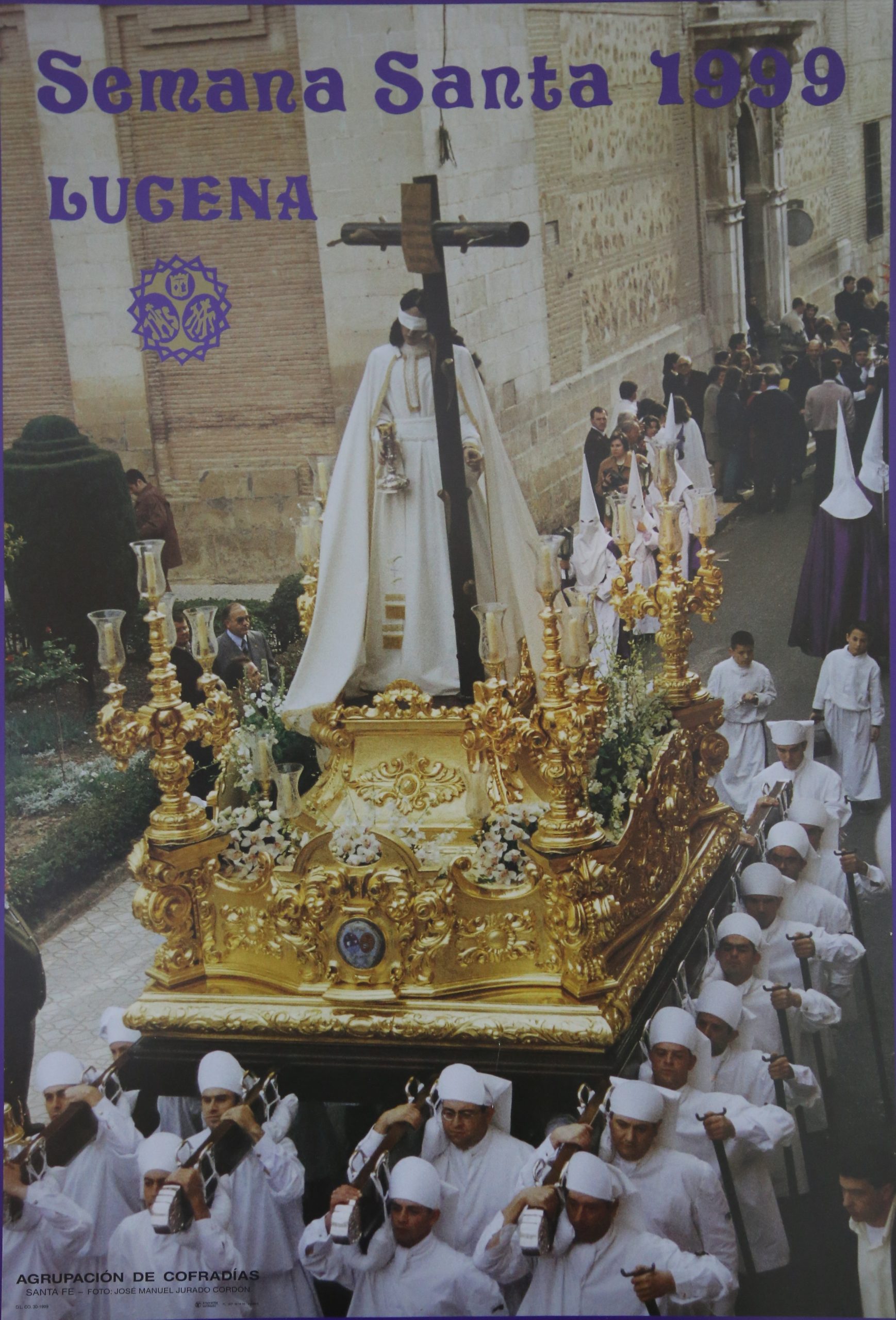
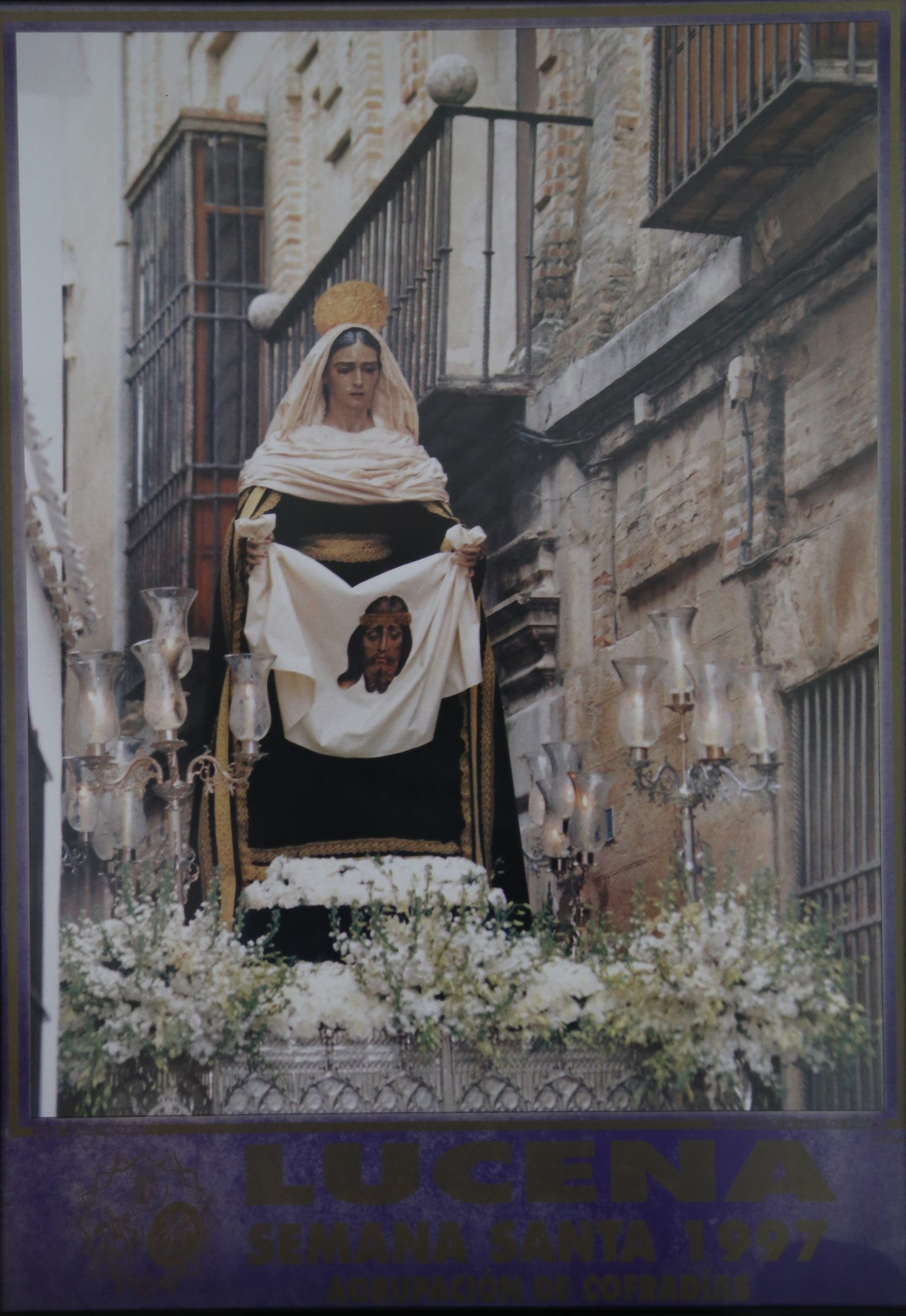
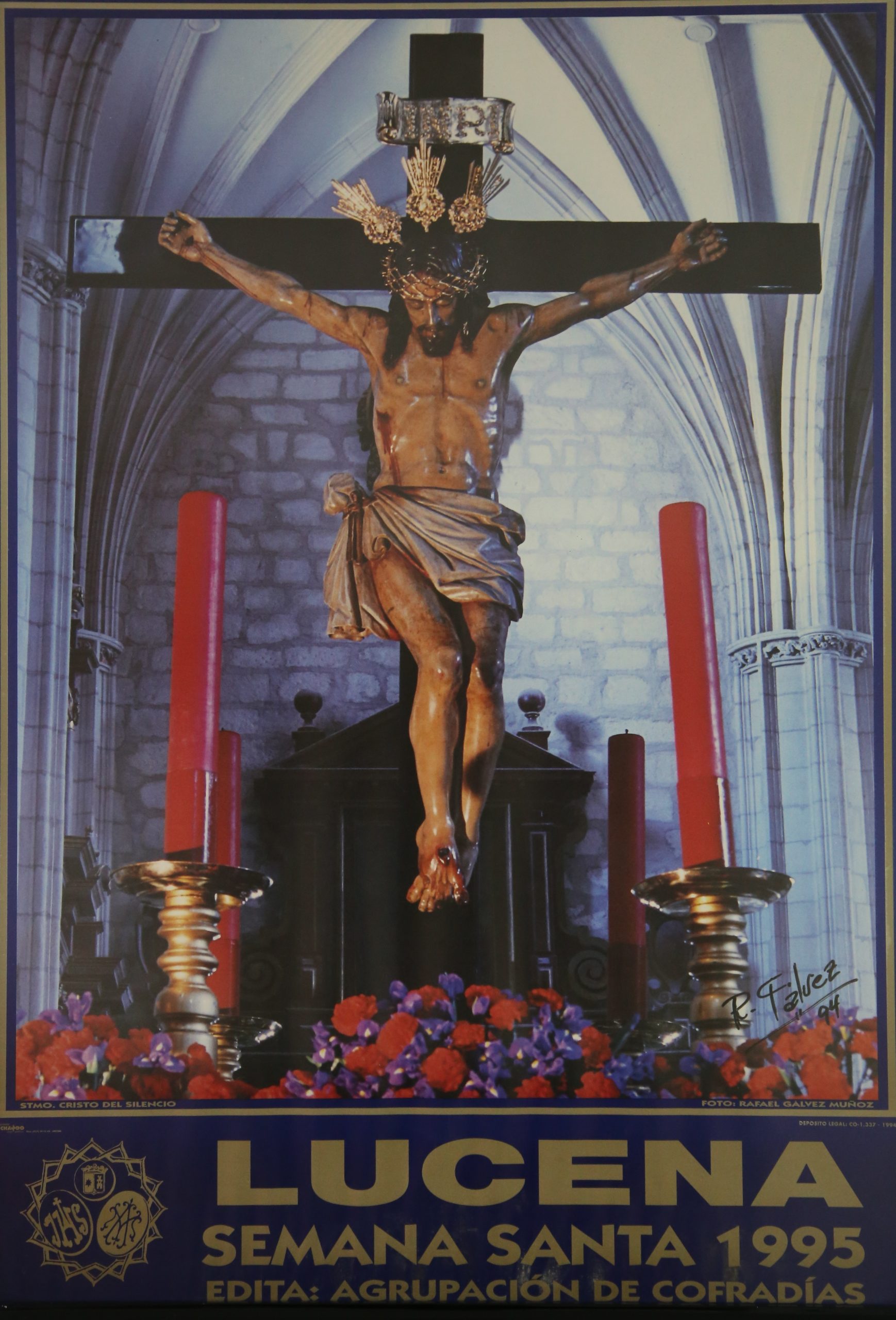
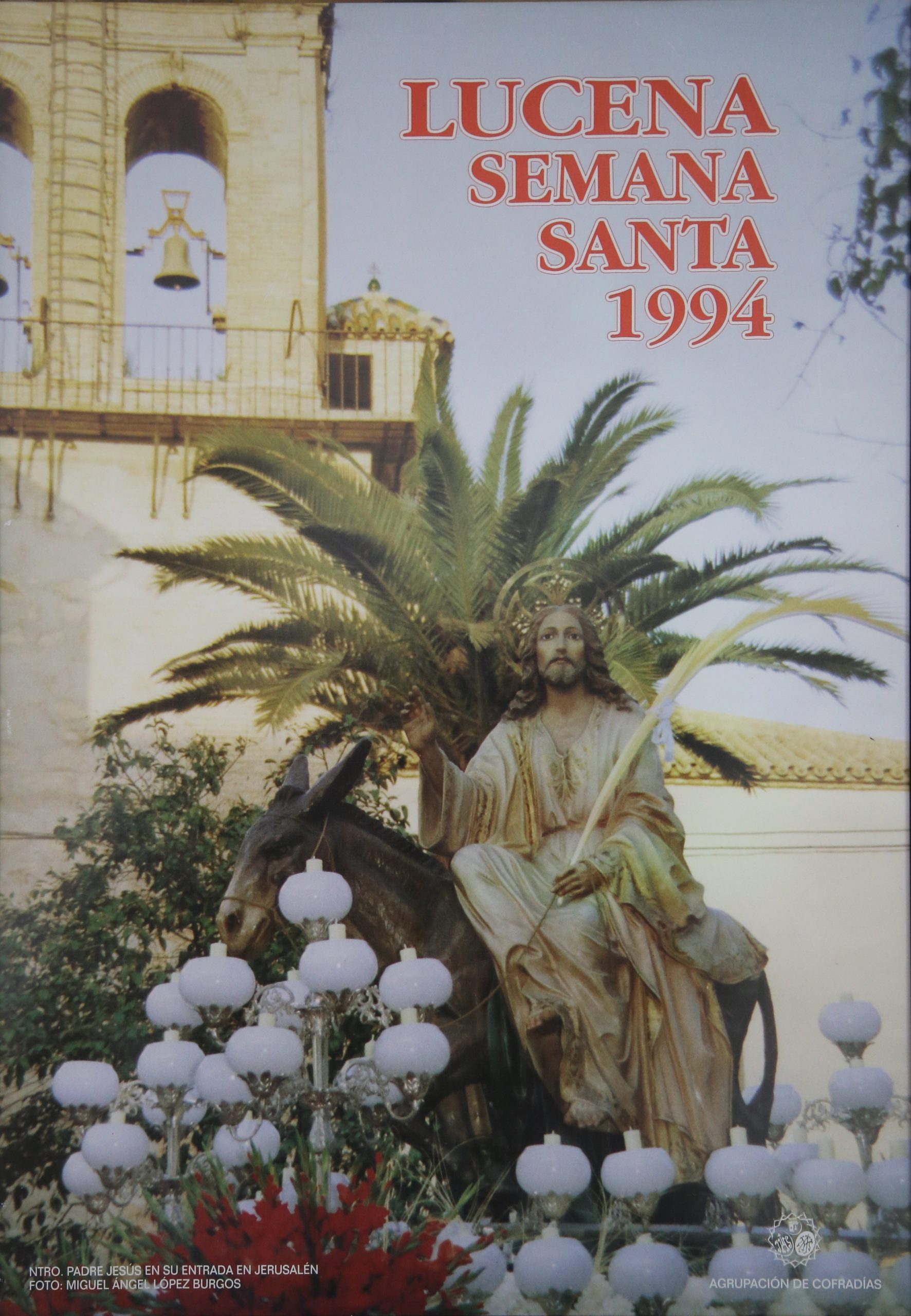
In this field, the first known Holy Week poster was created by Mariano Tenllado using linoleum printing and produced in his won workshops in 1943, althoughy it shares its Passion-themed subject matter with the Araceli festivities. The following year saw the creation of the Agrupación de Cofradías, whose objectives included the protection and promotion of Holy Week celebrations in Lucena. Despite this, apart from a poster drawn by Atienza that served as the cover of the local ten-day publication Producción, in 1953, it was not until 1970 that a specific Holy Week poster was published. Clearly expressionist in style and signed by Fajardo, it marked the starting point of the rich poster tradition that has since faithfully announced the commemorative celebration of the Passion, Death and Resurrection of Our Lord Jesus Christ.
In 2020, the Agrupación de Cofradías of Lucena promoted a collection of fasimiles of Lucena’s Holy Week posters, along with reproductions of other announcements published in the press or featured on the covers of the earliest programmes, until the collection was completed. The project was coordinated by Francisco López Salamanca, the official chronicler of Lucena. This was followed by various collections featuring posters and individual announcements from the different brotherhoods and confraternities of the Agrupación de Cofradías of Lucena, whose original posters are preserved by the Lucena-born confraternity member Miguel Ángel López Burgos.
For several decades now, the Holy Week poster of Lucena has been selected through a competition held specifically for this purpose, with the prize awarded to the winner during the formal presentation ceremony of the artwork.. In addition, the Agrupación de Cofradías of Lucena organizes a second competition to select the winning work for ‘Detalle de Pasión’, oan artwork that later serves to announce the institution’s official events during the current Holy Week.
Text byFrancisco López Salamanca, official chronicler of Lucena
Historical Collection of Holy Week Posters of Lucena