Holy Week
Children’s Holy Week
Holy Week in Lucena is a unique and deeply rooted tradition, whose vitality is sustained by the constant participation of entire generations. Among its most endearing and distinctive expressions is the Children’s Holy Week, a celebration that each year, on the Saturday following Easter, transforms the streets of the town into a true nursery of faith, tradition, and the future of the confraternity world.
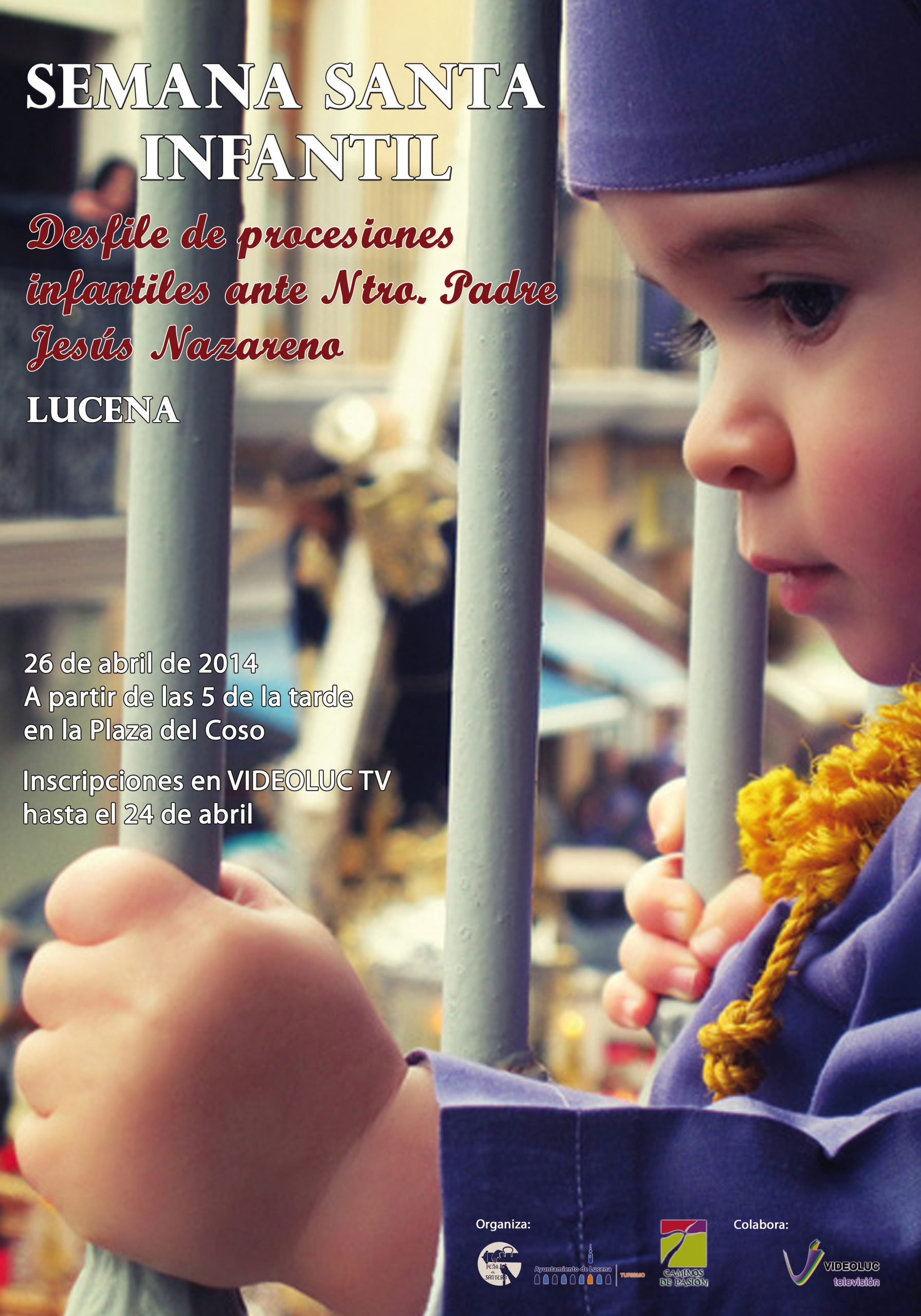
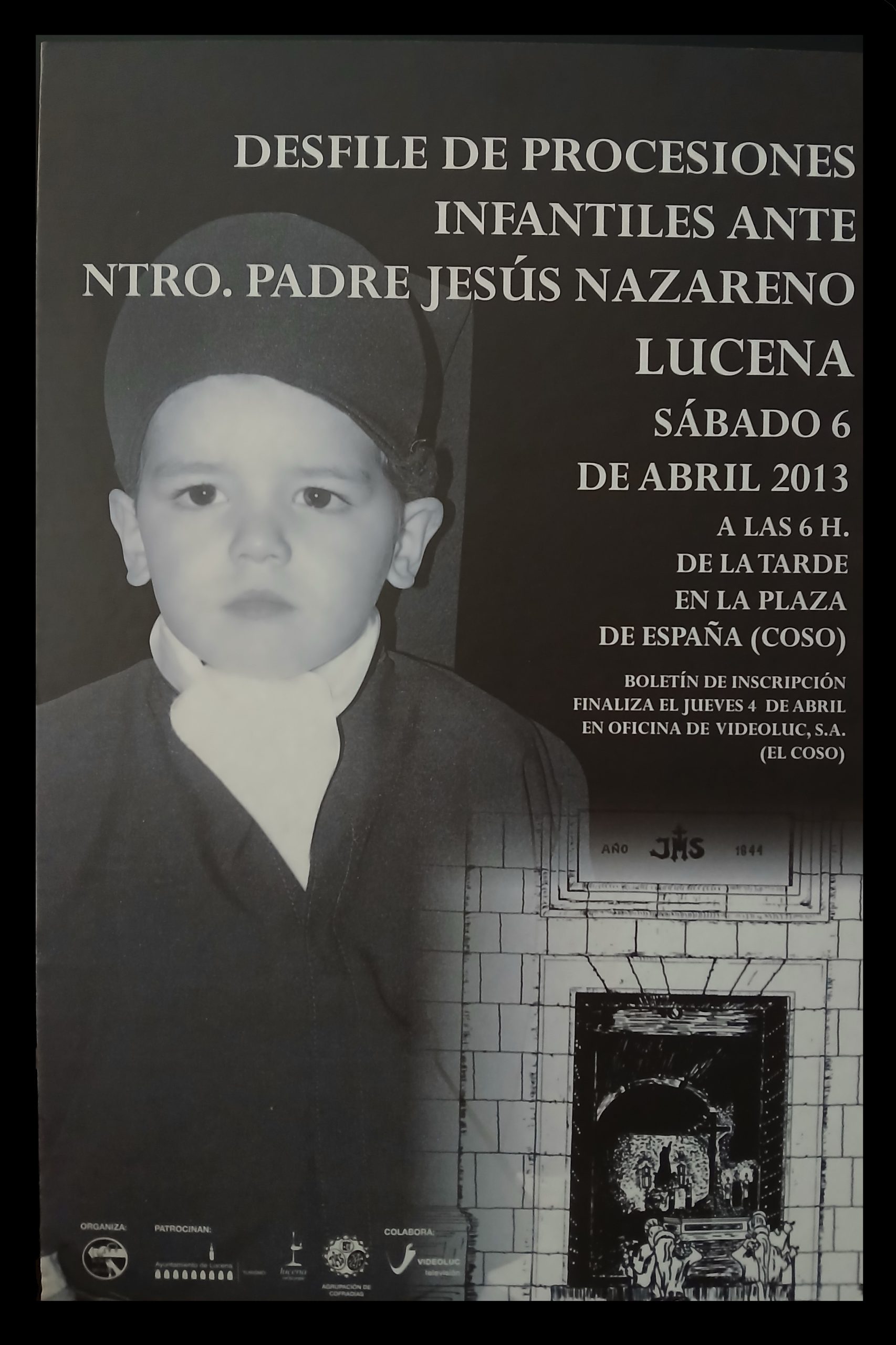
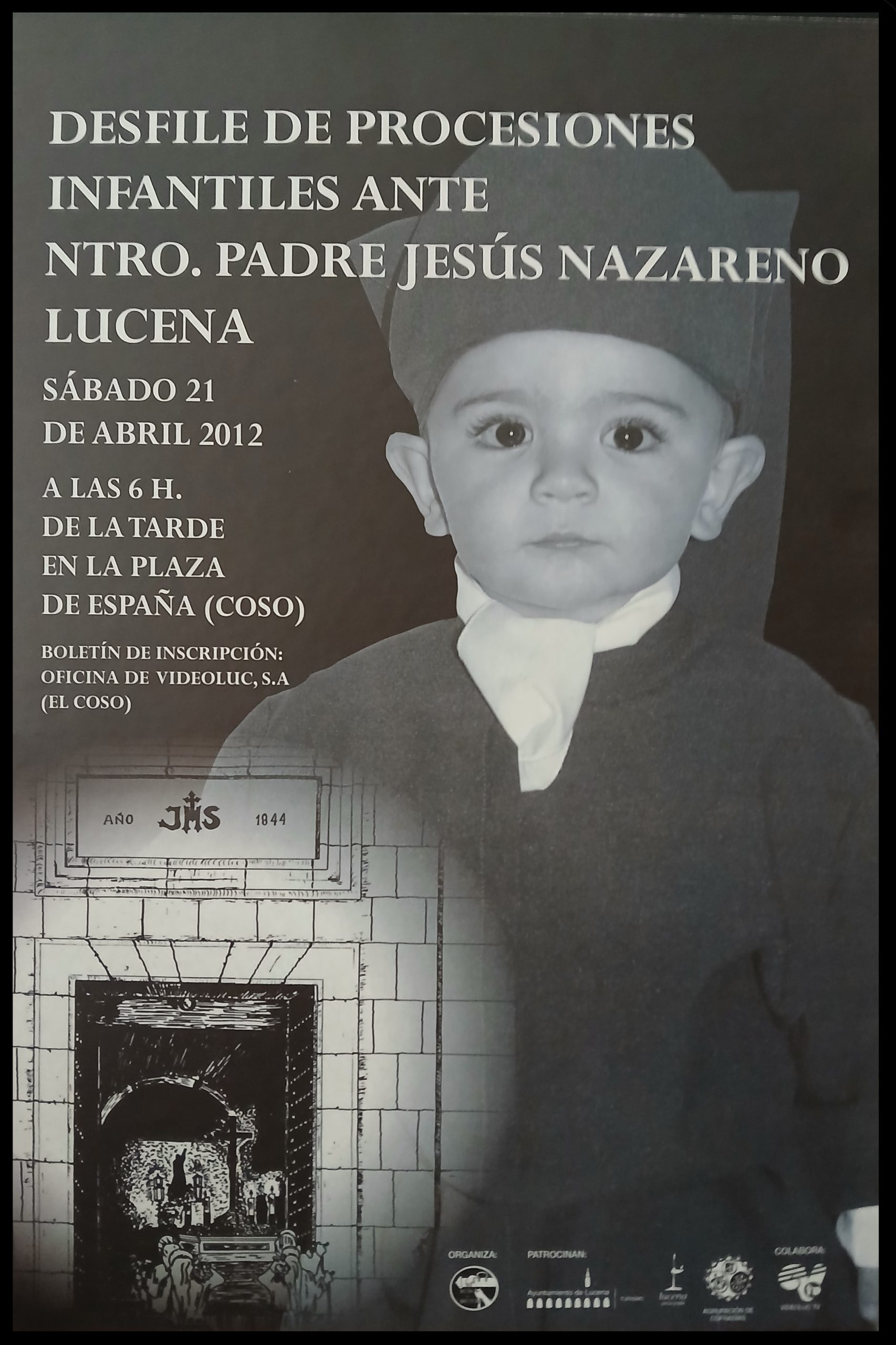
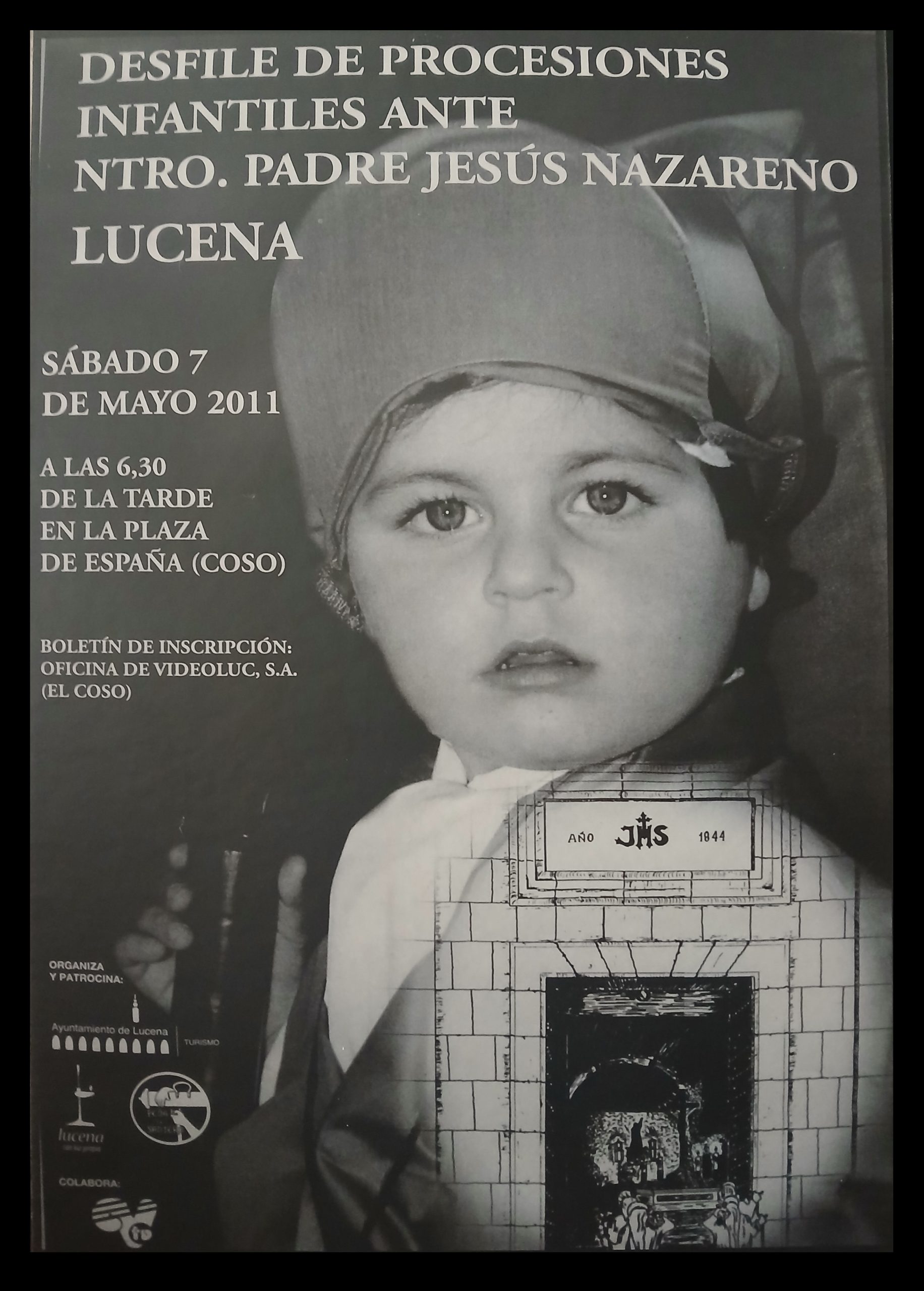
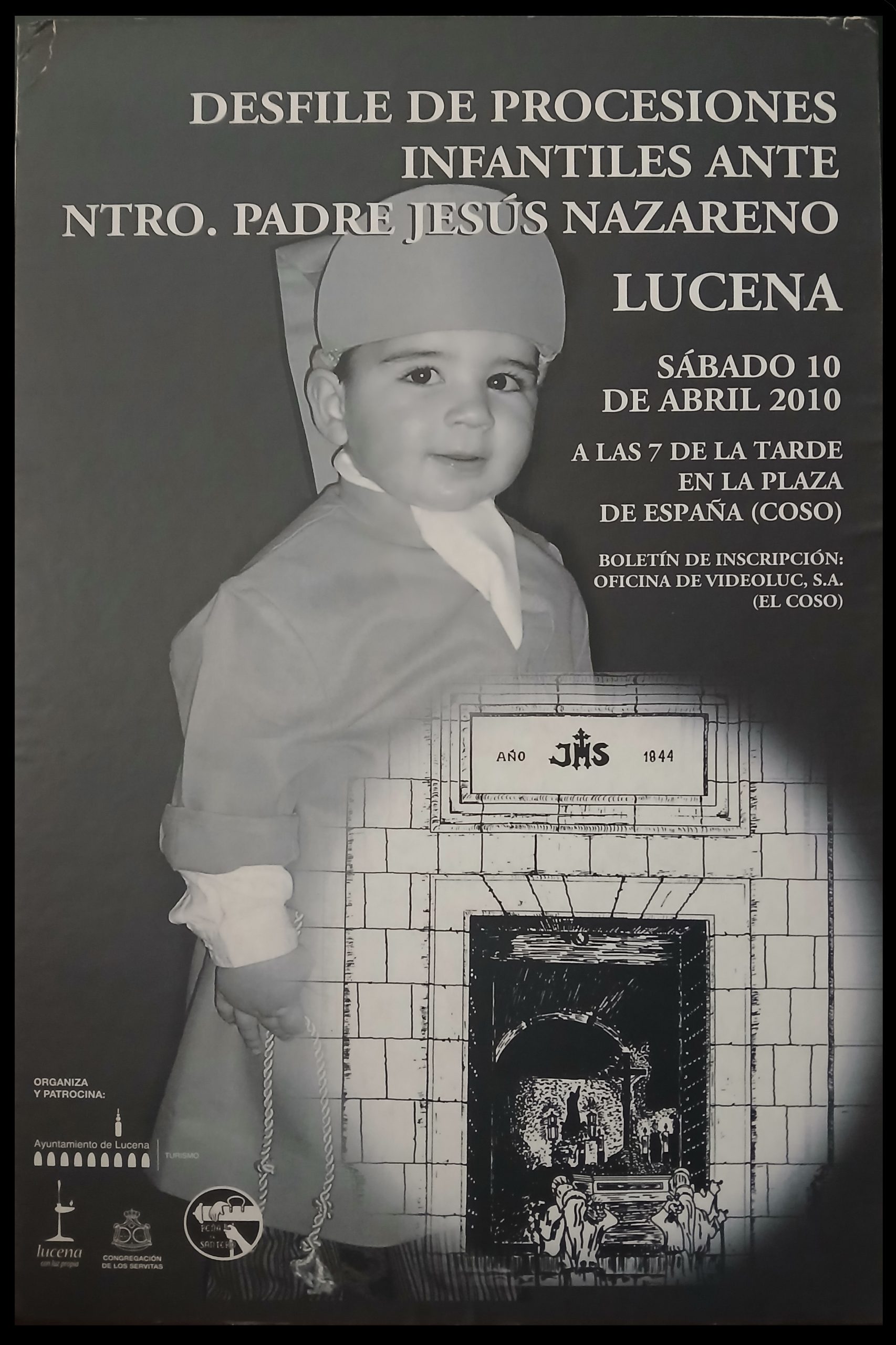
Its origins date back to the 19th century, when in 1855 Lucena and other nearby towns were struck by a severe cholera epidemic. As a preventive measure, children recreated the processions of the adults in small processional corteges, giving rise to what is now known as Children’s Holy Week That spontaneous initiative gradually became embedded in local life and, in 1973, the Agrupación de Cofradías officially decided to organise a Children’s Processions Contest, awarding each participant a commemorative medal featuring the official Holy Week poster of that year. Far from being lost, this custom has endured to the present day as a symbolic gesture of recognition for all the children who take part.
In 1985, the celebration ceased to be competitive and adopted the name Desfile de Procesiones Infantiles ante Nuestro Padre Jesús Nazareno (Children’s Processions Parade before Our Father Jesus the Nazarene), as its route includes a central moment: the passage of the processional corteges before the Chapel of Our Father Jesus the Nazarene, one fo the town’s deepest devotion. Three years later, in 1988, responsibility for organising the parade was transferred to the Peña El Santero, a cultural association which has since been dedicated to keeping this tradition alive with great commitment and affection.

Photograph:Tourism Department of the Lucena Town Council.

Photograph:Tourism Department of the Lucena Town Council.

Photograph:Tourism Department of the Lucena Town Council.

Photograph:Tourism Department of the Lucena Town Council.

Photograph:Tourism Department of the Lucena Town Council.
Every year, more than one hundred children’s processional thrones, carefully crafted, make their way through the streets of Lucena, carried on the shoulders of boys and girls who recreate Lucena’s distinctive way of processing: the ‘santería’. Wearing tunics adapted to their size, with their faces uncovered and under the direction of their own ‘manijero’, the young ‘santeros’ faithfully imitate the characteristic movement of the thrones upon the shoulders, giving them that unique motion which distinguishes Holy Week in Lucena. The procession is completed by girls dressed in the traditional ‘mantilla’, members of the brotherhood carrying their insignia, and drummers who set the rhythm of the procession.
All of this gives rise to a colourful and moving parade, watched by thousands of spectators who crowd the streets to witness the enthusiasm and dedication of the youngest participants. Children’s Holy Week has thus become a true school in which children experience the art of the ‘santería’ firsthand and learn values such as respect, coexistence, teamwork, and love for their traditions.
In addition, this event has a strong family and community dimension. Parents, grandparents, and older siblings help in the creation of the small processional thrones, passing on knowledge, craftsmanship techniques, and, above all, the confraternal and ‘santero’ spirit that has shaped Lucena for centuries. In this way, Children’s Holy Week ensures the continuity of the tradition, planting in children the seed of a faith and commitment that will one day make them ‘santeros’, ‘mantillas’, brotherhood members, and proclamers of Holy Week.
In short, Children’s Holy Week in Lucena is not merely an endearing and colourful spectacle, but a living and dynamic heritage that embodies the intergenerational transmission of the ‘santería’. A celebration that moves people through the tenderness of its young participants and that reaffirms, year after year, that Holy Week in Lucena has a future because it is rooted in the enthusiasm and hopes of its children.


Saetas Contest 2018 ― Archive of Peña El Santero
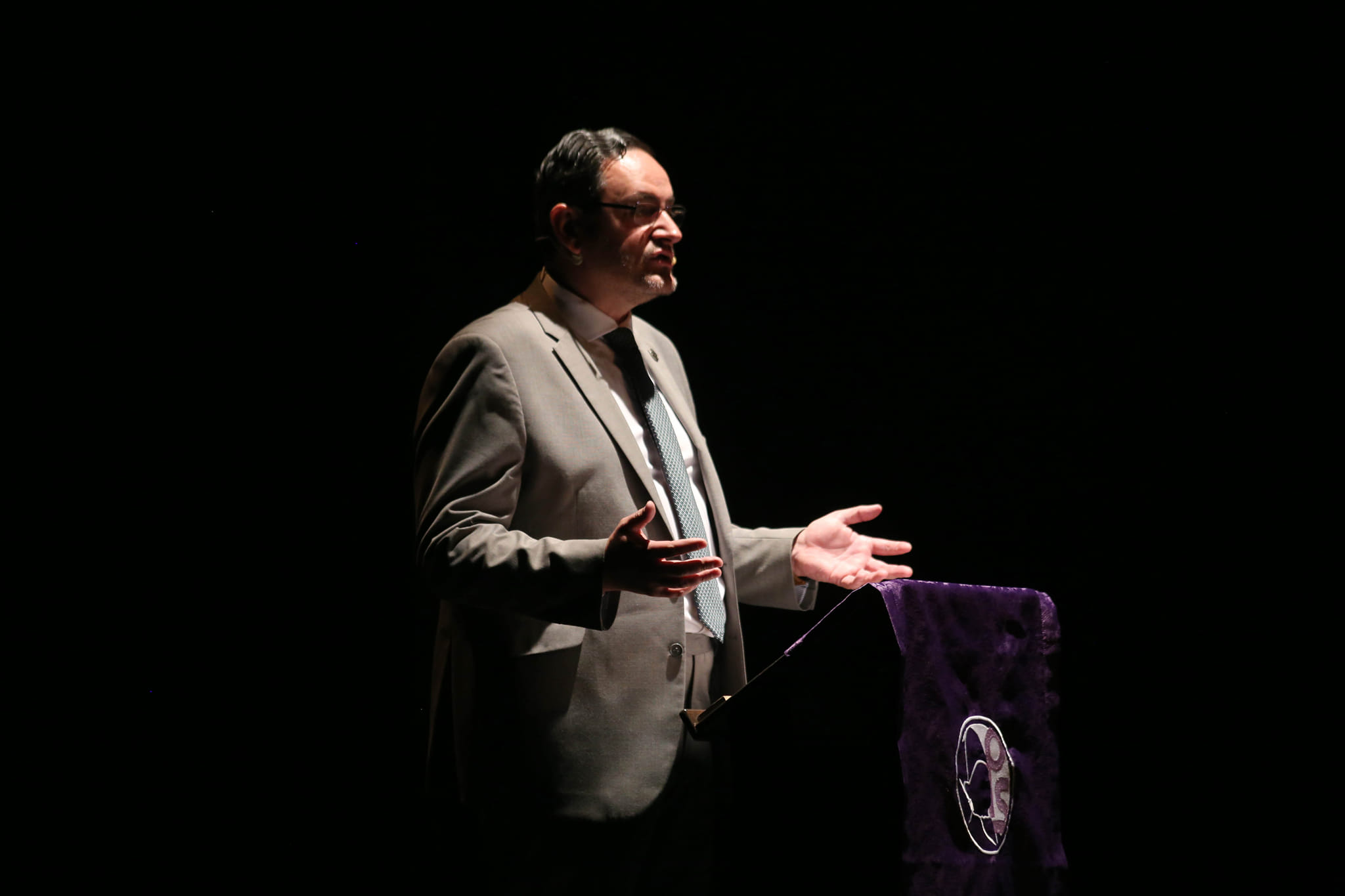
Photograph by the Tourism Department of the Lucena Town Council
Peña El Santero
Origins and Development of the Peña El Santero
The Peña El Santero was founded in 1982 under the presidency of Antonio Cobos. It first headquarter, located on Juan Palma García Street, was conceived as a multifunctional space featuring an assembly hall, bar facilities, a permanent exhibition, and a rich photographic display of the town’s processional thrones, ‘cuadrillas’, and ‘santeros’. From its earliest years, it became known for organising lectures dedicated to the ‘santería’ and for creating the prestigious Saetas Contest, which for many years awarded prizes both to the finest ‘cantaores’ (flamenco singers) and to the most outstanding ‘cuadrillas’ (processional crews), not without occasionally giving rise to intense controversy.
In 1983, Gonzalo Angulo Vigo assumed the presidency, and in 1986 the Peña El Santero moved to a new, more modest headquarters, marking the beginning of a period during which Fernando Díaz and Rafael Mármol worked tirelessly to ensure the continuity of the association. However, the Peña did not disappear as such: its activities continued in other areas of Lucena’s confraternity world, particularly in the organisation of children’s processions, which became firmly established as a breeding ground for future generations of ‘santeros’.
TheSantero Mass, celebrated annually at the Sanctuary of Aras and organised by the Royal Archconfraternity of María Santísima de Araceli (Our Lady of Araceli), became one of the association’s most significant events, in which the Peña El Santero collaborates. From 2014, with the incorporation of Eduardo García López, a register of ‘santeros’ was established and a new governing board was formed, which was officially entered in the municipal register of associations in 2017. That same year, Eduardo García assumed the presidency.
Exaltation of the Saeta and National Contest
In 2017 the Peña succeeded in reviving the Exaltation of the Saeta and the National Contest, which had dissapeared in 2002. These events have since been held on subsequent occasions, although not on a fixed annual basis. In 2020, the children’s procession was also relaunched with renewed vigour, further strengthening the Peña’s role as a transmitter of tradition to younger generations.
The Peña’s educational and cultural work was further diversified in 2021 with the competition-exhibition ‘Lucena ilustra su Pasión y Gloria’ (Lucena Illustrates its Passion and Glory), aimed at nursery and primary school pupils in the municipality and organised in collaboration with the Delegación de Fiestas (Festivals Department) and the Delegación de Educación (Education Departmen) of the Lucena Town Council.
In 2022, to mark its 40th anniversary, the Peña organised an extensive programme of events that included collaborations with the Hermandad de la Humillación (Servitas) (Brotherhood of the Humiliation ―Servites) and the Hermandad de Tambores de Lucena (Brotherhood of Drummers of Lucena), as well as lectures, concerts, and tributes that reinforced its role as a leading institution in confraternity life.
Today four decades after its foundation, the Peña El Santero remains a fundamental pillar in the preservation and promotion of the ‘santería’, as well as in the development of cultural, musical, and children’s activities that ensure the transmission of Lucena’s Holy Week to future generations.
Retrieved from: Notas para la historia de las cofradías lucentinas (Francisco López Salamanca – 2022)
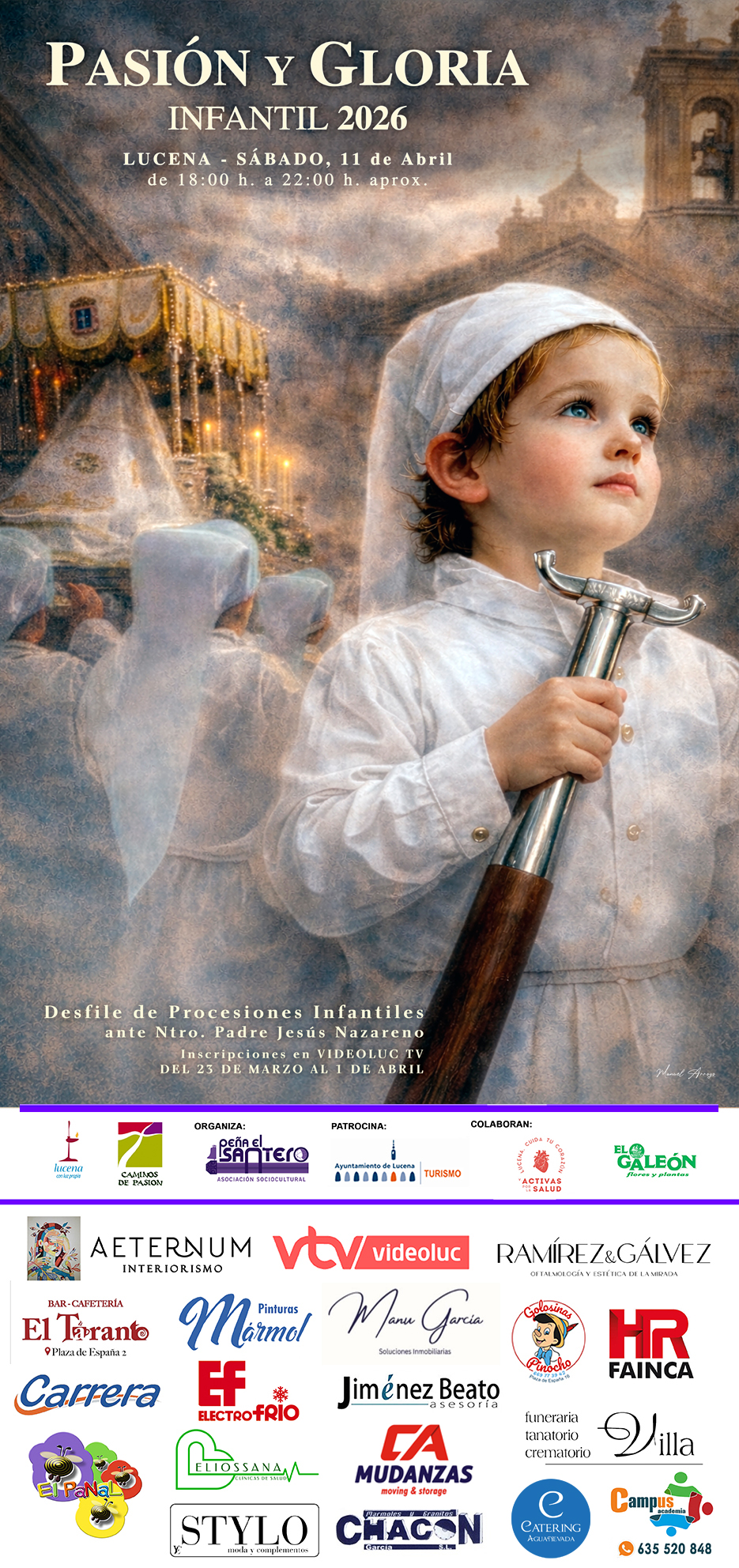
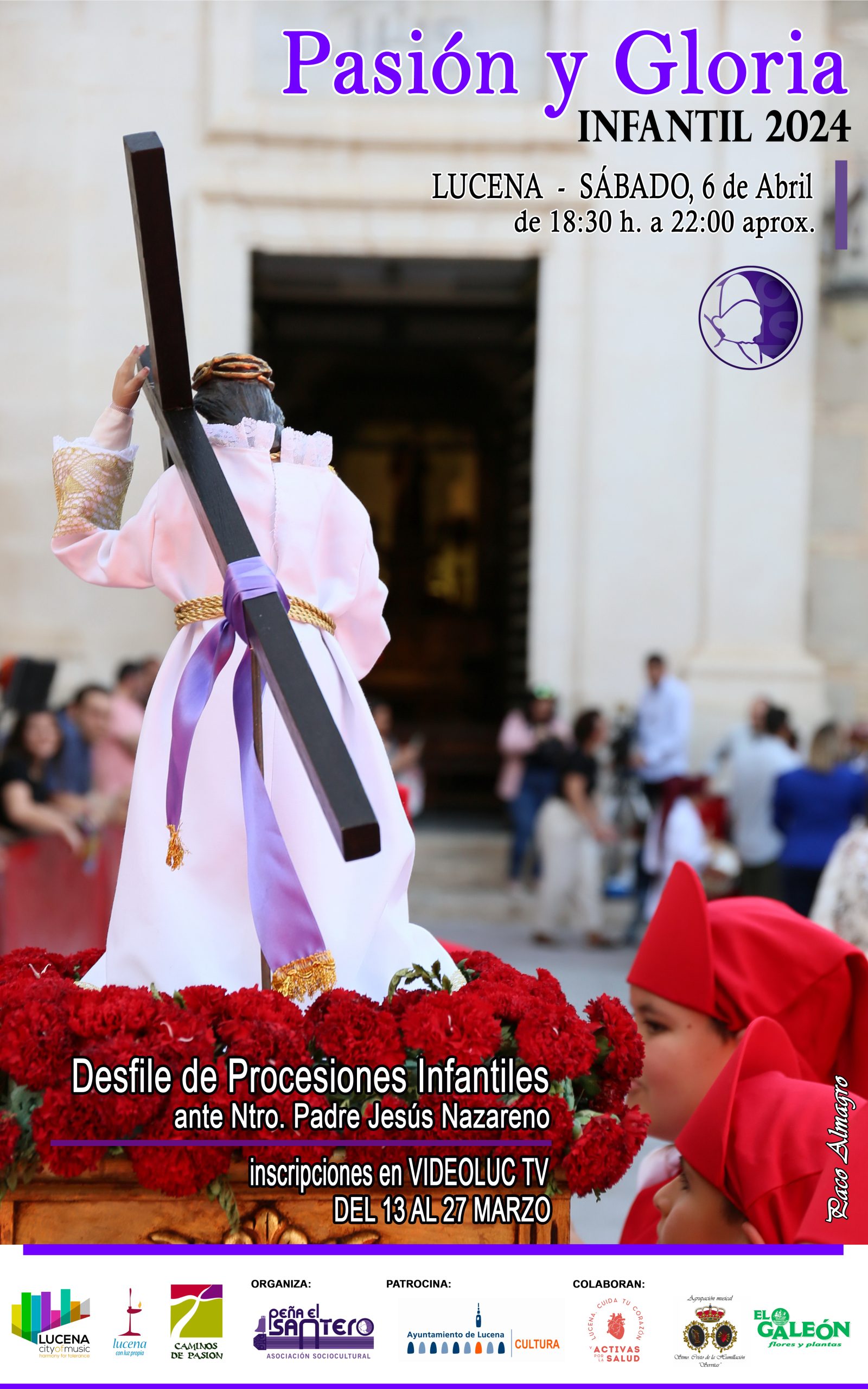
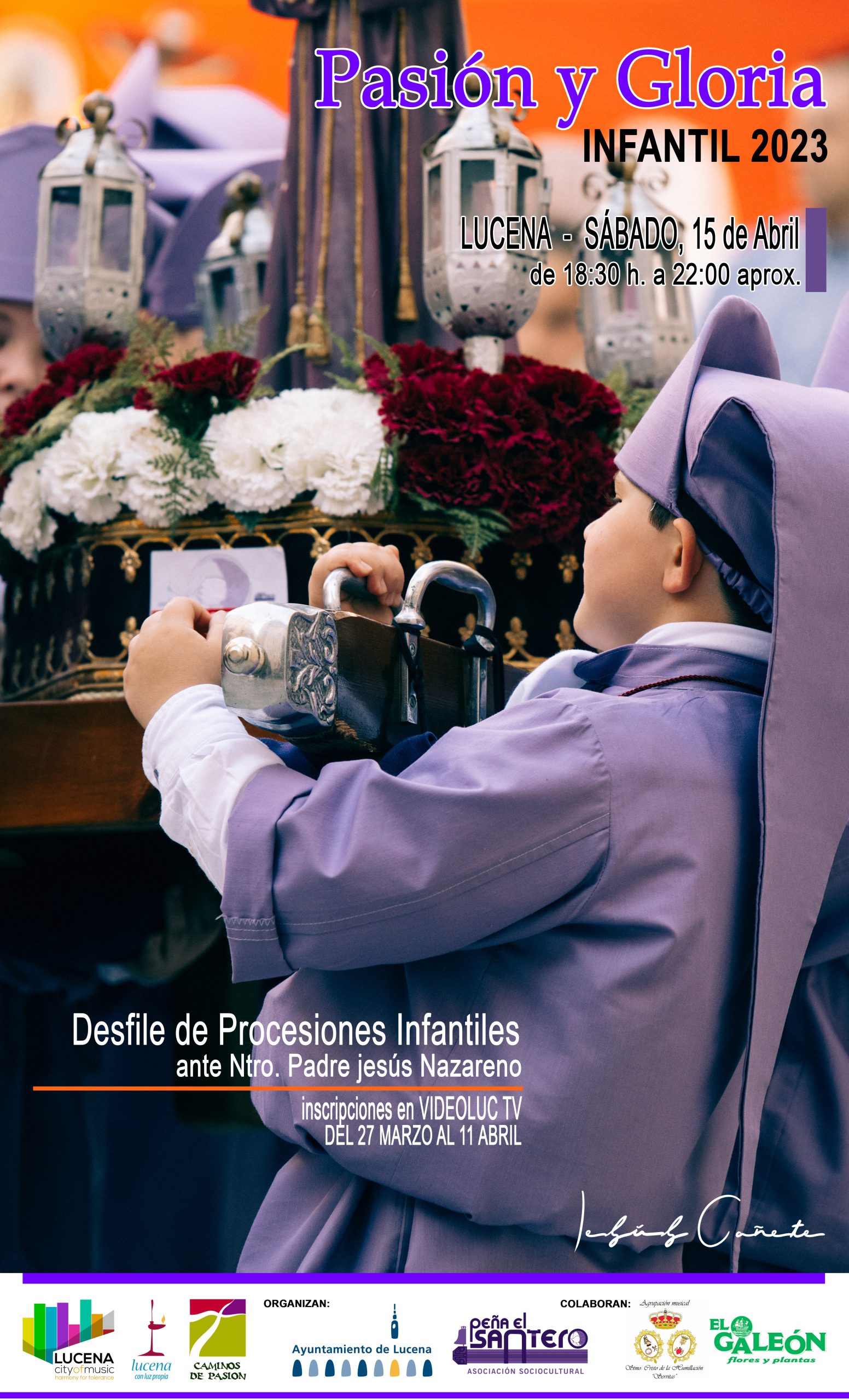
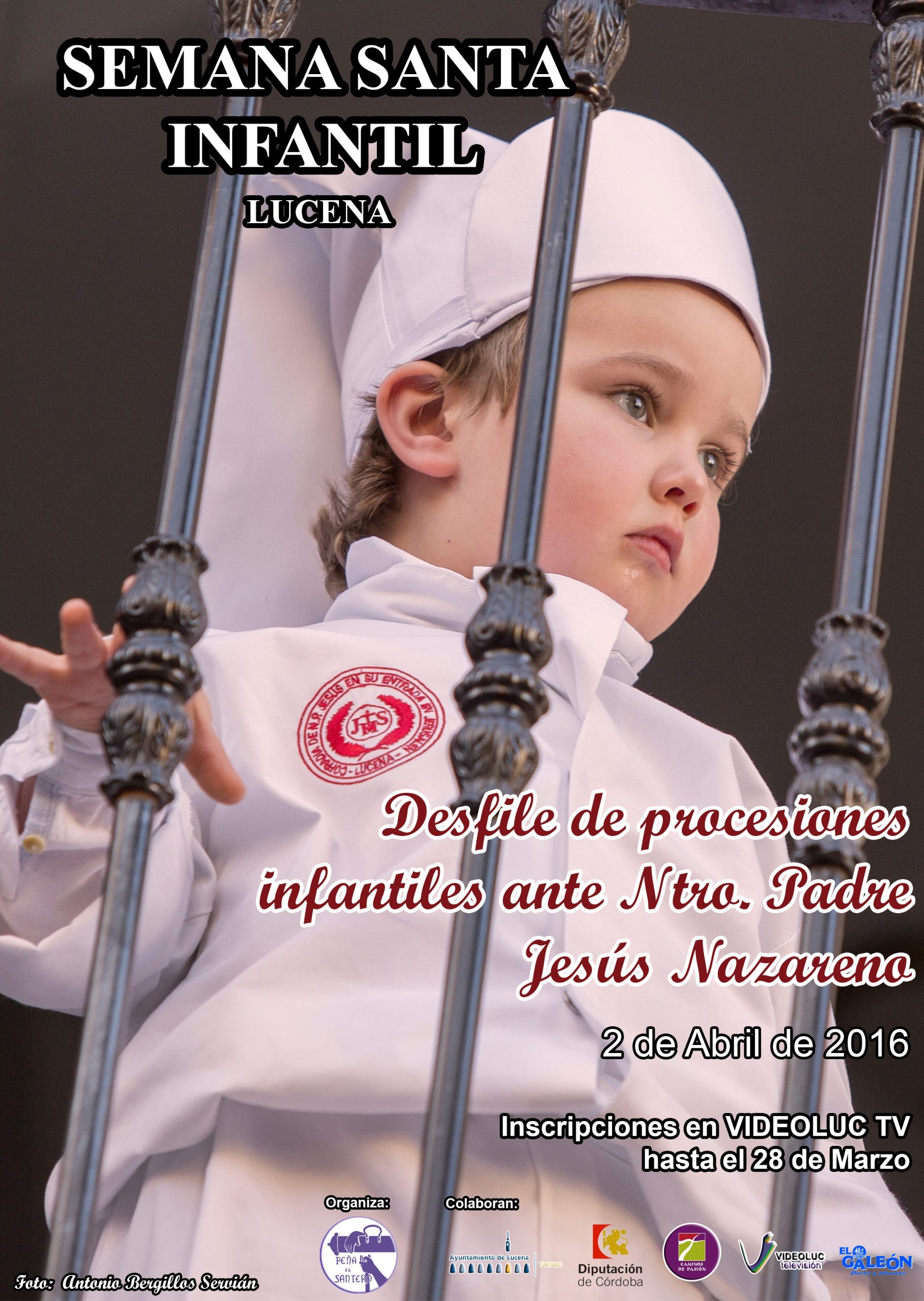
Historical Collection of Posters for the Children’s Processions Parade