Royal Archconfraternity of Mary Most Holy of Araceli (not affiliated)

Popular Name:
Our Lady of Araceli
Foundation:
1563
Canonical Seat:
Royal Sanctuary of Aras (During the month of May, it remains in the Major Parish Church of Saint Matthew the Apostle)
Imagery:
- Mary Most Holy of Araceli
- Descent throne: 22 santeros
- Procession Day throne: 36 santeros
- Ascent throne: 22 santeros
Hermano Mayor:
Gregorio Espejo Jiménez
Procession Departure:
- Descent Pilgrimage: second-to-last Sunday of April
- Procession on Her Day: first Sunday of May
- Ascent Pilgrimage: first Sunday of June
Number of Brothers:
2,459
Characteristic Musical Accompaniment:
During her Solemn Religious Service, the Misa del Campo Andaluz (Mass of the Andalusian Countryside), composed by maestro Antonio Villa Álvarez de Sotomayor, is performed. Both during her descent and ascent pilgrimages, and on the day of the Official Procession, Mary Most Holy of Araceli is accompanied by singers who perform the various styles of the Fandango de Lucena, to the sound of guitar chords. In addition, there is a broad repertoire of popular songs dedicated to the Patroness of Lucena, performed both during her pilgrimages and during the procession on the first Sunday of May, in the final stretch of the route.
Regional Costume:
Women, during the Floral Offering, usually wear the traditional Lucena regional costume. In addition, the Corte Aracelitana (Araceli Court) wears this attire for various events such as the reception of the Patroness during the Descent Pilgrimage, the Solemn Hand-Kissing Ceremony, or the first day of the Solemn Novena to Mary Most Holy of Araceli.
Santeros' Tunic:
White with a red cord (during the descent and ascent pilgrimages, the attire is: white shirt, medium-width trousers and sash)
The history of Mary Most Holy of Araceli, patroness of Lucena and of the Andalusian countryside, constitutes one of the great spiritual, historical, cultural and sentimental pillars of the city. Her devotion, deeply rooted since the 16th century, has shaped the religious and popular life of entire generations of Lucena’s people for more than four centuries, becoming one of the most important Marian manifestations in Andalusia.
Tradition places the origin of this title in the Basilica of Santa Maria in Aracoeli, located on the Capitoline Hill in Rome. According to medieval tradition, Emperor Augustus received there the prophecy of the Tiburtine Sibyl announcing the coming of the “King of the ages”. In a luminous vision he beheld the Virgin with the Child while a voice proclaimed: “This is the altar of the Son of God”. From then on, that place came to be called Ara Coeli, the “Altar of Heaven”. At the beginning of 1562, Don Luis Fernández de Córdoba y Pacheco, Marquis of Comares and Lord of Lucena, was deeply impressed by the image venerated in Rome and decided to commission a carving under the title of Mary Most Holy of Araceli. The image arrived in Spain through the port of Alicante on 12 April 1562, and later set off on its journey toward Lucena.
Tradition tells that, as the procession approached the Sierra de Aras, a fierce storm scattered those accompanying the image. The following day, the animal carrying it was found at the top of the mountain, at the spot where the three crosses of the Via Crucis now stand. The event was interpreted as a providential sign, and it was decided to build the Sanctuary right there. On 27 April 1562, according to a municipal record, Lucena solemnly prepared to receive the Virgin, who entered in procession and was proclaimed Patroness and Protectress of the town. She initially remained in the church of Santiago until the primitive hermitage was built on the Sierra de Aras. Barely a year later, according to various historians, the Confraternity was formally established, and the celebration of the feast was set for the first Sunday of May, a tradition that continues to this day.
The first Fiestas Aracelitanas (Araceli Festivities) are already documented as early as 1563. Since then, every spring Lucena celebrates days of profound popular devotion around its Patroness, combining religious worship, pilgrimages, offerings and popular celebrations that form an essential part of the city’s collective identity.
The Royal Diocesan Sanctuary of Aras
The growing devotion led, around the year 1600, to the construction of a larger temple on the Sierra de Aras. The present-day Royal Diocesan Sanctuary of Aras is one of the most important religious and artistic complexes in the province of Córdoba. It is reached via the road begun in 1854 and completed in 1864 thanks to the collaboration of the people of Lucena, local landowners and the Town Council. Set in a privileged natural location, the Sanctuary looks out from the Sierra de Aras over a vast landscape from which the lands of five Andalusian provinces can be seen: Córdoba, Jaén, Granada, Málaga and Seville. This mountain and pilgrimage character is one of the most recognizable hallmarks of the Araceli devotion.
The current structure of the Sanctuary, built over an earlier building, has a basilica-style floor plan with three naves separated by Doric columns of jasper and richly decorated Baroque ceilings. Its main façade, made of polychrome jasper by Martín de Rojas in 1765, gives access to an interior of enormous artistic richness. Of particular note is the crossing dome, one of the great jewels of Andalusian Baroque, designed by Leonardo Antonio de Castro Hurtado and built by the Antequera-born master Antonio de Rivera in 1722. The complex is completed by the main altarpiece, the Virgin’s camarín (elevated shrine chamber) and numerous historic rooms of great heritage value.
The Camarín of Mary Most Holy of Araceli is one of the most singular devotional spaces in the Sanctuary. Within it stands the image of the Virgin on a throne of carved and gilded wood with jasper columns, the work of the Lucena-born sculptor Pedro de Mena y Gutiérrez, surrounded by rich Baroque decoration featuring silks, reliquaries, mirrors and Marian paintings. Ecclesiastical recognition of the Araceli devotion came early. In 1613, Pope Paul V granted the first bull of indulgences to the Araceli confraternity members, privileges later extended in 1668 by Clement IX. During the 17th century, the historic stone Via Crucis that climbs from the First Cross up to the Sanctuary was also established.
Over the centuries, Our Lady of Araceli has been invoked by the people of Lucena in especially difficult times. There are numerous historical references to rogations and extraordinary descents of the image down to the city, as occurred in 1589 during a great drought, in 1600 to seek protection against the plague, in 1628 following a diphtheria epidemic, or in 1841 to implore rain. In 1851, the patronage of Mary Most Holy of Araceli over Lucena was officially ratified.
Canonical Coronation of 1948
One of the most important moments in Araceli’s history took place with the Canonical Coronation of Mary Most Holy of Araceli. The project began to take shape in the 1920s and took definitive form in 1932 with the creation of the Junta Pro-Coronación (Pro-Coronation Board) and the making of the crowns intended for the Virgin and the Christ Child, crafted by the prestigious Seville goldsmith Cayetano González.
Difficulties arising from the Second Republic, the Civil War and the complex social situation delayed the celebration for years. Finally, by means of a papal brief signed in Rome on 7 March 1947, the Pope authorized the Coronation. On 2 May 1948, Lucena experienced a historic day with a solemn pontifical Mass followed by a procession in which Cardinal Pedro Segura placed the crowns on the Virgin and the Christ Child. That celebration was the first Canonical Coronation in the Diocese of Córdoba and one of the most important religious events in Lucena’s contemporary history.
Jubilee Years
In 1962, to mark the Fourth Centenary of the Virgin’s arrival in Lucena, Pope John XXIII granted an extraordinary Jubilee Year for the city and the Diocese of Córdoba. During those months, Mary Most Holy of Araceli visited parishes, neighborhoods, convents and care centers in large-scale religious and popular events that profoundly marked Lucena’s spiritual life. Later, in 2012, the Archconfraternity celebrated the 450th anniversary of the Virgin’s arrival with a new Jubilee Year focused especially on spiritual renewal and social commitment. Among the most notable initiatives was the launch of a solidarity project linked to the Córdoba diocesan mission in Peru, promoting the construction of a shelter home for young people in need under the title of Our Lady of Araceli.
Pilgrimages and Araceli Festivities
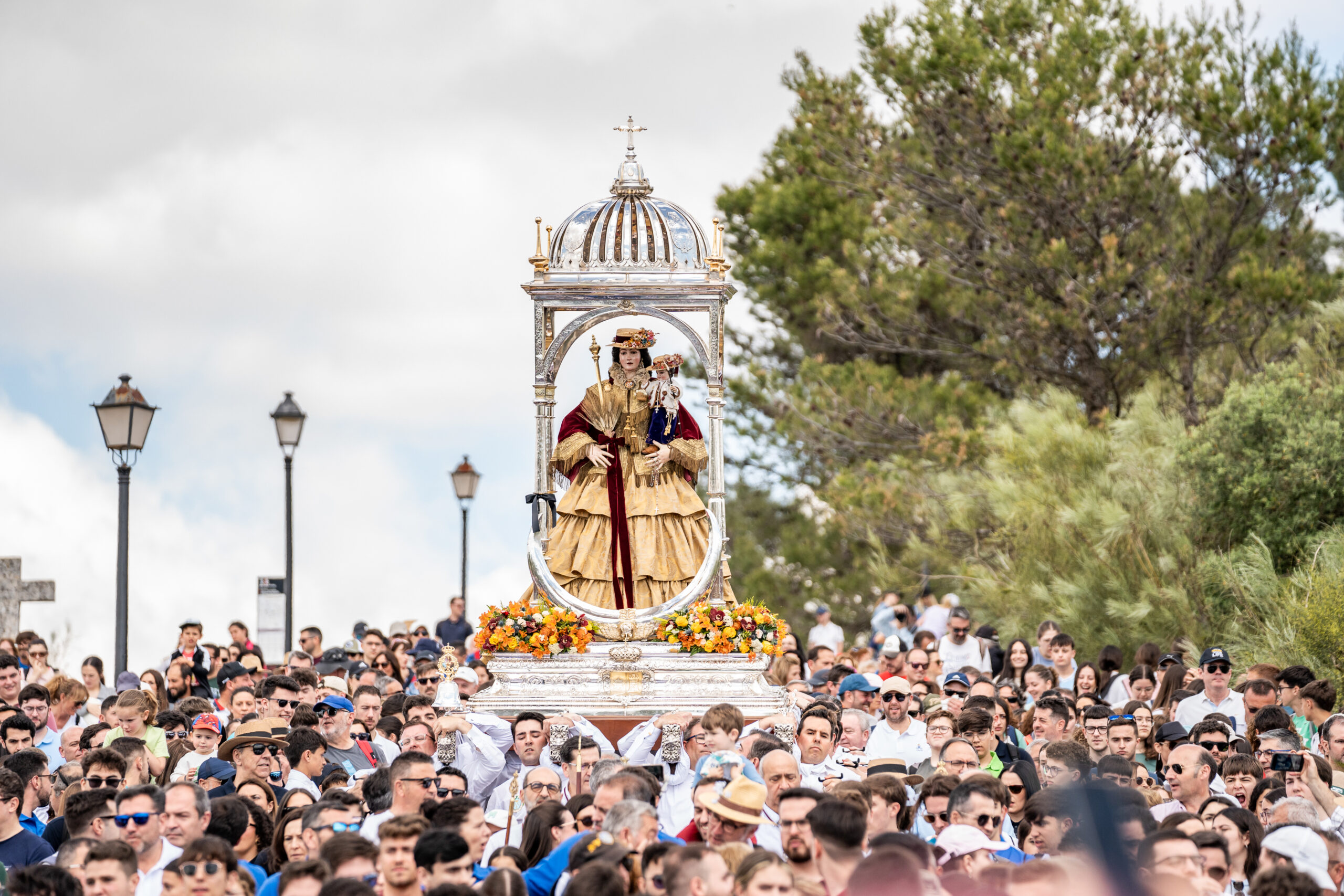
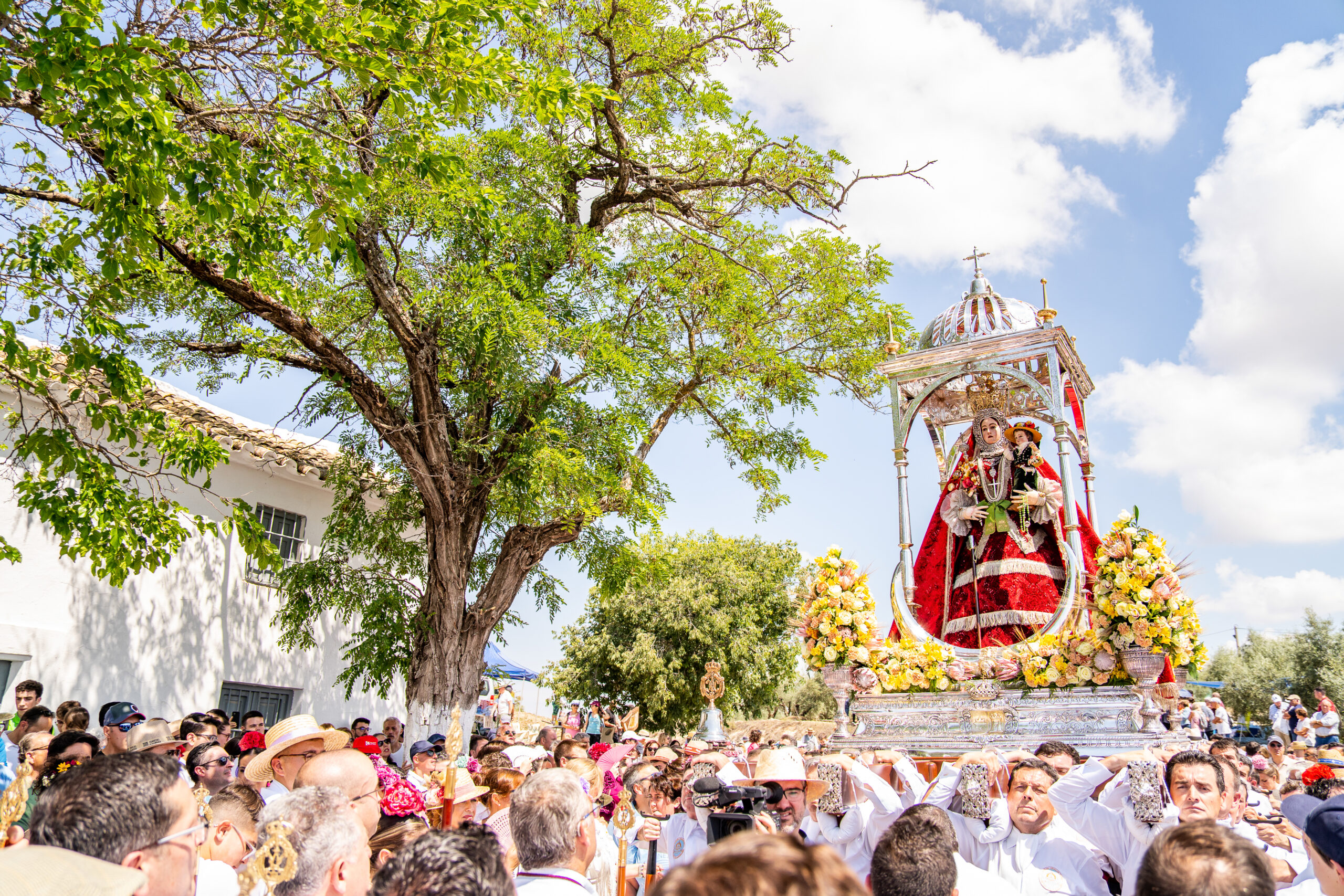
The Fiestas Aracelitanas (Araceli Festivities), declared of National Tourist Interest and held on the first weekend of May, are the main religious and popular event of Gloria in Lucena. During those days, thousands of people take part in acts of worship, opening speeches, floral offerings, religious services and the solemn procession of the Patroness through the streets of the city. Of particular importance are the Descent Pilgrimage, held on the second-to-last Sunday of April, and the Ascent Pilgrimage, on the first Sunday of June. Both represent two of the most intense expressions of Lucena’s popular religiosity. In them, the people accompany the Virgin between the Sierra de Aras and Lucena in an atmosphere of deep emotion, fervor and tradition passed down from generation to generation.
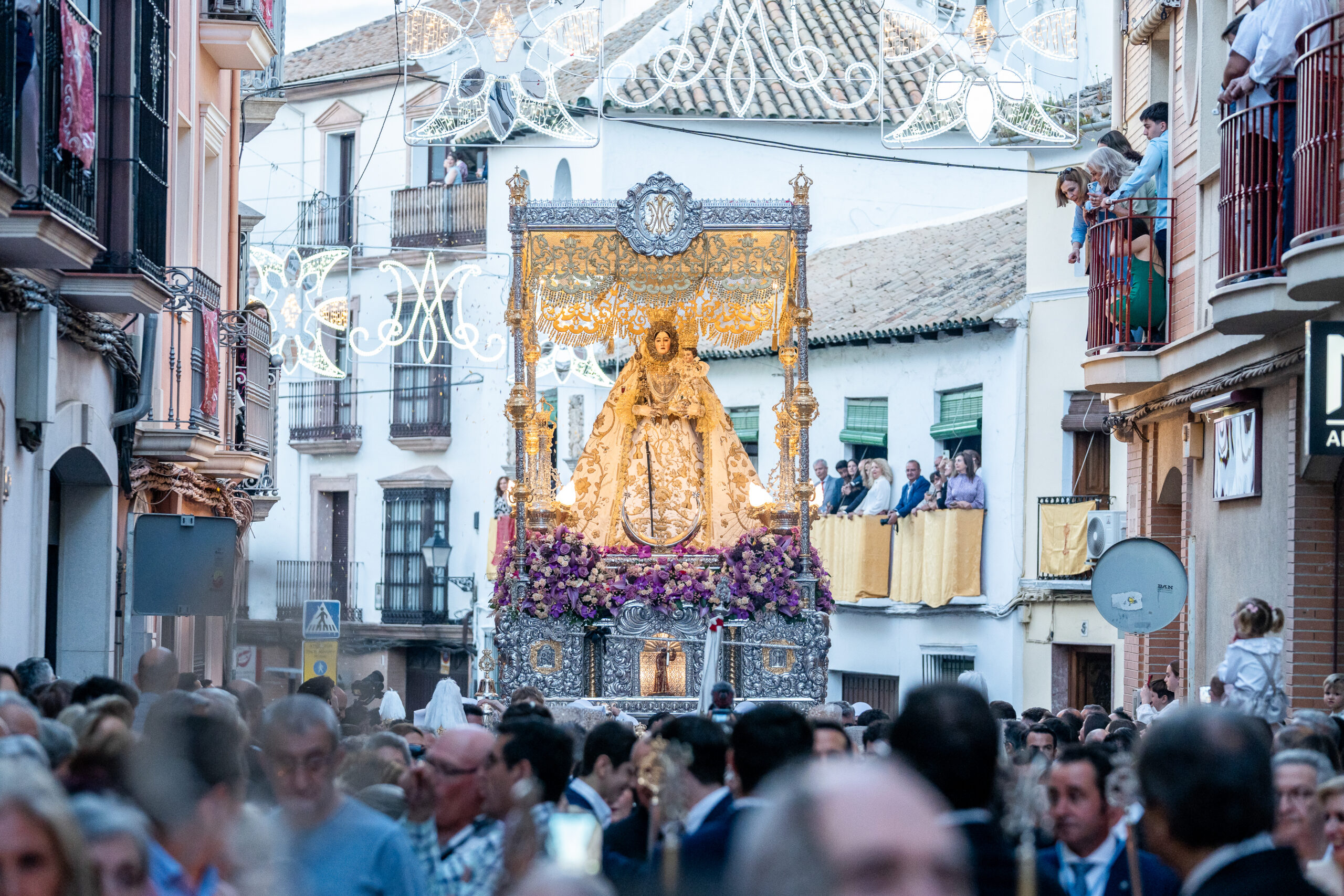
For its part, on the first Sunday of May the Official Procession of the Patroness of Lucena is held through the streets of the city, a day that begins with the traditional Solemn Religious Service, in which the Misa del Campo Andaluz by maestro Antonio Villa Álvarez de Sotomayor is performed, and culminates with the procession and the traditional fireworks display before her entry into the Major Parish Church of Saint Matthew. Also worth mentioning, among the acts of worship held in the days following the first Sunday of May: the Solemn Novena (with the participation of prominent priests from various dioceses across the country), the Solemn Hand-Kissing Ceremony, the Mass for the sick and elderly, and the presentation of newborns to the Virgin.
Araceli Heritage
The Araceli devotion preserves an important heritage, part of which can be visited at the Casa Museo de la Virgen de Araceli (House-Museum of the Virgin of Araceli). The textile trousseau of Mary Most Holy of Araceli is one of the most valuable heritage and devotional collections linked to Lucena’s popular religiosity. Through her mantles, skirts and rostrillos (face-frame veils) and various ornamental pieces, one can trace not only the artistic and aesthetic evolution of each era, but also the profound devotion that generations of Lucena’s people have professed to their Patroness.
Over the centuries, the Virgin’s trousseau was enriched thanks to important donations made by devotees, noble families and members of the Archconfraternity. Among the fabrics used, notable examples include silk satins, bobbin lace, damask fabrics, tissue cloth and gauzes, along with rich embroidery in gold and silver. From the 18th century, important historic vestment sets are preserved, such as the crimson silk ensemble embroidered in the Córdoba style, donated by the Duchess of Medinaceli around 1772, or the ensemble made of tissue cloth with gilded silver threads and silks of different colors. These pieces not only possess extraordinary artistic value, but also constitute a tangible expression of the faith, gratitude and popular devotion toward Mary Most Holy of Araceli.
The processional heritage of Mary Most Holy of Araceli reflects centuries of history, art and devotion surrounding the Patroness of Lucena. From the end of the 16th century, the first processions held around the Sanctuary of Aras are already documented. One of the most valuable elements of this heritage is the historic silver andas (processional platform), commissioned in 1628 by the Lucena Town Council from the Córdoba silversmith Martín Sánchez de la Cruz as an act of thanksgiving following a diphtheria epidemic. Currently preserved in the Casa de la Virgen (House of the Virgin), they stand out for their elegance and artistic value.
In 1864, the master craftsman Pedro Romero Ariza made a pedestal decorated with the anagram of Mary and heraldic symbols of Lucena, still preserved in the Sanctuary. Elements of the old neo-Gothic silver throne by Meneses, used until 1973, also form part of the Araceli heritage. Today, the Virgin has two main thrones. The first, used for the Descent and Ascent Pilgrimages, was made in 2002 by the Hermanos Lama (Lama Brothers) and is carried by twenty-two santeros. The second, unveiled in 1974 and the work of the Hermanos Angulo (Angulo Brothers), is Baroque in style and is used during the Fiestas Aracelitanas in May, being carried by thirty-six santeros.
In addition, an important intangible heritage passed down from generation to generation is preserved around the Patroness. Besides the aforementioned Misa del Campo Andaluz, the salves and popular coplas shared during the pilgrimages, and the devotional atmosphere that accompanies each celebration, form an inseparable part of Lucena’s sentimental memory. Added to this is the anthropological and emotional value of deeply rooted traditions such as family pilgrimages to the Sierra, houses decorated during the festivities, the crowded waits at the Puerta de la Mina, and the farewells to the Virgin amid tears and applause.
As for its documentary heritage, it preserves an extensive historical archive as well as numerous articles, books and research studies on the figure of the Virgin and the Araceli devotion. In addition, a printed edition of the Revista Araceli (Araceli Magazine) is published every year.
Araceli Youth
The Youth Committee of the Royal Archconfraternity of Mary Most Holy of Araceli plays an important role in passing on the Araceli devotion to new generations. Through fellowship gatherings, training activities, meetings, pilgrimages and cultural and religious events, the Araceli youth actively take part in the life of the Archconfraternity and in preserving its traditions. Their work is essential to ensuring the continuity of a devotion deeply rooted in Lucena, fostering among the youngest members knowledge of Araceli’s history, love for the Patroness, and involvement in the religious and social life of the corporation.
The Araceli Court
The Corte de Damas Aracelitanas (Court of Araceli Ladies) is one of the most representative traditions of the Festivities in honor of Mary Most Holy of Araceli, Patroness of Lucena. Young women from Lucena represent the town during the religious and festive events, especially in the celebrations of the first Sunday of May.
Affiliated Confraternities
Devotion to Mary Most Holy of Araceli has, for centuries, transcended the boundaries of Lucena and remains alive in various Spanish cities through its affiliated confraternities. These brotherhoods, in many cases founded thanks to Lucena-born devotees settled outside the city, continue to promote acts of worship and celebrations linked to the Patroness and the Sanctuary of Aras. There are currently Araceli affiliates in Córdoba (with a titular image that processions through the streets of the Córdoba capital), Málaga, Seville and Madrid.
Today, Mary Most Holy of Araceli continues to be much more than a Marian title: she represents the spiritual, cultural and sentimental memory of Lucena, a living link between generations and one of the greatest symbols of the city’s collective identity.
*Documentary source: Notas para la historia de las cofradías lucentinas (Francisco López Salamanca – 2022), the official website of the Royal Archconfraternity, and documentation provided by the confraternity itself.
*Photographs: Jesús Cañete Fernández.

