Venerable Archconfraternity of Our Father Jesus the Nazarene

Popular Name:
Jesus the Nazarene
Founded:
Canonical Seat:
Iglesia de San Pedro Mártir de Verona y Capilla de Nuestro Padre Jesús Nazareno
Imagery:
- Our Father Jesus the Nazarene (Anonymous carving from the mid-16th century) – Throne of 26 santeros
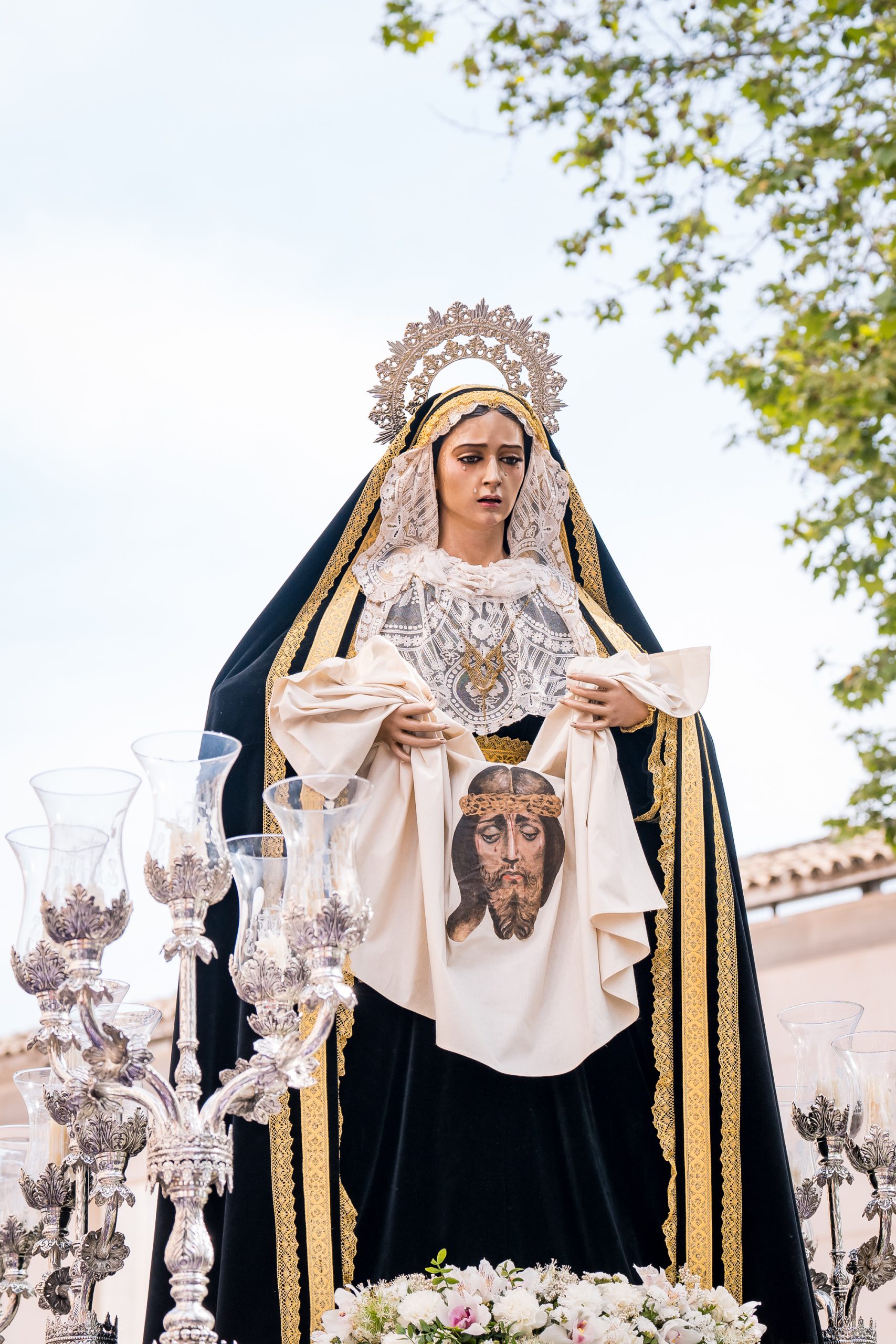
- Holy Woman Veronica (Luis Álvarez Duarte – 1995) – Throne of 24 santeros
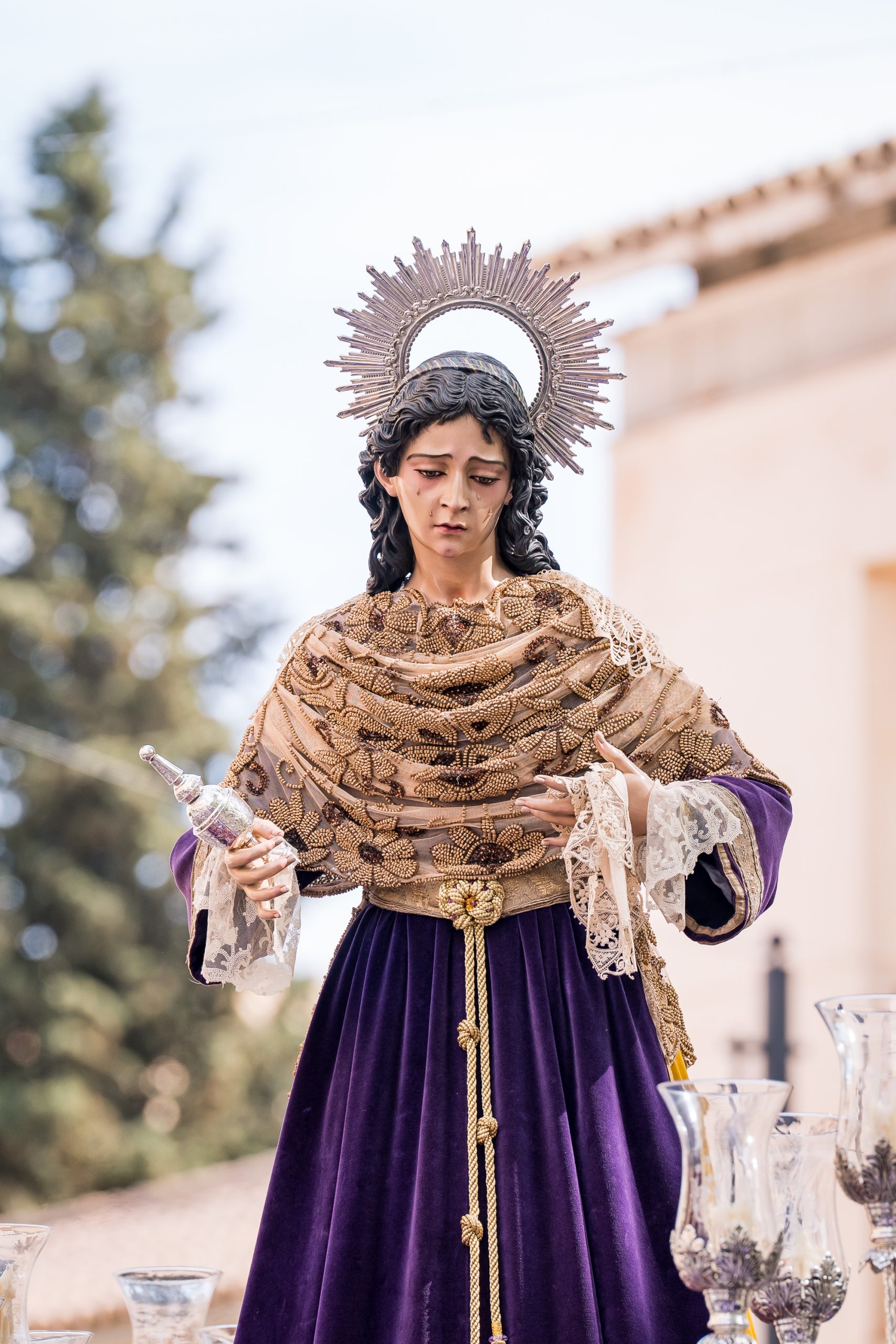
- Saint Mary Magdalene (Luis Álvarez Duarte – 1995) – Throne of 24 santeros
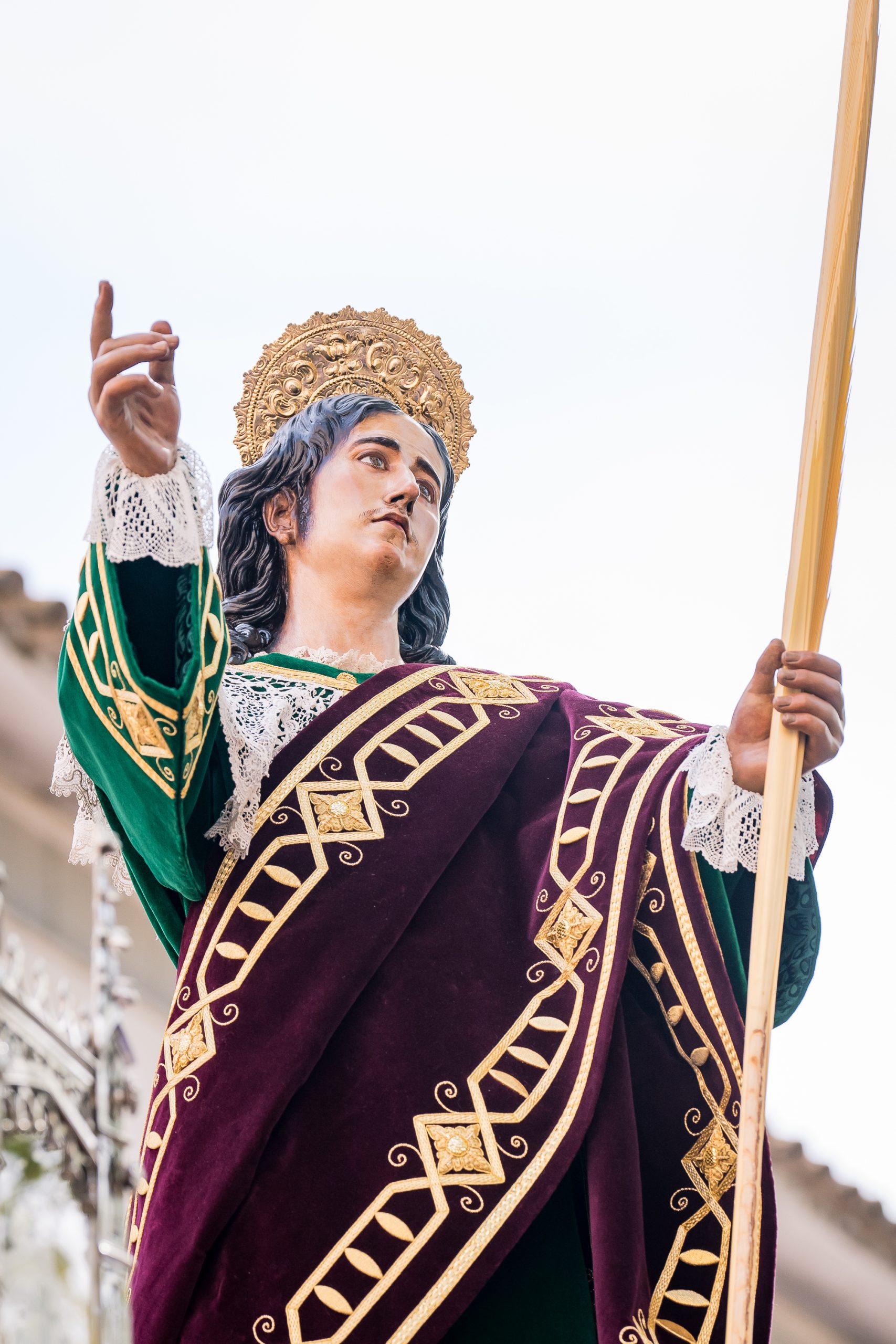
- Saint John the Evangelist (Francisco Salzillo – 18th century) – Throne of 24 santeros
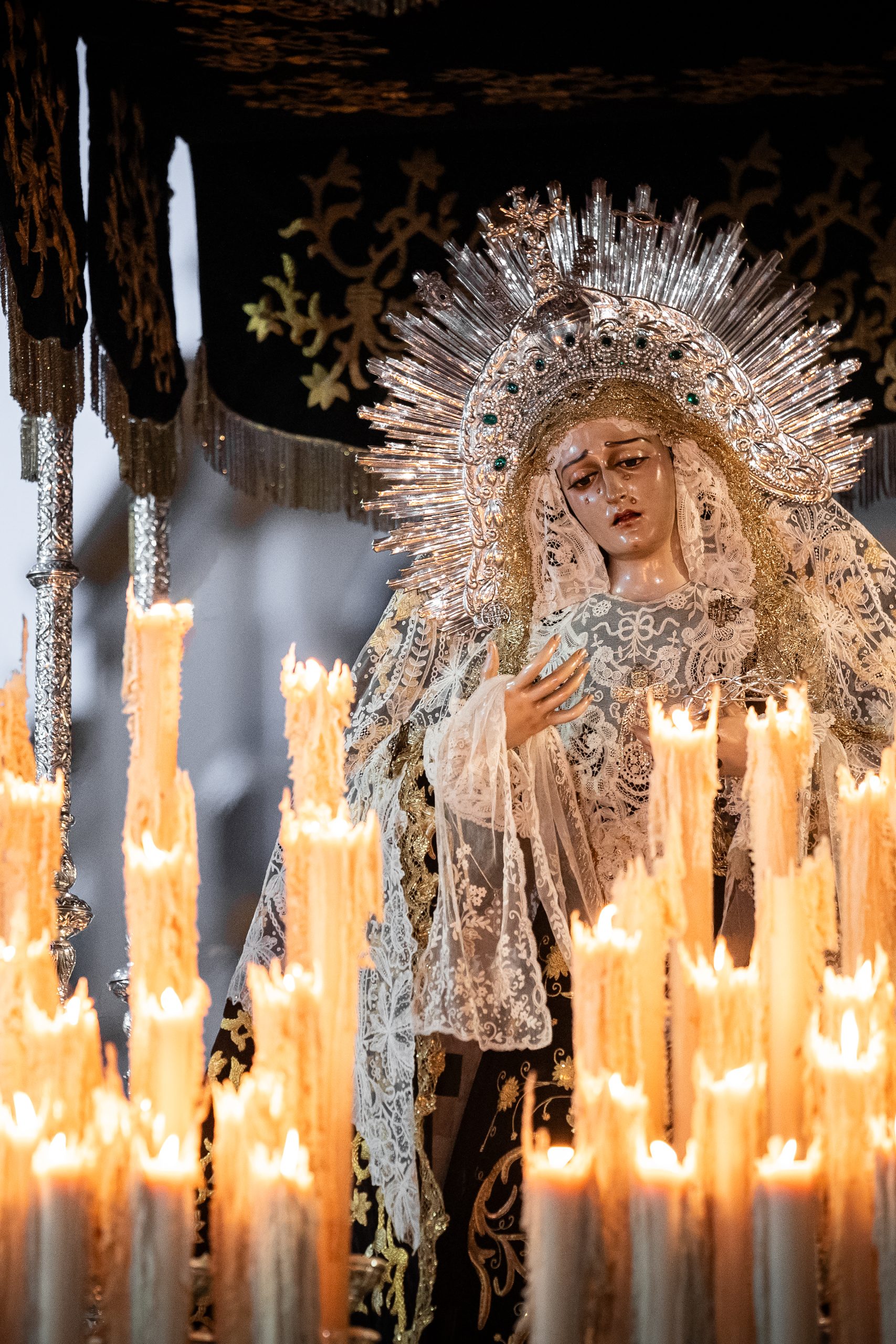
- Our Lady of Succour (Luis Álvarez Duarte – 1994) – Throne of 26 santeros)
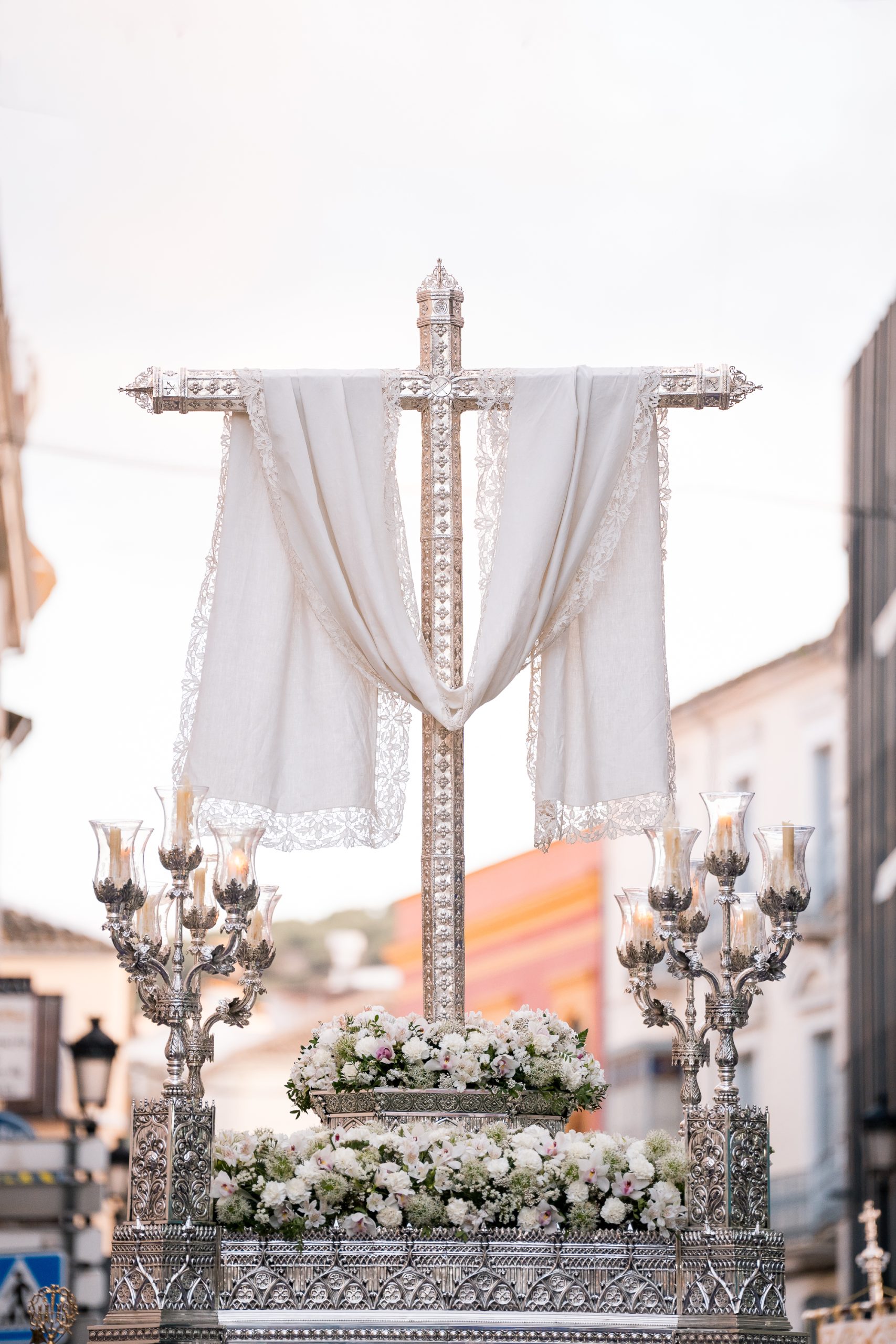
- The Holy Cross (Castillo y Costi – 1893) – Throne of 24 santeros
- Holy Burial of Our Lord Jesus Christ (Miguel Verdiguier – 18th century) – Throne of 24 santeros
Hermano Mayor:
Juan Torres Tenllado
Processional Departure:
Good Friday – 6:00 am (Our Father, Woman Veronica, Mary Magdalene, John the Evangelist, Our Lady of Succour)
Good Friday – 8:00 pm (Holy Cross, Holy Burial, Mary Magdalene, John the Evangelist, Our Lady of Succour)
Number of Brothers:
2,530
Characteristic Musical Accompaniment:
It processes with torralbo, and a musical ensemble of wind instruments and choir performing the Miserere. The throne of the Virgin of Succour is followed by the Sociedad Didáctico Musical “Banda de Música de Lucena”.
At 3:00 am, the traditional Llamada de Hermanos (Call to the Brothers) takes place through the streets of the city, performed by the Hermandad de Tambores (Brotherhood of Drums).
Tunic of the Brothers:
Purple, with a very tall capirote of the same colour without a face-covering, and a yellow pita-fibre cord. Following the image of Jesus, women penitents process dressed in strict black with a veil and a crown of thorns, carrying wooden crosses.
Tunic of the Santeros:
Purple, with a capirote of the same colour.
Around the ancient image of Jesus the Nazarene and a now-lost Recumbent Christ, it appears that the confraternity known as the Great Power of God was formed in the early 16th century, at the hermitage of Santa Catalina de Siena, which was absorbed, from 1570 onwards, into the Dominican foundation of the Convento de San Pedro Mártir.
On 14 March 1599, the brothers don Diego Cererato de Castañeda, cleric; don Diego de Escalona Chacón, don Francisco de Cárdenas, Francisco Cerrato de Castañeda, Juan del Día, Juan de Castro Urbino, Pedro de Garay, don Antonio de Fonseca, the licentiate Juan Ruiz de Córdoba, the licentiate Alonso Valera, Luis de Morales, alderman, Gonzalo Martín del Valle, Antonio Cuello, Antón Luque de la Cruz, and the elected Hermano Mayor don Juan Fernández de Angulo, met to found, on the basis of the rules of the aforementioned confraternity of the Great Power of God, a new Brotherhood dedicated to Jesus the Nazarene, whose rules were approved on 26 September of that same year by the then Bishop of Córdoba, don Francisco Reinoso.
The original chapel of this devotion was initially located in the Epistle-side nave next to the tower, following a deed of sale granted before the notary Bartolomé de Andía on 2 March 1642, for a price of eight hundred reales. However, at a chapter meeting of the Confraternity held on 26 August 1758, due to certain disagreements between the confraternity members and the Dominican community, the Hermano Mayor don Antonio Rafael de Mora y Saavedra stated “that, carried by his great fervour for Our Father Jesus, he had eagerly sought to build for His Majesty and the other Images belonging to this Confraternity as decent a Chapel as could be, in the very houses belonging to Our Father Jesus”, with the prior licence of the Lord Bishop and the consent of don Diego López de Haro y Capote, chaplain of the chapel of Santa Catalina, located in the transept of the church.
With the work entrusted to the master mason Vicente del Castillo and the stonemason Andrés Cordón, construction began, though with frequent interruptions, which led the Hermano Mayor to offer to build it at his own expense and to endow it with a third of his considerable estate, in exchange for the right of patronage over the chapel for himself and his family. His proposal was accepted at the General Assembly of brothers on 28 November 1762, and the works continued slowly until the death of don Antonio Rafael de Mora in 1783. The heirs’ refusal to fulfil the Hermano Mayor’s testamentary wishes regarding the chapel led to a lengthy lawsuit, which resulted in the withdrawal of the right of patronage and the release of all financial obligations in exchange for compensation; with these funds, together with alms from the faithful, the work was finally completed, after redesigning the ambitious initial project, in 1803.
Later, around 1838, the closure of the church of San Pedro Mártir, brought about by the Disentailment of Church Property, forced the brotherhood to complete the second storey, “which was left unfinished and was used for working the wax”, and, after walling up the connection with the adjoining church, to open a door onto the square, for which purpose the city ceded a certain area of public land “for the greater splendour” of the work.
In other respects, the history of the Venerable Archconfraternity was affected by the bishops of Córdoba, who, in the early 19th century and influenced by Enlightenment thinking, showed an attitude opposed to certain popular religious practices. In 1807, Bishop Pedro Antonio de Trevilla banned practices such as the proclamation of the sentence, the Desprendimiento (the Deposition rite), and the use of the correón (carrying strap) to move the processional thrones, although the latter was occasionally retained until its definitive prohibition in 1839. During this period, the image of Jesus was enriched with a new silver cross and a tunic embroidered by Francisca Gutiérrez Calderón, known as “la persa” (“the Persian”).
The suppression of the religious orders in 1835 caused concern within the confraternity, which feared losing the church of San Pedro Mártir as a place of worship. To safeguard its space, in 1844 a storeroom was added to the chapel and a door was opened onto the llanete (small square). Although the State expropriated the confraternity’s assets, the following decades saw a notable increase in devotion and in the number of brothers, marking a period of growth for the brotherhood.
In the mid-19th century, the church of San Pedro Mártir was closed due to the risk of collapse. In 1866, the vaults of the presbytery and part of the transept caved in, destroying several altarpieces. Faced with the danger of further collapses, the images were temporarily moved to the Franciscan church of Madre de Dios, returning two years later. The country’s political and economic instability, especially following the overthrow of Isabel II, prevented the reconstruction of the church. Nevertheless, the confraternity retained its strength and managed to acquire new items, such as a silver cross made in 1892 by the silversmith Francisco Castillo y Costi, and a Neo-Gothic throne in 1906. At the turn of the 20th century, the confraternity became embroiled in internal and political conflicts, with accusations of electoral fraud and unrest. The bishop’s intervention in 1905 managed to calm the situation and amend the statutes to restore stability. During the Second Republic, processions were banned in 1932, 1933 and 1936.
In the mid-20th century, the Confraternity of Our Father Jesus the Nazarene went through a period of administrative irregularity, which was resolved by Bishop Adolfo Pérez Muñoz. Through a drastic but necessary measure, he decreed the suspension and immediate re-establishment of the brotherhood under new statutes. The reorganisation was led by a provisional board chaired by Pedro Jiménez Alba, which established that the Hermano Mayor would be appointed by the prelate, while the governing board would be elected by a small percentage of brothers by lot (insaculación). In this new stage, Felipe Torres Muñoz was elected president, and under his term the first besapié (foot-kissing devotion) to the image of Jesus was held in 1944.
A decade later, in 1953, Bishop fray Albino González appointed José de Mora Romero as Hermano Mayor. He took on the challenge of recovering the site of the old church of San Pedro Mártir, ceded by the diocese, but the works were left unfinished. The structural fragility of the building caused a collapse in 1969 that destroyed several processional thrones, forcing the Good Friday procession to be reduced to the images of Jesus the Nazarene and the Virgin of Succour. In 1972, with Juan Palma Garzón as the new Hermano Mayor, major renovations were undertaken. A new Neo-Baroque throne was commissioned for Jesus, the fittings and vestments of the titular images were improved, and, in 1973, the old Marian image was replaced with a Baroque Dolorosa of great artistic quality. In 1975, improvement works were carried out on the chapel and the sacristan’s dwelling, during which the image of Jesus was temporarily moved to the parish of Santo Domingo. From 1978 onwards, with Francisco Muñoz Gómez as Hermano Mayor, a new structural drive was undertaken: the image of Saint John was reincorporated into the procession thanks to the acquisition of a new throne. In addition, in 1982, a statutory reform restored to the confraternity members the right to democratically elect the Hermano Mayor. In the following years, new thrones were commissioned for Mary Magdalene and Veronica, and the complete set of images for the Good Friday procession was finished in 1989.
With the election of José María Cañete Mora in 1990, the confraternity underwent a period of aesthetic and spiritual renewal. A new mantle was made for the Virgin of Succour, and the pregón (Holy Week proclamation) in honour of Jesus the Nazarene was established. In 1993, the restoration of the image of Our Lady of Succour was commissioned from the sculptor Luis Álvarez Duarte, but it was destroyed by a fire shortly afterwards. The same sculptor delivered a new image on the eve of the following Holy Week and was also the author of the new carvings of Mary Magdalene and Veronica, which replaced the previous ones between 1996 and 1997.
The year 1999 marked a key date: the fourth centenary of the founding of the confraternity. Numerous commemorative events were organised, publications were issued, and new statutes were approved. Shortly afterwards, under the leadership of Gonzalo Beato Cobos, the chapel’s paintings were restored and an ambitious project was launched: the reconstruction of the church of San Pedro Mártir. This initiative was backed by Bishop Juan José Asenjo and progressed with the laying of the first stone in 2006. At the same time, a new carved and gilded throne was unveiled for the urn of the Holy Burial.
The economic crisis caused the works to stall, but in 2010, with Eduardo Cortés Jiménez as Hermano Mayor, work resumed. The façade was restored, the walls and roofs were rebuilt, and the bell-gable and doorways were refurbished. In 2011, the image of Jesus was sent to the Andalusian Institute of Historical Heritage for restoration, a process that took nine months. In 2013, following the death of Cortés, Gonzalo Beato Cantizani took over leadership. During his term, the sacristy, the santero’s dwelling, the hemispherical dome of the central nave, the side vaults and an underground columbarium were completed. The works finished with the laying of flooring, glazing and electrical systems, and the church was solemnly blessed on 14 March 2014, in a crowded ceremony attended by three bishops and numerous priests.
During Beato Cantizani’s new term, intensive work was carried out to pay off the loan needed for the works, financed through the occupation of columbarium niches, donations and activities organised by the confraternity. The renovated church allowed for greater participation by the faithful and the introduction of new acts of worship, such as the triduum to the Virgin of Succour and the feast of Saint John Paul II, whose image was also brought into the church. The heritage collection was enriched with pieces such as the tunic of the roses, and old mantles and pedestals were restored.
With his term completed in 2020, the pandemic caused by COVID-19 forced the suspension of processions and acts of worship for two years. Given this situation, Bishop Demetrio Fernández extended the term of the governing board. Once the health crisis had passed, Juan Torres Tenllado was elected in the elections that were called. His team took on not only the inherited financial responsibilities, but also the commitment to maintain the quality of the acts of worship and to promote new restorations, such as those of the Recumbent Christ and Saint John the Evangelist.
In 2024, the confraternity celebrates its 425th anniversary with an extensive programme of events that began in October 2023 with the presentation of a commemorative poster, a logo and a calendar of activities. The recent history of this brotherhood is, without doubt, that of a living community, deeply rooted in devotion, which has managed to combine faithfulness to its tradition with constant renewal and an active commitment to its cultural and spiritual legacy.
Our Father Jesus the Nazarene and the Holy Cross
Our Father Jesus the Nazarene is a fully carved sculpture, though dressed, somewhat larger than life-size. Towards the beginning of the 17th century, its arms were fitted with joints so that, by means of a spring mechanism, it could impart a blessing to the people on the morning of Good Friday. A devotion of ancient standing in Lucena, no details are known about its authorship or the date of its execution, although some authors have noted similar features linking it to the output of Jerónimo Quijano (1500-1563), a disciple of Jacobo Florentino. However, stylistic analysis of the face reveals a moment prior to the founding of the Confraternity in 1599. The image of the Nazarene, with its head turned slightly to the right, shows a sharp, completely symmetrical face, even in the curls of the beard. It can be considered a transitional work between the late Gothic and the Renaissance and, therefore, datable to the first third of the 16th century. It is probably, according to a study carried out by the historian of the Instituto Andaluz del Patrimonio Histórico. The Holy Cross of Our Father Jesus, silver in its natural colour and made by the Cordovan silversmith Castillo y Costi in 1893, is the same cross that processes in the afternoon on the throne of the Holy Woman Veronica.
Our Lady of the Rosary
A polychrome carving, about 120 cm tall including the pedestal. It depicts Mary, wearing a richly gilded and estofado-decorated tunic, a necklace closely fitted to the neck, and a mantle covering her head which, after passing around her right arm, crosses to the left, with which she holds the Child, gracefully foreshortened in the gesture of turning towards his Mother to touch her face, while with his left hand he holds a kind of fruit or orb. Recently found in a walled-up recess in the crypt of the chapel, it must have belonged to the now-vanished convent annexed to San Pedro Mártir. It shows traces of once having had a star above the forehead. It is an anonymous work from the last third of the 16th century.
Urn of the Holy Burial and Recumbent Christ
The urn is a gilded carving: 187 cm long, 125 cm wide and 200 cm high, including the pedestal. It rests on a moulded, mixtilinear-plan pedestal with floral decoration in sgraffito and relief work, raised on six mourning angels acting as atlantes. The casket is glazed within fine carved frames set with small mirrors, also featuring little cherub heads. It is topped at each corner with a pyramid and, at the centre, an orb bordered with angelic heads. It is the work of Pedro de Mena y Gutiérrez, commissioned by the Confraternity in 1769.
The Recumbent Christ is a fully carved figure, somewhat smaller than life-size, with jointed arms to allow for the performance of the Descent from the Cross, a ceremony formerly carried out by the Confraternity. To replace an earlier Christ figure, known as the Great Power of God, its execution was commissioned from the sculptor Miguel de Verdiguier in 1774. This Christ figure was restored by Ana Infantes during the term of Hermano Mayor Mr Juan Torres Tenllado.
Our Lady of Succour
The image of Our Lady of Succour, popularly known as the Virgen de la Capilla (Virgin of the Chapel), is a central figure in Lucena’s Good Friday processions, with her participation documented since 1666, accompanying the Nazarene alongside Mary Magdalene, Saint John and Veronica.
Throughout its history, the image has undergone several interventions. In March 1943, it was sent to Granada to the sculptor Manuel Salvatierra García for a significant refurbishment, including the fitting of a new head that would convey the solemnity befitting a throne of its standing. This work cost 850 pesetas for the head, although the accounts for that year record an expense of 929.85 pesetas for a bust of Our Lady of Sorrows.
In 1973, the transfer to the archconfraternity of the image of the Virgen de los Dolores from the hospital of Nuestra Señora de los Desamparados was finalised, an attempt that had already been made unsuccessfully in 1942. This process was delayed by changes in the archpriesthood but was eventually carried out. Later, at the Corpus Christi general assembly of 1992, it was decided to entrust the restoration of the image of Our Lady of Succour, which was in a very poor state, to the Seville sculptor Luis Álvarez Duarte for a sum of 750,000 pesetas. The restoration took place between the summer and autumn of 1993, and the image returned to its niche in early November of that year. However, a month later, on the night of 7 December 1993, a partial fire — presumed to have been intentional due to the presence of small candles beneath the pews and in the niche of Saint John — destroyed part of the image. Álvarez Duarte was immediately contacted to assess the damage.
Following the sculptor’s visit in January 1994, it was determined that the damage was so severe that restoring the original image was impossible. It was therefore agreed to create a new image at a cost of 1,500,000 pesetas. Álvarez Duarte undertook to deliver it in time for Palm Sunday. A fundraising committee was formed, and the new image was delivered to the chapel on 23 March 1994, being blessed by the diocesan bishop the following day.
Saint John the Evangelist
A dressed image, with carved head, hands and feet. Life-size. This Confraternity’s inventories record an image of Saint John, possibly the work of the Lucena-born sculptor Pedro de Mena, which was sold to the Cofradía de Jesús de Jauja in 1789. This present image was acquired in its place, and is of undoubted artistic quality. It was initially attributed to Miguel de Verdiguier, and may date from around 1780. However, following the restoration carried out in 2023, according to the words of its restorer, Doña Ana Infante, its authorship could even be attributed to the Murcian sculptor Francisco Salzillo. The attribution of the making of Saint John the Evangelist to the Murcian artist was corroborated by the Doctor of History don José Alberto Fernández Sánchez.
The Holy Woman Veronica and Saint Mary Magdalene
On 16 July 1994, brother Dionisio Algar proposed to the governing board that the Seville sculptor Luis Álvarez Duarte be commissioned to create new images of Mary Magdalene and the Holy Woman Veronica. This would add to the archconfraternity’s heritage, and to Lucena itself, two true works of art from the chisels of one of the most prestigious contemporary sculptors. He stated that, in conversations held with Álvarez Duarte during the process of making the image of the Virgin of Succour, he had agreed a price of 2,500,000 pesetas for the commission, with one image to be delivered for its unveiling in 1995 and the other in 1996. This interesting proposal was unanimously approved.
Saint John Paul II
The former chaplain of the Venerable Archconfraternity, Don Nicolás Rivero, had the happy idea of putting forward his wish that the image of Pope John Paul II, which the Lucena-born sculptor Francisco Javier López del Espino was creating, should be destined for our archconfraternity. This image was blessed by the late Pope Francis in Rome. Don Demetrio Fernández, Bishop of Córdoba, embraced the idea as his own, and thanks to his work and interest, what had seemed a dream came true that February morning.
Thrones of Our Father Jesus the Nazarene and the Virgin of Succour
On 29 July 1972, the board reviewed the designs for the two new thrones, including the amphorae and the candle stands, which the Casa Angulo presented with a budget of 825,000 pesetas. After deliberation, it was agreed to go ahead with their construction, along with that of the corresponding carrying frames, entrusting the finance committee with arranging the bank loans needed for their funding, with all board members taking joint and several responsibility for them.
The old Neo-Gothic throne of Jesus the Nazarene was purchased by the confraternity of the Santísimo Cristo del Amor for 50,000 pesetas. And that of the Virgin of Succour was transferred on 12 August 1973 to the confraternity of Nuestra Señora de los Dolores (Servites).
Thrones of Saint John the Evangelist, the Holy Woman Veronica and Saint Mary Magdalene
On 30 May 2018, at an Ordinary Assembly of the Venerable Archconfraternity of Our Father Jesus the Nazarene, it was approved to award the work of building the throne of Saint John the Evangelist to Orfebres Gradit, with an openwork design over a purple velvet background, making its first penitential procession on 19 April 2019.
The new lower section of the base was designed, the work of the Puente Genil-born creator Javier Aguilar, following the Neo-Gothic style so characteristic of the throne, with cartouches set in lobed and flamboyant openings, plant decoration with scrollwork, and floral decoration with roses, all crowned with cresting and pinnacles.
The embossed, openwork cartouches were made, allowing the purple velvet background to show through. On the front panel there is a flamboyant niche containing an image of the evangelist’s symbol, an eagle over the Gospel; the upper section was restored and completed with pointed-arch windows topped by a spiked cresting that had almost been lost over time. The upper part of the throne is for the new pedestal, also made with the same Gothic, plant and floral motifs. The four magnificent cast Gothic lanterns and the two three-light candelabra were restored and given a new sterling silver plating.
On 18 June 2019, the Governing Board agreed, at an ordinary session, to commission the restoration of the thrones of both Mary Magdalene and the Holy Woman Veronica from Orfebres Gradit, following the design line presented in the recently unveiled throne. A sketch and an overall design for the throne were produced, respecting the Neo-Gothic appearance of the existing elements and adding the new lower section of the base, the pedestal and the new candelabra. Once approved, work began on developing the designs at full scale and chasing the first pieces.
The base consists of two sections. In the lower one, where there was previously only velvet, the fabric was replaced with new material, and embossed mouldings with geometric motifs and cartouches with openwork foliage were added, allowing the purple velvet background to show through. The upper section already had Neo-Gothic cartouches, which were restored and improved in some respects. The pedestal was made with embossed mouldings featuring geometric and plant motifs and with Neo-Gothic cartouches featuring architectural and floral motifs. New five- and three-branch candelabra were also made to complete the thrones, following the same style, with a broad square base, architectural and floral motifs, upward-curving arms and plant ornamentation.
Everything was finished with a sterling silver plating, given a patina and lacquered. However, with the arrival of the COVID-19 pandemic, it was not until 15 April 2022 that they could be unveiled through the streets of Lucena.


*Documentary Source: Notas para la historia de las cofradías lucentinas (Francisco López Salamanca – 2022), Official Programme of the Lucena Holy Week 2026, and documentation provided by the confraternity itself.
*Photographs: Jesús Ruiz Jiménez ‘Gitanito’ and Jesús Cañete Fernández.

