Holy Week
Holy Week 2026
Lucena experiences its Holy Week with a distinctive identity of its own
Lucena is preparing to experience another Holy Week, a celebration with a distinctive identity of its own, in which tradition, heritage, and a unique way of understanding devotion come together. Here, it is not merely watched; it is lived.
The santería, recognised as an Asset of Cultural Interest (Bien de Interés Cultural), is its principal hallmark and defining feature. A unique way of carrying the processional thrones that forms part of the soul of the town and defines a distinctive way of experiencing Holy Week. This is complemented by a significant artistic heritage, with roots dating back to the 16th century, which transforms every route into a genuine open-air museum.
A total of 17 Passion brotherhoods shape the Holy Week of Lucena with 39 processional thrones—carrying more than fifty images of Christ, the Virgin Mary, and secondary figures—, the result of constant work carried out throughout the year. The Agrupación de Cofradías, which brings them together, coordinates this collective effort that keeps alive the traditions and legacy of generations.
Lucena invites visitors to discover its historic Holy Week from within. To walk its streets, to pause at each moment, and to experience something in which emotion, art, and devotion form part of a single language. A town that welcomes visitors and is ready to host and share a celebration rich in meaning.

Official Programme
Holy Week 2026
Itinerary Map
Holy Week 2026
Passion Confraternities and Brotherhoods
Discover its history
Real-Time Processions Routes
Live location.
Agenda
Don’t miss a thing
Parking information
Plan your arrival
Photo Gallery
Discover Holy Week in images
Videos of Holy Week in Lucena
Moments, sounds and emotions that define it.
Holy Week Premieres 2026
Lucena’s Holy Week continues to grow in 2026, with significant new additions and improvements that reflect the year-round dedication and hard work of its brotherhoods and confraternities. Heritage restoration projects, new works, and infrastructure improvements that enrich, with due respect, a tradition that is constantly evolving.
The Cofradía del Santísimo Cristo de la Humillación y Nuestra Señora de los Dolores “Servitas” (Brotherhood of the Most Holy Christ of the Humiliation and Our Lady of Sorrows “Servites”) presents a set of tunics for the Christ’s ‘santeros’, a new ‘parigolón’ for the throne of Nuestra Señora de los Dolores (Our Lady of Sorrows) —configured for 28 ‘santeros’— and a new gold-embroidered tunic for the Santísimo Cristo de la Humillación (Most Holy Christ of the Humiliation), the final work of Teresa Botella.
For its part, the Cofradía del Santísimo Cristo del Amor y Nuestra Señora de la Paz y Esperanza (Brotherhood of the Most Holy Christ of Love and Our Lady of Peace and Hope) is introducing a new brotherhood standard, created by the embroidery workshops of Jesús Rosado (Écija), where the processional tunic of the Santísimo Cristo del Amor (Holy Christ of Love) has also been restored and the new processional tunic of Nuestro Padre Jesús de la Crucifixión (Our Father Jesus of the Crucifixion) has been produced. Also added is a tree-style cross for the Santísimo Cristo del Amor (Holy Christ of Love), crafted by the artisan Enrique Lobo, together with a set of customised ‘potencias’ donated by the members of the Governing Board.
The Cofradía de Nuestro Padre Jesús del Valle y María Santísima de la Amargura (Brotherhood of Our Father Jesus of the Valley and Mary Most Holy of Sorrow) presents the complete restoration of the Virgen de la Amargura (Virgin of Sorrow) and the addition of a new Simon of Cyrene for the throne of Nuestro Padre Jesús del Valle (Our Father Jesus of the Valley), who, following his participation in the Procesión Magna (Great Procession), will now make his first penitential station during Holy Week. Both works have been carried out by the Lucena-born sculptor and restorer José Daniel Henares Paredes. In addition, new sets of cords are being introduced for both ‘cuadrillas’.
The Cofradía del Santísimo Cristo de la Salud y Misericordia (Silencio) (Brotherhood of the Holy Christ of Health and Mercy – Silence) is introducing new tunics for its ‘santeros’, while the Cofradía de María Santísima de la Soledad (Brotherhood of Holy Mary of Solitude) has installed a new display case in its House of Brotherhood for the exhibition of the Virgin’s mantles and gowns.
The Cofradía de Nuestro Padre Jesús de la Columna y María Santísima de la Paz y Esperanza (Brotherhood of Our Father Jesus of the Column and Blessed Mary of Peace and Hope) has made a new canopy for worship, and the Cofradía de Nuestro Padre Jesús Resucitado (Brotherhood of Our Father Jesus Resurrected) presents new features such as a new insignia for the brotherhood and adjustments to its route.
For its part, the Cofradía del Encuentro (Brotherhood of the Encounter) continues its efforts towards the acquisition of a new headquarters, while the Cofradía de Nuestro Padre Jesús de la Agonía en el Huerto (Brotherhood of Our Father Jesus in Agony in the Garden) is making progress with its new House of Brotherhood and has launched its new website.
Taken together, these new additions demonstrate the commitment of Lucena’s brotherhoods and confraternities to the preservation, enhancement, and promotion of a heritage that continues to grow, while always maintaining its identity and its distinctive way of understanding Holy Week.
Key Places to Experience the Santería
Throughout the route, there are places where Lucena’s Holy Week is experienced with particular intensity. Places where the santería, the passage of the brotherhoods, or the gathering of spectators create unique moments that form part of the identity of our celebration. These are places where the throne is adjusted, where the rhythm changes, or where silence and sound take on a different meaning, not forgetting a visit to the churches in the hours before each procession to admire the thrones fully prepared and adorned with their floral decorations.
Narrow streets, open squares, and particular corners become familiar settings for those who experience it year after year, and essential stopping points for those who come to visit us. It is in these places that much of the emotion, the visual spendour, and the distinctive way of experiencing Holy Week in Lucena are concentrated.
In Flores Street, the narrowness of the route demands absolute precision, turning the passage of the throne into a true display of mastery. Flores Street is always traversed “del tirón” (without interruption), with the throne never being set down at any point. It passes through sections less than three metres wide, forcing the ‘santeros to move completely beneath it in order to advance. In the Cuesta del Reloj, the steep gradient makes both the approach to and passage of the throne particularly difficult, just before reaching Plaza Nueva. Meanwhile, in Plaza Nueva, the town’s central hub, large crowds gather to watch the procession of thrones, with the Parish Church of Saint Matthew the Apostle providing a magnificent backdrop.
In places such as Ancha Street, it is particularly striking that, despite its name, the street is remarkably narrow, creating a very special atmosphera of recollection and devotion. El Peso Street is often the chosen location for the singing of the ‘saeta’, in those processions that include it, and the ‘santería’ is usually more measured and unhurried there, as it is one of the streets at the social heart of the town. Santiago Street, meanwhile, serves as both the departure and return route for the brotherhoods that make their penitential station from the Parish Church of Saint James the Apostle.
Also worthy of note are Las Torres Street, particularly central within the town, and the Pasaje Cristo del Amor, popularly known as the “cuesta del tomate” (“Tomato Hill”), where the effort and technique of the ‘santería’ become especially visible.
The route is completed by places such as the Llanete de San Francisco, with its rich historic surroundings, and the Llanete de la Virgen de la Estrella. Finally, mention should be made of a place especially associated with the ‘santería’: “la vuelta de la llave”, at the junction of San Francisco, Maristas and Alcaide Streets. Nor should we forget to mention the squares in which the churches serving as the canonical seats of Lucena’s brotherhoods and confraternities are located, or the balconies from which ‘saetas’ are traditionally sung (Círculo Lucentino, Llanete de Santiago, and Plaza del Cristo de la Sangre, among others).
Each of these places offers a different way of seeing, feeling, and understanding Holy Week in Lucena, creating a living map where tradition and experience come together.
Moments You Shouldn’t Miss: Holy Week in Lucena
- Venerable e Ilustre Archicofradía de Nuestra Señora del Carmen (Venerable and Illustrious Archconfraternity of Our Lady of Carmen). Departure from the Parish Church of Our Lady of Carmen and descent along the Cuesta del Carmen, a steep incline that represents a considerable challenge for the ‘santeros’. The procession of Nuestro Padre Jesús en su Entrada Triunfal a Jerusalén (Our Father Jesus on His Triumphal Entry into Jerusalem) is accompanied by the sound of Torralbo.
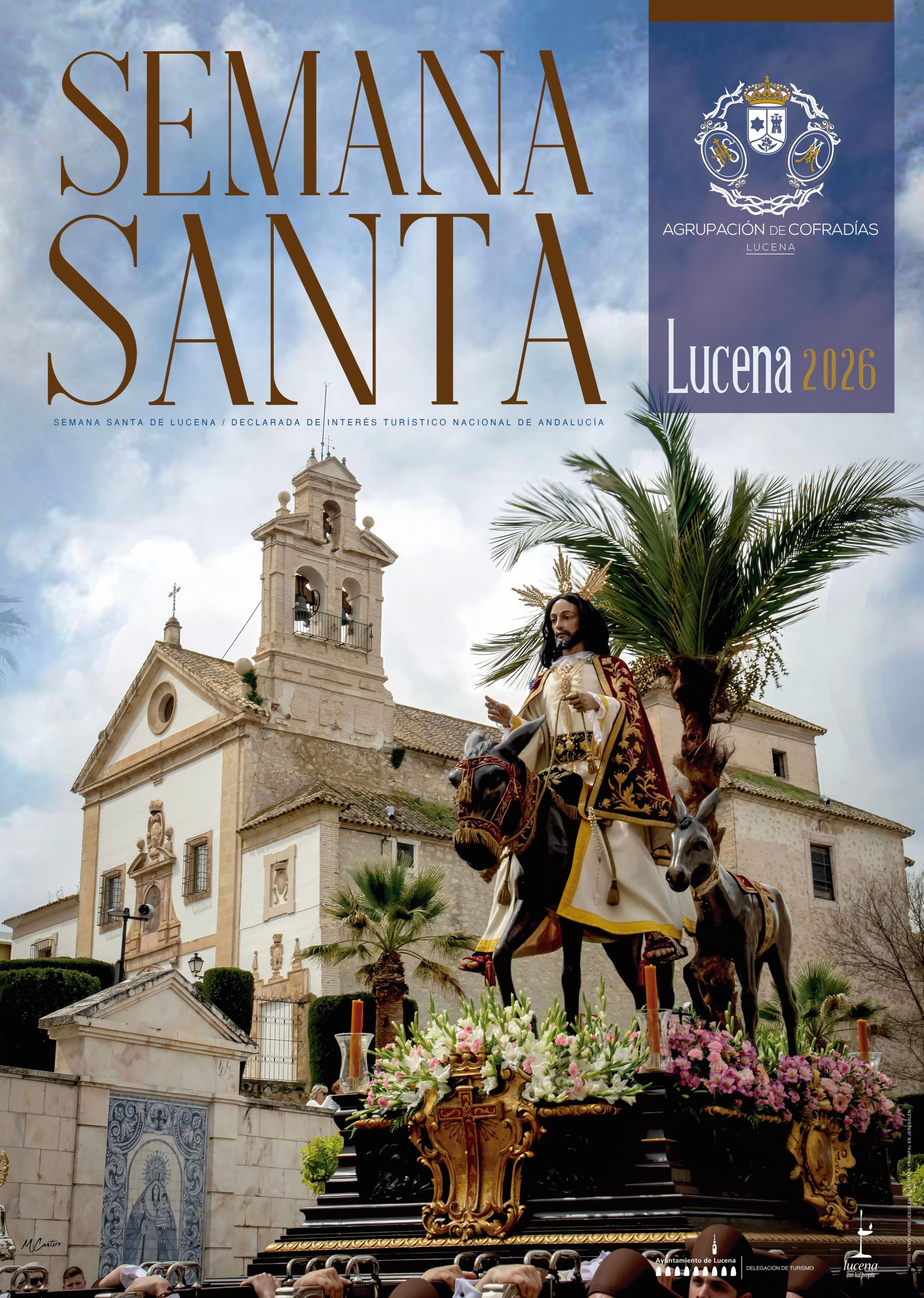
- Cofradía de Nuestro Padre Jesús en su Entrada Triunfal en Jerusalén (Brotherhood of Our Father Jesus on His Triumphal Entry into Jerusalem). The departure from the Major Parish Church of Saint Matthew, often carried on shoulders from within the church itself, and its passage through Curados Street, which in most years is traversed “del tirón” (without any stop for rest). Particularly noteworthy are the sunlight falling upon the palm branches and the large number of children who take part dressed as Hebrews. The processionis accompanied by the sound of Torralbo.
- Real Cofradía de Nuestro Padre Jesús de la Agonía Orando en el Huerto, María Santísima de la Estrella y San Inocencio Mártir (Royal Confraternity of Our Father Jesus in His Agony Praying in the Garden, Blessed Virgin Mary of the Star, and Saint Innocent the Martyr). Its passage through its own neighbourhood, home to the Llanete de la Virgen de la Estrella. There, a musical march specially composed for the Marian title of this brotherhood is performed.
- Hermandad Sacramental de Nazarenos del Sagrado Encuentro de Nuestro Padre Jesús de la Bondad, María Santísima del Divino Consuelo, San Juan Evangelista y San Felipe Neri (Sacramental Brotherhood of Nazarenes of the Sacred Encounter of Our Father Jesus of Goodness, Blessed Mary of Divine Consolation, Saint John the Evangelist, and Saint Philip Neri). The narrowness of Ancha Street as the procession departs from a very small church, the Chapel of the Filipensas, and its progress along this same street. Also noteworthy is its returns to the Santiago District, its historic neighbourhood.
- Cofradía Franciscana de Pasión (Franciscan Confraternity of the Passion). Its passage along Aurora Street before entering its own neighbourhood, and its arrival at the Conventual Church of the Mother of God of the Franciscan Fathers, after nightfall. During its passage down the Cuesta del Reloj, a special drum roll is sometimes performed for Nuestra Señora de las Angustias Virgen de Piedra (Our Lady of Sorrows, known as the Virgin of Stone)
- Cofradía del Santísimo Cristo de la Humillación y Nuestra Señora de los Dolores ‘Servitas’ (Confraternity of the Most Holy Christ of the Humiliation and Our Lady of Sorrows ‘Servites’). The musical acompaniment provided by the band founded within the brotherhood itself, the procession of ‘mantillas’ accompanying the Marian image, and its passage through the town’s central streets.
- Piadosa, Humilde y Fervorosa Hermanda y Cofradía del Santísimo Cristo del Amor y María Santísima de la Paz ‘Campanitas’ (Pious, Humble and Fervent Brotherhood and Confraternity of the Most Holy Christ of Love and Blessed Mary of Peace ‘Campanitas’). Its passage through the Pasaje del Cristo del Amor, known as the “Cuesta del Tomate” (“Tomato Hill”), and the Virgin’s ascent of the Cuesta del Reloj, which demands a considerable effort from the santeros and where the throne performs three complete turns on the same ‘horquillo’. In addition, the ‘paso de misterio’ is particularly noteworthy as it has been taking part in processions for just over a decade and is the largest ‘paso de misterio’ in the town.
- Cofradía de Nuestro Padre Jesús del Valle y María Santísima de la Amargura (Confraternity of Our Father Jesus of the Valley and Blessed Mary of Sorrow). The departure from its own neighbourhood, whose church is the furthest of all the canonical seats of Lucena’s brotherhoods from the historic centre, and the meeting of the two Images in the centre of Plaza Nueva.
- Cofradía y Hermandad de Tambores Enlutados del Santísimo Cristo de la Salud y Misericordia (Cristo del Silencio) (Confraternity and Brotherhood of Mourning Drummers of the Most Holy Christ of Health and Mercy – Christ of Silence). The sounding of the ‘toque de silencio’ as the procession departs, with the whole town in near darkness and illuminated only by the light of the four large candles carried on the throne. The accompaniment of the mourning drums throughout the entire procession, with the participation of more than 900 members of the brotherhood. Particularly noteworthy is its passage along the steps and through the centre of the Paseo del Coso.
- Hermandad de Nazarenos de Nuestro Padre Jesús de la Caridad y Nuestra Señora de las Tristezas (Brotherhood of Nazarenes of Our Father Jesus of Charity and Our Lady of Sorrows). This recently established brotherhood (2015) brightens the morning of Maundy Thursday and is distinguished by its young ‘cuadrilla’ (processional crew), which continues to grow year after year. Its passage through the “Cuesta del Tomate”. The figure of Christ, created in 2015, is the work of a sculptor from Lucena.
- Cofradía de la Santa Fe, Nuestro Padre Jesús en el Sagrado Lavatorio y Nuestro Padre Jesús Preso (Confraternity of the Holy Faith, Our Father Jesus in the Sacred Washing of the Feet, and Our Father Jesus the Prisoner). The departure from the narrow Ermita de Dios Padre chapel, followed by its passage into Flores Street, mark one of the most distinctive moments of its procession.
-
Hermandad y Cofradía de Nuestro Padre Jesús de la Columna y María Santísima de la Paz y Esperanza (Brotherhood of Our Father Jesus of the Colum and Blessed Mary of Peace and Hope). The departure from the Parish Church of Saint James, with its distinctive style that gives the impression the throne is almost running, together with its passage through Flores Street and its return to the Santiago disctrict, are among the most characteristic moments of its procession. The passage of the Christ accompanied by the drumbeat of Torralbo.
-
Cofradía de Nuestro Padre Jesús Caído y Nuestra Señora de la Salud (Confraternity of Our Father Jesus Fallen and Our Lady of Health). Its passage through Flores Street and its return to the Santiago district, where the lights are extinguished and the brotherhood proceeds in near darkness, create one of the most moving moments of its procession. The figure of the Virgin, created in 2010, is the work of a sculptor from Lucena.
-
Hermandad de Nazarenos del Santísimo Cristo de la Sangre y María Santísima del Mayor Dolor (Brotherhood of Nazarenes of the Most Holy Christ of the Blood and Blessed Mary of Greatest Sorrow). Its passage down the Cuesta del Reloj, where a special drum roll is performed for the Christ, and its returns to the neighbourhood, home to the Plaza de Cristo de la Sangre, named in honour of this Titular Image, mark some of the key moments of the procession. Also noteworthy is the cortege of ‘mantillas’ accompanying the Virgin.
-
Venerable Archicofradía de Nuestro Padre Jesús Nazareno (Venerable Archconfraternity of Our Father Jesus the Nazarene). The departure at 6.00 a.m., with the sound of the Torralbo echoing through Curados Street, marks the beginning of a unique day defined by the great purple tide of more than 2.500 members of the brotherhood and an “organised disorder” that spreads throughout the town, on a day that belongs entirely to the Lord. Particularly noteworthy is the group of female penitents accompanying the Lord on His way to Calvary, always anonymous figures veiled in black and carrying a cross and a crown of thorns. The Lord’s three blessings (in Plaza Nueva, the Paseo del Coso, and upon His return to the church), the singing of the ‘Miserere’, the distinctive aroma of burning incense pellets, His passage through Flores Street and Las Mesas Street, and the early hour of His procession ―while it is still dark or as dawn breaks until reaching Plaza Nueva― are among the most significant moments of the day. The figures of Saint Mary Magdalene, Saint Veronica, and Sait John the Evangelist are traditionally carried by young ‘cuadrillas’ (procession crews) taking part in their first ‘santerías’. In the afternoon, the distinctive movement of the Santísimo Entierro (Holy Burial), also continuies the day’s observances. The procession is attended by representatives of the Agrupación de Cofradías of Lucena, together with representatives of all the town’s brotherhoods and confraternities. Upon reaching the Palace of the Counts of Santa Ana in San Pedro Street, the official act of condolence takes place.
-
Cofradía de Nuestra Señora de la Soledad (Confraternity of Our Lady of Solitude). The only processional throne of the day, accompanied by numerous ‘saeteros’ ―with as many as fifty ‘saetas’ having been sung during the procession― together with a large cortege of ‘mantillas’ and more than 800 members of the brotherhood, creates one of the most moving scenes of the day.
-
Cofradía Franciscana de Nuestro Padre Jesús Resucitado y Nuestra Señora de los Ángeles (Franciscan Confraternity of Our Father Jesus Resurrected and Our Lady of the Angels). A festive and joyful day, featuring young ‘cuadrillas’ thanks to the brotherhood’s effort to reduce the weight of the thrones, together with the participation of the youth groups from all of Lucena’s brotherhoods and confraternities. The figure of Christ, created in 2025, is the work of a sculptor from Lucena.

