
Franciscan Confraternity of the Passion


Popular Name:
La Pasión
Foundation:
Canonical Seat:
Iglesia Conventual de Madre de Dios de los RR.PP. Franciscanos
Imagery:
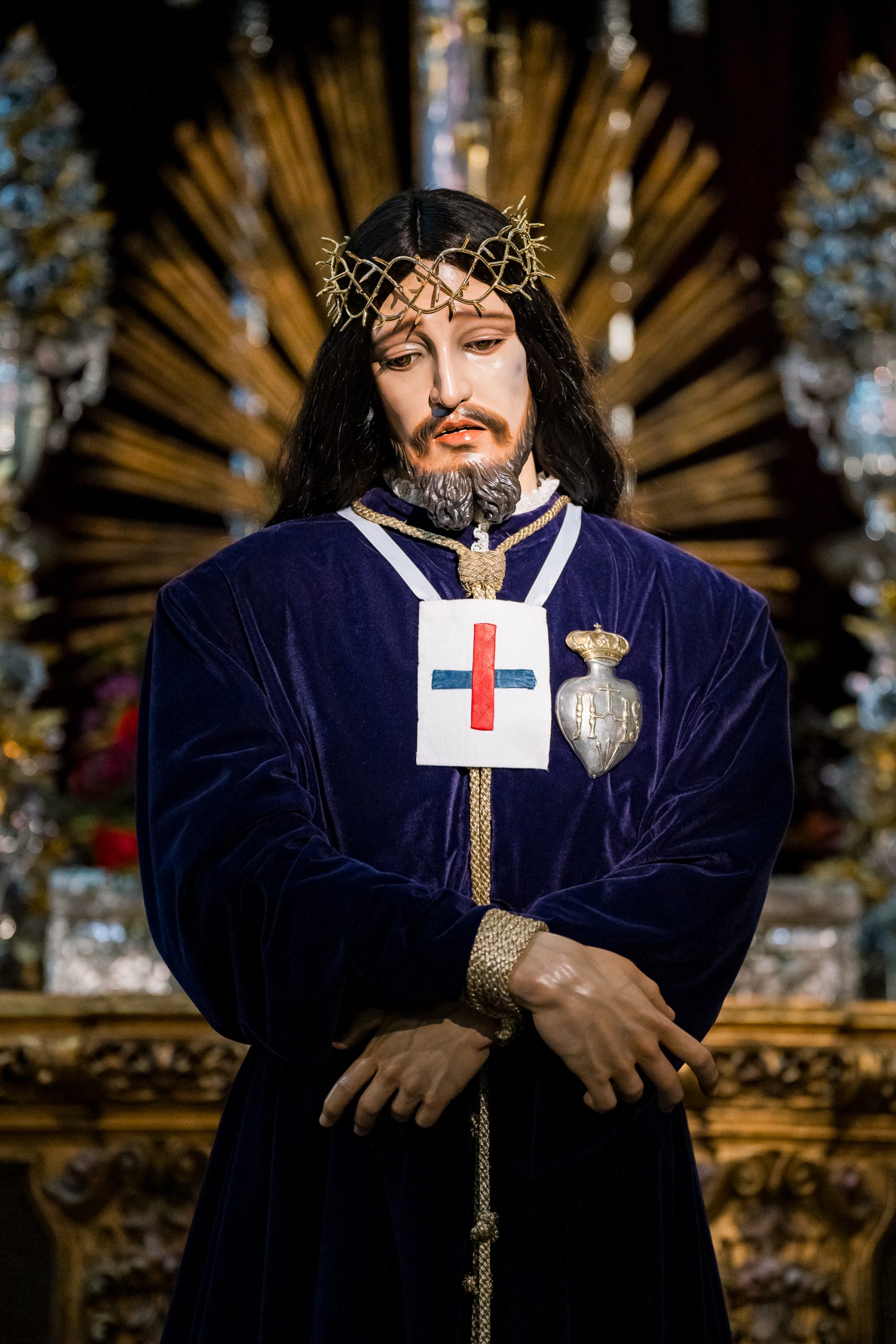
- Our Father Jesus Captive of Medinaceli (Diego de Ramos – 1713) – Throne of 26 santeros
- Our Lady of Anguish, Virgen de Piedra (Blas Molner – 1800) – Throne of 28 santeros
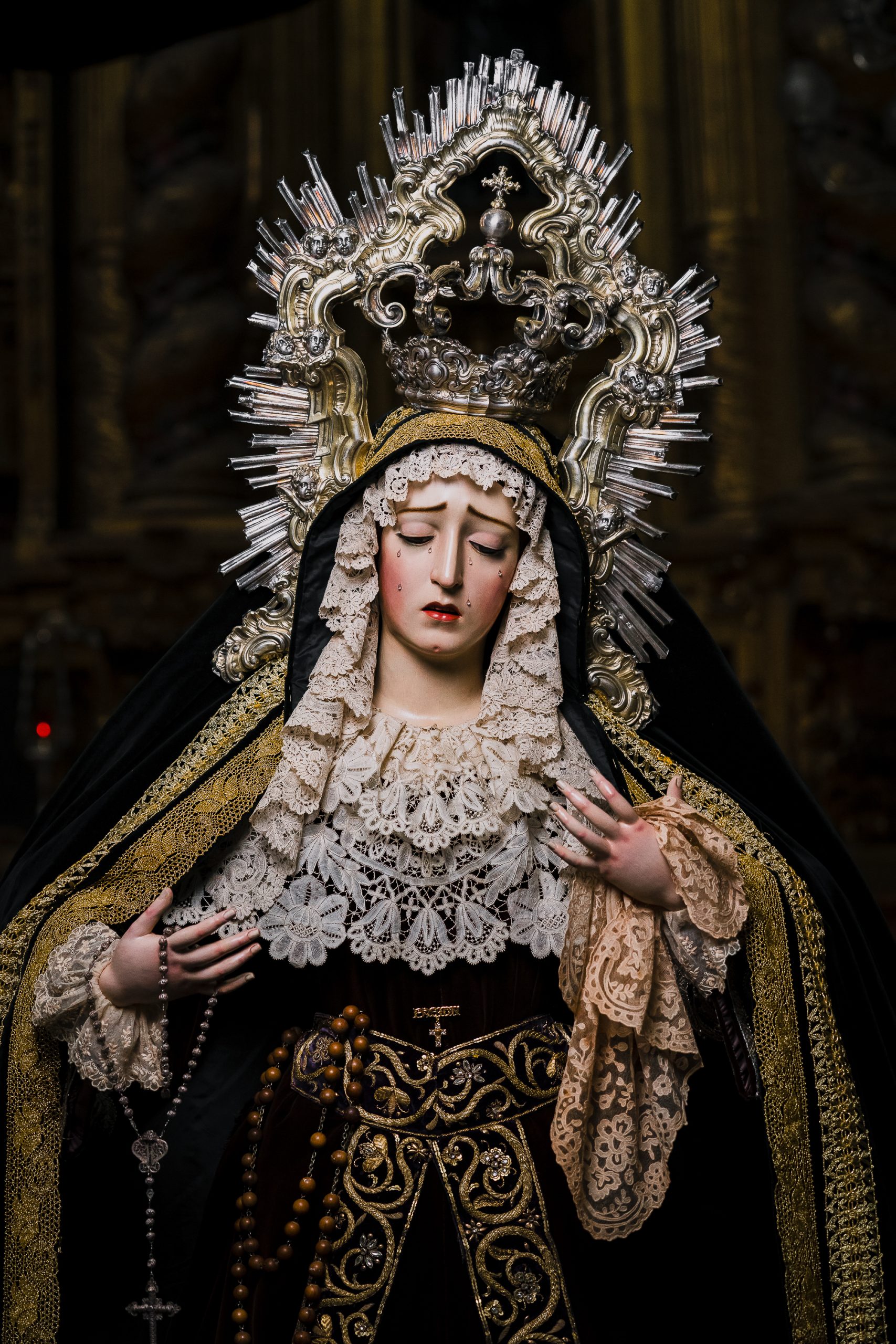
- Mary Most Holy of the Passion and Souls (Anonymous carving from the early 18th century) – Throne of 28 santeros
Hermano Mayor:
Jesús Ramírez Arroyo
Procession Departure:
Holy Monday – 7:00 pm
Number of Brothers:
200
Tunic of the Brothers:
Brown with a white cord, inspired by the Franciscan habit, and an ivory hood. The officers wear a cape of this same colour.
Tunic of the santeros:
White with a red capirote (Christ), white with a maroon capirote (Piedra) and white with a blue capirote (Pasión)
The origin of the Franciscan Confraternity of the Passion dates back to 1576, the year in which the old confraternity was founded. Its procession used to take place on Holy Wednesday. The Archconfraternity of the Passion reached great splendour in the last quarter of the 18th century and the early years of the 19th century, a century during which it gradually faded until it practically disappeared. Its collection of thrones or floats was quite extensive. Below is a list of those that made it up in 1819: the Farewell of Jesus and Mary, the Last Supper, the Prayer in the Garden, the Lord Taken Prisoner, the Binding at the Column, Jesus the Nazarene, the Crucified Christ and Mary Most Holy of the Passion.
On 30 January 1987, the Confraternity of Mary Most Holy of the Passion and Souls and Saint Francis of Assisi — the Marian titular image of the old Archconfraternity of the Passion — joined the Agrupación de Cofradías. On Holy Monday of that year, this new Passion-themed corporation held its first procession with Mary Most Holy of the Passion and Souls under a canopy. In 1989, the Confraternity of the Most Holy Christ of Medinaceli joined this procession, and the following year the Confraternity of the Christ of the Passion did likewise, together with the processional thrones of the Most Holy Christ of Mercy — Christ of los Camisitos, which today presides over the altarpiece of Saint Peter Martyr — and of Mary Most Holy of Anguish.
In 1991 the Christ of Mercy ceased to process, and it was in 1992 that the confraternities and processional thrones that had processed on Holy Monday the previous year merged into a single corporation, under the title of Franciscan Confraternity of the Passion. This is when the present-day Franciscan Confraternity of the Passion, as we know it today, was born.
Jesus of Medinaceli is an image made in 1713, the work of the Granada-born sculptor Diego de Ramos, extensively reworked by Manuel Luque Bonillo in 1995. It underwent restoration work in 2025 by restorers Miguel Ángel Sánchez and Manuel Espejo, who returned the image to the polychromy of the restoration carried out by Muñoz de Toro in the 19th century. During this 2025 restoration, documentation was also found inside the image attesting to both its creation and its subsequent restorations. It comes from the Parroquia del Carmen and later became part of the private oratory of the Villalta family, from where it was transferred to the Franciscan convent. It processes on a magnificent throne of gilded wood, dated to the 18th century, originally from the city of Cádiz and acquired by the confraternity in the city of Córdoba in the 1990s. It was restored in the Guzmán Bejarano workshops in Seville.
Our Lady of Anguish, better known as Virgen de Piedra, is a magnificent work by Blas Molner that arrived in Lucena in the year 1800. It comes from the old Brotherhood of the Veracruz and remained for much of the 19th century in the private oratory of the Villa family, being transferred to the Franciscan convent in 1982. It processes on a silver-plated throne with a maroon velvet backdrop.
Mary Most Holy of the Passion and Souls is a Baroque image by an anonymous author, also restored by Manuel Luque Bonillo in 1995. In 2024 it was skilfully restored by restorers Miguel Ángel Sánchez and Manuel Espejo, recovering the image’s earlier polychromy. She is the original titular image of the old Confraternity of the Passion. Among her regalia is a magnificent chased silver crown, the work of the Cordoban silversmith Damián de Castro. She processes on a silver-plated throne made in the Angulo workshops of Lucena, with valances and a mantle embroidered in appliqué technique at the workshops of Francisco Carrera Paquili in Seville.

*Documentary Source: Notas para la historia de las cofradías lucentinas (Francisco López Salamanca – 2022), Official Programme of Lucena’s Holy Week 2026, and documentation provided by the confraternity itself.
*Photographs: Jesús Ruiz Jiménez ‘Gitanito’ and Jesús Cañete Fernández.

