
Santería
Lucena’s Santería Pride, Identity and Heritage
We, the people of Lucena, are truly fortunate to be the custodians of our most cherished tradition and to have preserved it with dedication and care over the generations. The ‘santería’, recognised in 2025 as Bien de Interés Cultural (BIC, Asset of Cultural Interest), is the defining feature and princpal hallmark of a Holy Week that has held the designation of Festival of Tourist Interest in Andalusia since 2003.
It is far more than a style or technique for carrying the Passion and Glory images in procession. It is a model unlike any other in the world, distinguished by its own liturgy, a ritualised aesthetic, and a distinctive body language that goes far beyond mere function to become a powerful symbolic and anthropological expression. Moreover, rather than following the processional traditions found in neighbouring towns across the Subbética in Córdoba, the ‘santería’ has developed as a fully independent tradition, transmitted orally and lived by all those who embrace it throughout the year. The ‘santería’ also has its own distinctive aesthetic codes, evident in the way the processional throne is carried (‘santear’), the arrangement of the ‘cuadrillas’, the gestures of the ‘santeros’, and the way movement and solemnity are understood in procession, creating a visual identity that is instantly recognisable.
The very structure of the ‘cuadrillas’ also creates deep personal bonds among their members. Although each ‘cuadrilla’ is formed for a specific procession, the shared effort, companionship, physical commitment, and emotional intensity of ‘santear’ together create bonds that, in many cases, last a lifetime. The ‘santería’ is not only a distinctive way of carrying sacred images in procession, but also a way of relating to one another, of belonging, and of building community around a shared experience that is deeply rooted in Lucena’s identity.
The costant enthusiasm and curiosity shown by children and young people for the ‘santería’ and brotherhood life ensure that its traditions, rituals, codes, and forms of participation will continue to be transmitted from one generation to the next. It is a living heritage that continues to be transmitted naturally in the streets, in familiy homes, through the ‘juntas’ and ‘cuadrillas’, preserving one of the most distinctive and valuable expressions of Spain’s intangible cultural heritage.
Origins and History of a Living Tradition
Like many other Holy Week celebrations in Andalusia, Lucena’s Holy Week traces its origins to the 16th century, although earlier precedents can be found. It became firmly established during the 17th century and the first half of the 18th, when Lucena experienced a flourishing of religious and cultural life, marked by the foundation of new brotherhoods and the growth of Passion devotion. This period was followed by a significant decline in the 19th century, brought about by the ‘desamortizaciones’ (ecclesiastical confiscations) and the prohibition of public religious celebrations.
In 1838, the Archconfraternity of Our Father Jesus the Nazarene (Archicofradía de Nuestro Padre Jesús Nazareno) abolished the old carrying system known as the ‘paso a correón’ —in which broad leather straps attached to the bearer’s chest were used to carry the processional float, and which today survives only in Casabermeja (Málaga)— and introduced shoulder-borne carrying. It was this very change that marked the beginning of the aesthetic and symbolic evolution that would eventually give rise to today’s ‘santería’.
Perhaps the phenomenon of ‘santería’, which took shape in the closing years of the 19th century and became deeply rooted in popular tradition, served as a genuine bulwark against the misunderstanding ―and even hostility― that public religious expressions faced in many other parts of Spain.
The term ‘santero’ ―which the people of Lucena aptly adopted to refer to the former ‘insignieros’ or bearers of the processional ‘pasos’, descendants of the earlier ‘correonistas’―, first appeared in print in 1907, in an article published in the issue no. 99 of the local newspaper ‘La Alianza’, reporting on a procession with the image of Saint Teresa, referred to «the so-called ‘santeros’ who carried her…». The word ‘santería’ derives from the act of carrying the ‘santos’, the colloquial name given in Lucena to the processional thrones.
From the 1970s onwards, Lucena witnessed a remarkable revival, with the re-establishment of several brotherhoods, the expansion of its processional heritage, and the gradual consolidation of the ‘santería’ as the exclusive way of carrying the processional thrones. Today, processional images take the streets of Lucena on every day of Holy Week, following a tradition that has become the town’s defining hallmark and one unlike any other in the world. Alongside the ‘santerías’ of the Passion, those of the Glory celebrations take place throughout the year. The most renowned is that of Mary Most Holy of Araceli (María Santísima de Araceli), Patroness of Lucena and of the Andalusian countryside, whose principal procession is held on the first Sunday in May.


A Processional Tradition unlike any other in the World
La santería en Lucena es el modo excepcional de procesionar los tronos sobre el hombro, a cara descubierta y al ritmo del tambor, cuyo valor antropológico, etnográfico y emocional trasciende lo estandarizado. Es un rito único en el mundo repleto de señeros valores estéticos y profundamente humanos, siendo particular el hecho también de que no existen relevos y no se ensaya: se vive en plenitud en el instante procesional. Además del tambor, instrumento esencial para el desarrollo de la santería, existe también otro toque característico y propio de Lucena, el torralbo, una corneta que anuncia la llegada de determinados pasos con una melodía metódica.
Bajo las órdenes del manijero, santero designado por la cofradía para dirigir el paso al toque del timbre, la cuadrilla (compuesta por 24, 26 o 28 varones, 36 en el caso del trono de María Santísima de Araceli en la procesión el día de su onomástica) guía sus pasos al son del tambor variando en función de la imagen, dramatizando con ello la escenificación pasionista. Suelen portar cada uno entre 40 y 50 kilos de peso, dependiendo del trono.
El santero no interpreta un papel: encarna una herencia. Su paso firme y su disciplina compartida son expresión de un patrimonio inmaterial que se transmite de generación en generación, no existiendo reglas escritas. En este modelo se resume la forma de entender la religiosidad de un pueblo. Las cuadrillas se componen temporalmente para cada santería y sus miembros se eligen por afinidad, respeto y experiencia, sin que una misma cuadrilla se reproduzca para diferentes santerías más de una vez en la vida. Esta singularidad otorga a cada estación penitencial un carácter único e irrepetible, cargado de emoción y de un valor especial para quienes la viven.
El manijero lidera la cuadrilla y el porrillas, siempre desde fuera del trono, le asiste. También destacan en la cuadrilla los esquineros (quienes ocupan las esquinas del trono) y el cuadrillero, figura responsable del nombramiento del manijero que, a día de hoy, solo se conserva en las cofradías de Nuestro Padre Jesús Nazareno, Nuestro Padre Jesús en su Entrada a Jerusalén y Nuestra Señora de la Soledad. En los restante casos, es la propia cofradía o hermandad de Pasión o Gloria la que designa al manijero seleccionado entre los aspirantes a tal honor que hacen saber su intención de mandar el paso mediante una carta remitida a la institución, siendo su Junta de Gobierno la encargada de nombrarle con una antigüedad mínima, en la mayoría de los casos, de un año.
Importante resaltar también que la santería ha generado un vocabulario propio que la define y que acumula centenares de expresiones propias, muchas de ellas provenientes de términos ligados al campo.No debemos olvidar que la economía de Lucena ha estado históricamente vinculada al mundo agrícola. De ahí que la santería se articule en torno a una cuadrilla de santeros —en clara analogía con las cuadrillas de jornaleros del campo—, organizadas y dirigidas por un manijero —figura equivalente al capataz que ordenaba y coordinaba las faenas de los trabajadores—. También recoge términos relacionados con el trabajo en las velonerías y en las tinajerías, de clara importancia en el municipio, e incluso del mundo taurino, como paseíllo o cortarse la coleta (o el capirote).
The Journey to Santería Day
Once the ‘manijero’ has been appointed, the annual cycle of the ‘santería’ begins with the ‘recogida del timbre or campana’ (the receiving of the bell) which takes place at the end of the ‘santería’ immediately preceding his own. This ceremony symbolically marks the beginning of the manijero’s commitment and is usually followed by a celebration known as the ‘mojar el timbre’ or ‘remojá de la campana’ (the ceremonial toast of the bell). From that moment on the ‘manijero’ begins to ‘aviar’ (assemble) his ‘cuadrilla’, carefully selecting each ‘santero’. The ‘manijero’ personally visits the ‘chosen santero’ ―usually without prior notice― to invite him to become part of the ‘cuadrilla’. The commitment is sealed with a handshake and a toast with a glass of local wine, a gesture that symbolises mutual respect and the value of one’s word. Nor document or contract is required: the spoken word alone is enough, upheld by tradition, trust, and honour.
This is followed by the ‘juntas de santeros’, highly symbolic gatherings where food and drink are shared in a spirit of fraternity, with everyone drinking from the same glass and eating from the same ‘perol’ (traditional pan). During these gatherings, bonds between the ‘santeros’ are strengthened, trust in the ‘manijero’ is reinforced, and the oral traditions of the ‘santería’ are kept alive. They are accompanied by the sound of the drum (and, where appropiate, the ‘torralbo’) and by the ‘saetas de santería’, renowned for their power, intensity, and irony. Typically, between four and six ‘juntas’ are held, mainly during the final months of the year and throughout Lent, while those of the Glory ‘santerías’ take place at other times of the year. Among the most important are the following ‘juntas’: he ‘junta oficial’ (attended by members of the brotherhood, local authorities, and ‘saeteros’); the ‘junta de esquina’ (held exclusively for the ‘santeros’ assigned to a particular corner of the processional throne); the ‘junta de sitios’ (during which the ‘manijero’ assigns each ‘santero’ their position beneath the throne); and the ‘junta de marca’ (where an experienced ‘marcaor’ —usually a retired ‘santero’— measures each ‘santero’ so that, using wooden wedges, the shoulders of all the ‘santeros’ are brouhght to the same height beneath the procesional throne). At one of these ‘juntas’, the ‘cuadrilla’ traditionally presents the ‘manijero’, as a gesture of courtesy, with the ‘timbre’ or ‘campana’ (bell) that will be used to signal the beginning and end of each ‘horquillo’. This bell, of Málaga origin, was first introduced in Lucena in the late 19th century for the processional thrones of the Brotherhood of the Vera Cruz and the Christ of Humility (Cofradía de la Veracruz y del Cristo de la Humildad). The ‘galleta del timbre’ is often especially significant, as its design reflects the identity of the brotherhood responsible for the processional throne. At every ‘junta’ ―and especially during the ‘junta de marca’―, the ‘manijero’ explains to his ‘santeros’ how he wishes the ‘santería’ to be carried out. He also emphasises one of these defining characteristics: the ‘santería’ is never practiced. It comes to life only on the day of the procession, with no opportunity for prior practice beyond the experience that each ‘santero’ has acquired over the years. Although it is not considered a ‘junta’, it is customary for the ‘manijero’ and his ‘esquineros’ to walk the route in the days leading up to the procession. This allows them to visit the streets along the itinerary, discuss and assess different aspects of the forthcoming ‘santería’, and identify any street furniture, overhead cables, or other obstacles that might affect the procession.
Finally, it should be noted that, although the ‘cortejos de mantillas’ do not follow the same ritual as the ‘juntas de santeros’, they have their own distinctive protocol, organisation, and ceremonial practices. The ‘manijero’ appoints the ‘manijera de mantillas’ —usually his wife, mother or sister— who is likewise responsible for assembling (‘aviar’) her group of ‘mantillas’ and coordinating the brotherhood’s female procession. In some cases, such as the procession accompanying Our Lady of Solitude (Nuestra Señora de la Soledad), it can number as many as one hundred women.
During Lent, it is customary to hold gatherings popularly known as ‘juntas de mantillas’, during which guidance is given on dress, protocol, and conduct during the penitential procession. In addition, the ‘manijera’ traditionally presents each ‘mantilla’ with a small gift and the identifying sash in the brotherhood’s colours, which they will wear on the day of the procession.


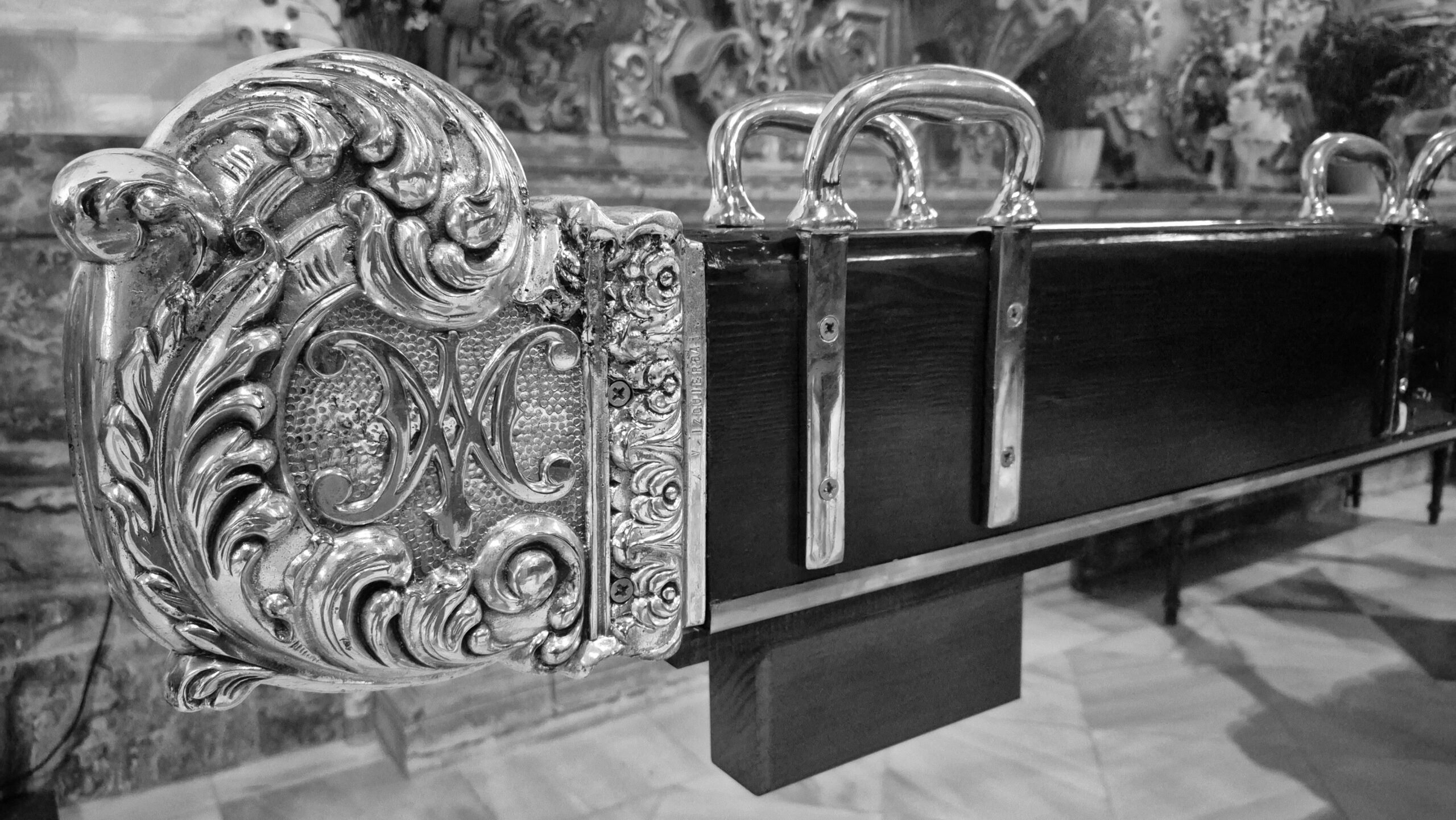


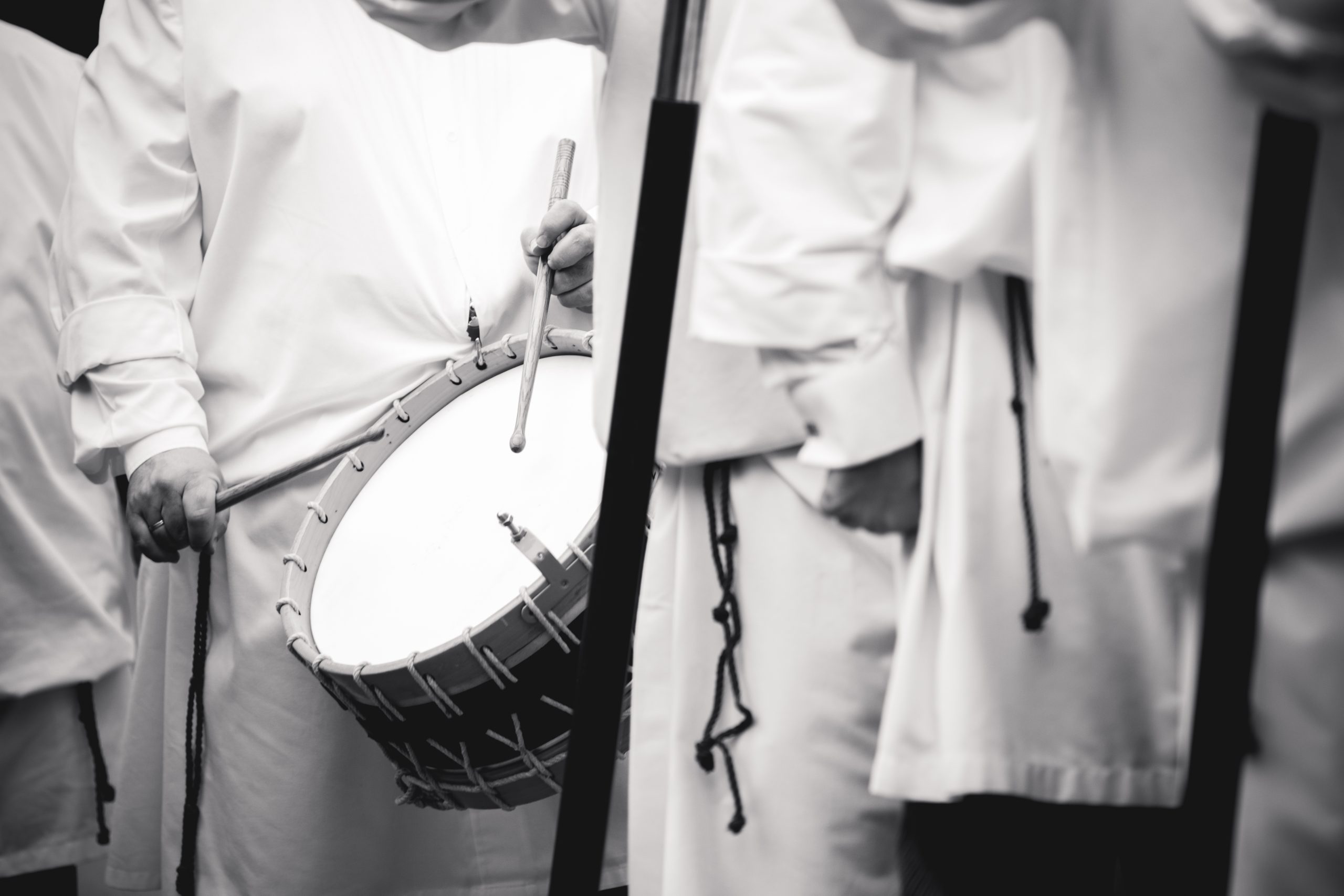
When Lucena Takes to the Shoulder: The Day of the Santería

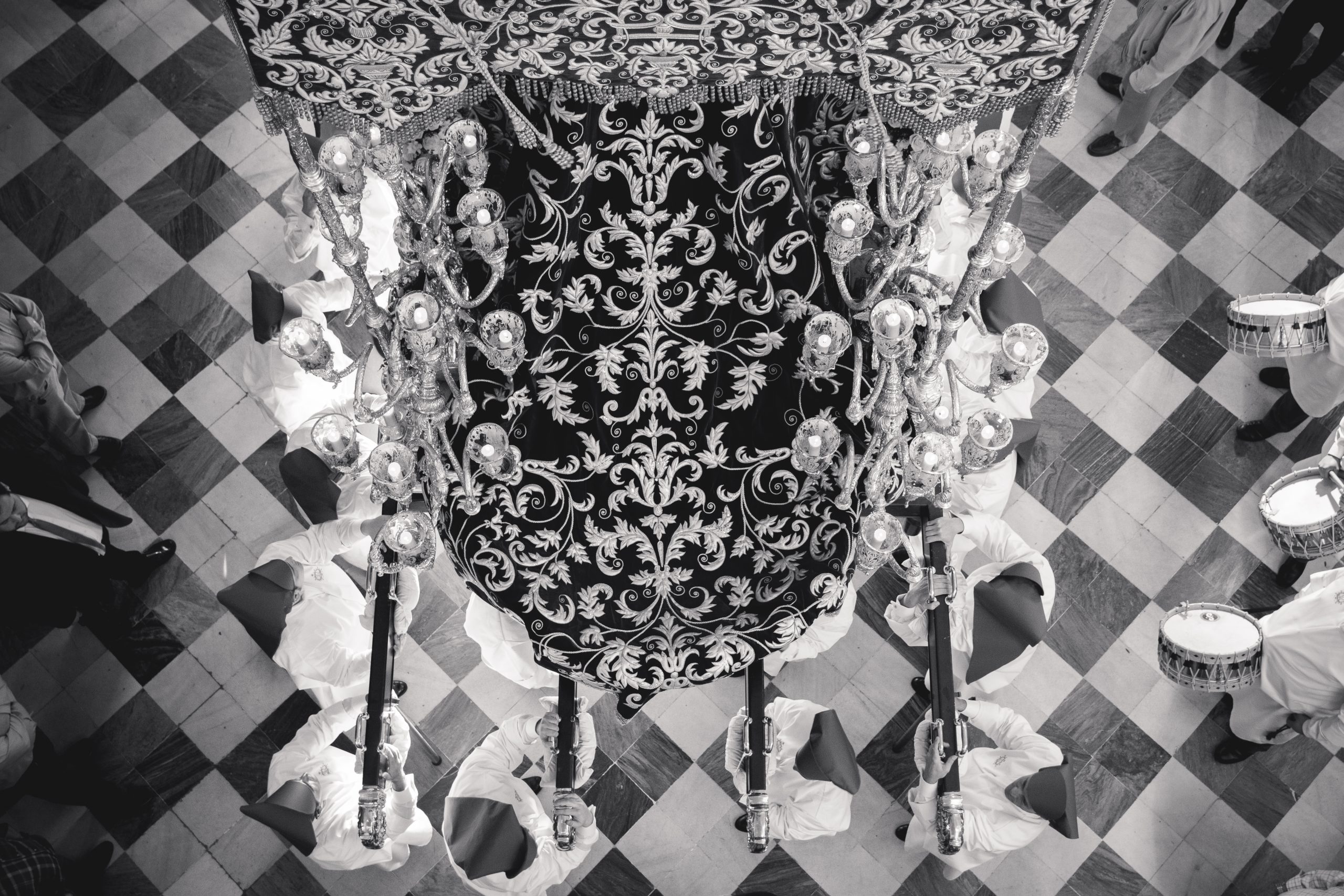
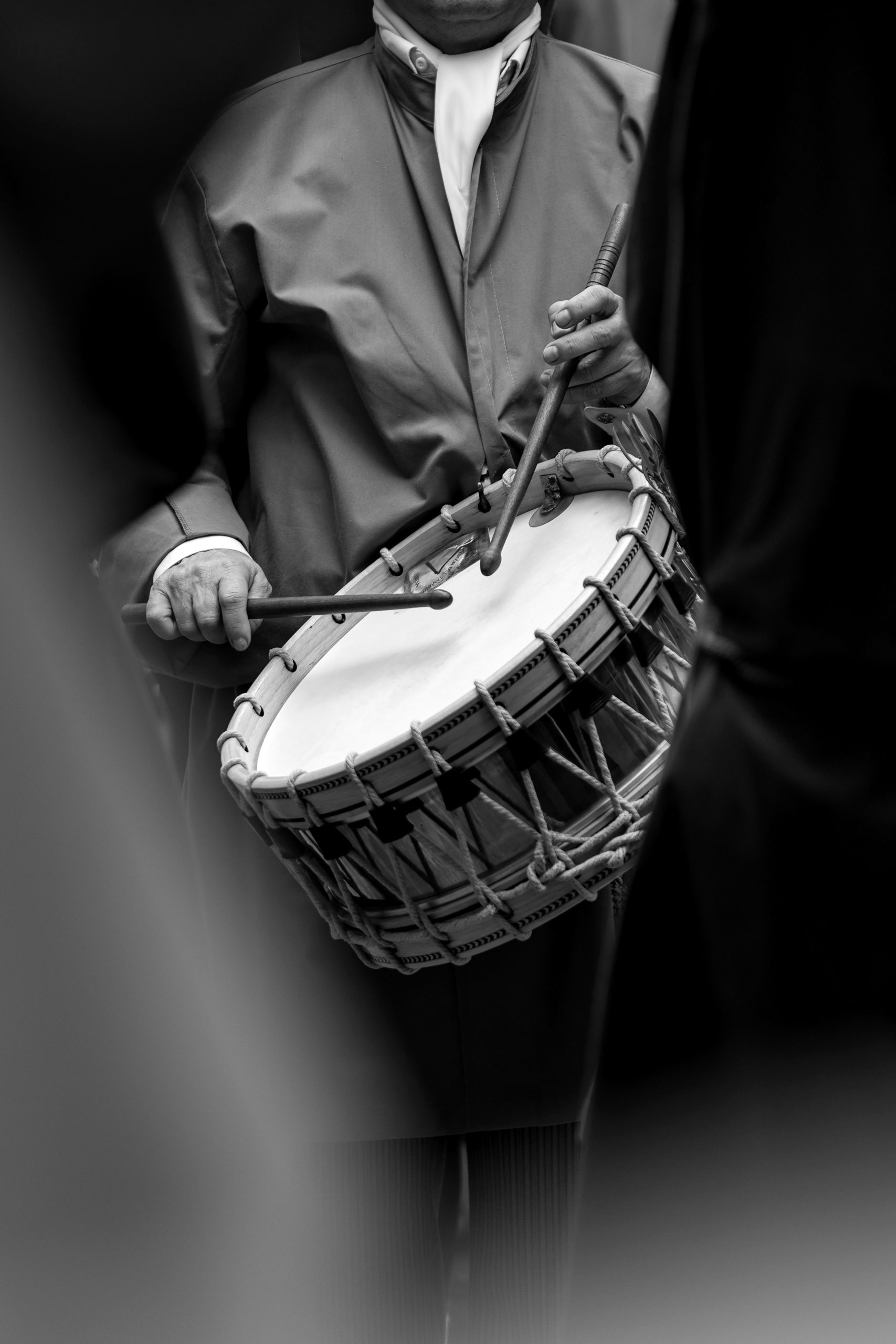
El día de la santería comienza con el ritual de vestir al santero, quien debe contar con ayuda de una persona experimentada: pantalón de medio ancho, botas negras, camisa sin cuello, faja (ropa de algodón de dos metros que, sobre la camisa, se lía en la cintura para salvaguardar los riñones del peso), cinto (correa de varias cinchas que, colocada sobre la faja y bajo la túnica, refuerza la función protectora), capirote sin cubrir el rostro, pañuelo blanco al cuello y túnica del color de la cofradía o hermandad, a lo que se suma cordón en algunos casos. Siempre bien aseado y afeitado, sin lucir pulseras ni relojes aunque sí gemelos, mostrando gran elegancia. Las túnicas de los santeros (entonces correonistas) fueron, en origen, las mismas que las de los hermanos, ya que en 1688 el cardenal Salazar impuso, mediante decreto, que penitentes, disciplinantes y cofrades en general procesionaran con el rostro descubierto. Es en este contexto donde puede situarse el origen de la túnica tradicional lucentina,que, probablemente, se configuraría de manera definitiva en fechas posteriores. Ya en la década de 1920, se introduce para los penitentes un atuendo de clara inspiración sevillana, incorporando el cubrerrostro. Sin embargo, los santeros permanecen fieles a la tradición, procesionando siempre a cara descubierta. A lo largo del siglo XX, la indumentaria y la disposición del cortejo irán perfilándose progresivamente, incorporando detalles que hoy se consideran característicos como el acortamiento de la túnica, el uso de camisa blanca bajo esta, o el pañuelo blanco al cuello.
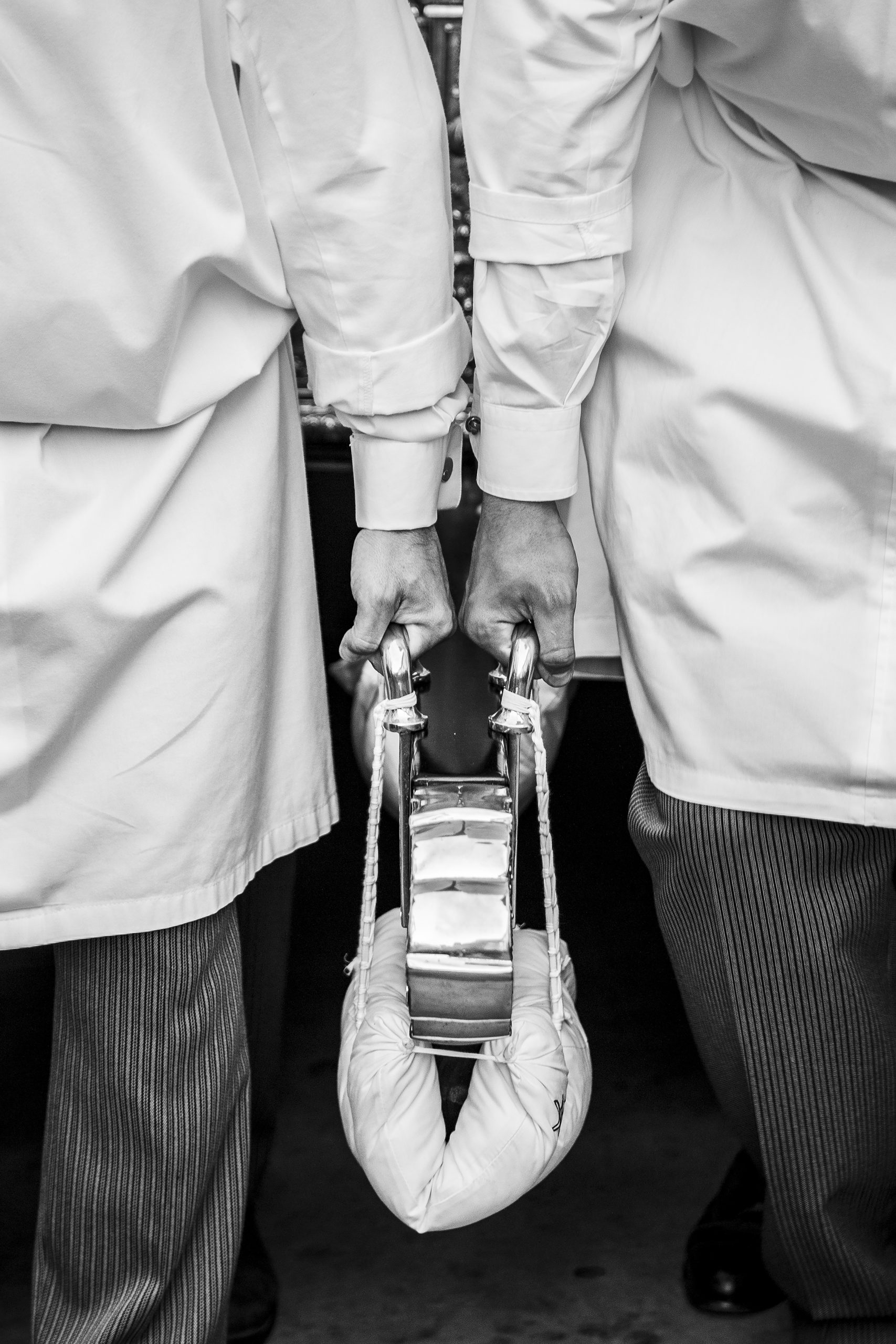
Tras este emotivo momento solemne e íntimo, en el que suele participar la familia más cercana y que habitualmente se realiza en el hogar, el santero acude a la casa de su manijero (y del cuadrillero en el caso de las cofradías que mantienen esta figura) para compartir un café, regado con anís y dulces típicos de la época como pestiños o magdalenas. Aquí el manijero dará las últimas indicaciones a su cuadrilla antes de iniciar el tradicional paseíllo de todos los santeros hacia el templo, acompañados de un toque característico de tambor y del torralbo, en el caso de los pasos que llevan este acompañamiento musical. También participa en este paseíllo el cortejo de mantillas, en los pasos que van acompañados de esta figura. A la llegada al templo, los santeros amarran sus almohadillas (saco rectangular de tela relleno de lana o borra) al varal y a los asones (asideros que tienen los tronos en los varales) para envolver la cuña de madera (previamente dispuesta tras la marca) y que ayuda a amortiguar el peso del trono en el hombro. En ocasiones, se ayudan de otra persona para esta tarea.
The Ritual Takes to the Streets: When the Processional Throne is lifted onto the Shoulder
Cuando el reloj marca la hora y el paso (que en Lucena se denomina santo) se ubica en el atrio del templo, transportado desde los asones al son del Himno de España interpretado por la agrupación musical o banda de cornetas y tambores que espera en la plaza, tiene lugar la echá al hombro en tres tiempos (muslos, sangría y hombro) o de un tirón (directo al hombro desde el suelo), a las órdenes del manijero «¿Estáis?» y tras responder el santero de la esquina mala «¡Puestos!», confirmando así que cada santero ocupa su lugar: esquina, contraesquina, pata, contrapata, varal, repisón y cimbra (en algunos casos).
Aquí comienza la santería cuyo paso, siempre al son de los tambores que se ubican tras el trono (en grupos de entre tres y cinco, normalmente), difiere si se trata de Cristo, Virgen o paso de misterio —existiendo el maceteaó, el reposaó, el botaó o el pingaó—, dejando atrás la santería de contras protagonista del pasado siglo XX. Dentro de unos cánones establecidos, el manijero adapta a su gusto personal el paso que, salvo en las imágenes marianas o crucificados, suele tener diferencias en su ejecución entre los santeros de la delantera y la trasera del trono. En los pasos acompañados por el torralbo, la persona que lo interpreta (a quien también se denomina torralbo) se ubica delante del paso para anunciar su llegada, ataviado con la misma túnica de santero que el resto de la cuadrilla
El santero debe santear con el cuerpo y el cuello erguido, por estética y como prueba visible de que cumple su función en su sitio y lleva el peso que le corresponde, siempre abrochao a su sitio. Las órdenes del manijero para comenzar a andar (llamado tomá) se emiten, tras un siseo, con el toque de campana. Mientras el trono no está en movimiento, se sustenta sobre unas horquillas realizadas en madera o metal y rematadas con una pieza de hierro en forma de u. Esta acción se denomina ahorquillar o ajorquillar. Por su parte, el tiempo que el trono permanece sobre los hombros de los santeros, se denomina horquillo. Cuando se interpreta alguna saeta, muy habitual en la Semana Santa de Lucena, el trono suele realizar el movimiento sin ir hacia delante, hasta que ésta termina y el manijero dice «¡Vámonos!» y continúan su trayecto. Es habitual que familiares y personas allegadas a la cuadrilla permanezcan cercanos al trono durante todo el recorrido, por si surge alguna necesidad y para suministrarles agua.
El proceso de encierro del paso se ejecuta de manera inversa al de su salida. Tras la indicación del manijero para que los santeros retiren las horquillas con ayuda de personas allegada a la cuadrilla —«¡Fuera horquillas!»—, el paso desciende de forma ordenada hasta reposar, siguiendo siempre la secuencia tradicional de sangría, muslos y suelo, y ejecutándose invariablemente en tres tiempos. Al término, es habitual que una persona muy allegada al santero le entregue en la iglesia una pelliza, prenda de abrigo para resguardarse del cambio de temperatura al término del esfuerzo realizado.
Una vez finalizada la santería, tiene lugar el refresco, comida de cuadrilla celebrada el mismo día y a la que acuden los santeros, aún con su túnica, junto a sus esposas y donde se comenta la santería recién vivida. Semanas después, el manijero organiza el gasto, último acto simbólico de los santeros y con el que se disuelve la cuadrilla.
Santería and the Town: Heritage and Cultural Impact
The ‘santería’, in both its Passion and Glory expressions, not only shapes Lucena’s confraternal calendar but also stands as a genuine driving force behind the town’s cultural economy. A wide network of traditional crafts and specialist skills revolves around it: workshops dedicated to religious sculpture, embroidery, gold and silversmithing, bronze work, and woodcarving; the composition of processional music, the craftsmanship behind the floral decorations for the processional thrones; the upkeep of ‘casas-hermandad’ (brotherhood houses) and confraternity museums; as well as sectors such as hospitality and retail, all of which find a vital source of activity in these celebrations. Together, these elements make the ‘santería’ a living heritage that fosters community, whrere tradition, culture and development are inextricably intertwined.
Lucena Today: A Model of Authenticity with Global Reach. From the solemn presentation of the ‘campana’ to the ‘manijero’ to the final roll of the drum making the end of the penitential procession, the ‘santería’ beats as a collective identity, as a shared inheritance and a unique way of living and understanding the world. It is far more than an inherited ritual: it is a way of life transmitted from one generation to the next, an intangible and universal legacy that cannot truly be explained in words: it must be lived, felt, and shared.


The ‘santeros’ assigned to each corner of the processional throne occupy the following positions: ‘esquinero’, ‘contraesquina’, ‘pata’, ‘contrapata’, ‘varal’, and ‘repisón’ Each group is led by its own ‘esquinero’, although all remain under the authority of the ‘manijero’. For the purpose of coordinating the movement of the processional throne, it is divided into two sections: the front (‘delantera’), comprising the ‘santeros’ at the manijero’s corner and the left corner; and the rear, (‘trasera’), comprising the ‘santeros’ at the corners known as the ‘esquina mala’ and the ‘esquina de la salud’. The ‘manijero’, the left corner and their two ‘varales’ together form what is known as the ‘escaparate’ or ‘frentá’.

Document source of the text: Book ‘Nota para la historia de las cofradías lucentinas’ (‘Notes for the History of Lucena’s Brotherhoods and Confraternities’) by Francisco López Salamanca, Lucena’s official chronicler (2022) / Article ‘Algunas notas sobre la santería lucentina’ (‘Some Notes on Lucena’s Santería’) by Manuel Guerrero Cabrera.
Photographs: Jesús Cañete Fernández
Processional throne infographic: DIEV Diseño Evolutivo

