
Magna Pasionista (Great Passion Procession)
Churches and Sanctuaries
Lucena has a total of eighteen religious buildings, five of them parish churches, although in past centuries it was home to more than thirty. Presented below are those that take part in the Great Passion Procession, as they serve as the churches from which the participating cortèges depart or to which they return during this historic event.
To complete the total number of Lucena’s churches, the following should also be included: The Convent Church of Saint Martin of the Augustinian Recollect Nuns, the Church of the Immaculate Conception, the Church of St. John the Baptist and the former Hospital of St. John of God, the Royal Sanctuary of Our Lady of Araceli, the Hermitage of Our Lady of the Aurora, the Church and Convent of Saint Joseph and Saint Teresa of the Discalced Carmelites, the Hermitage of the Moroccan Christ, and the churches in the outlying districts of Jauja and Las Navas del Selpillar.

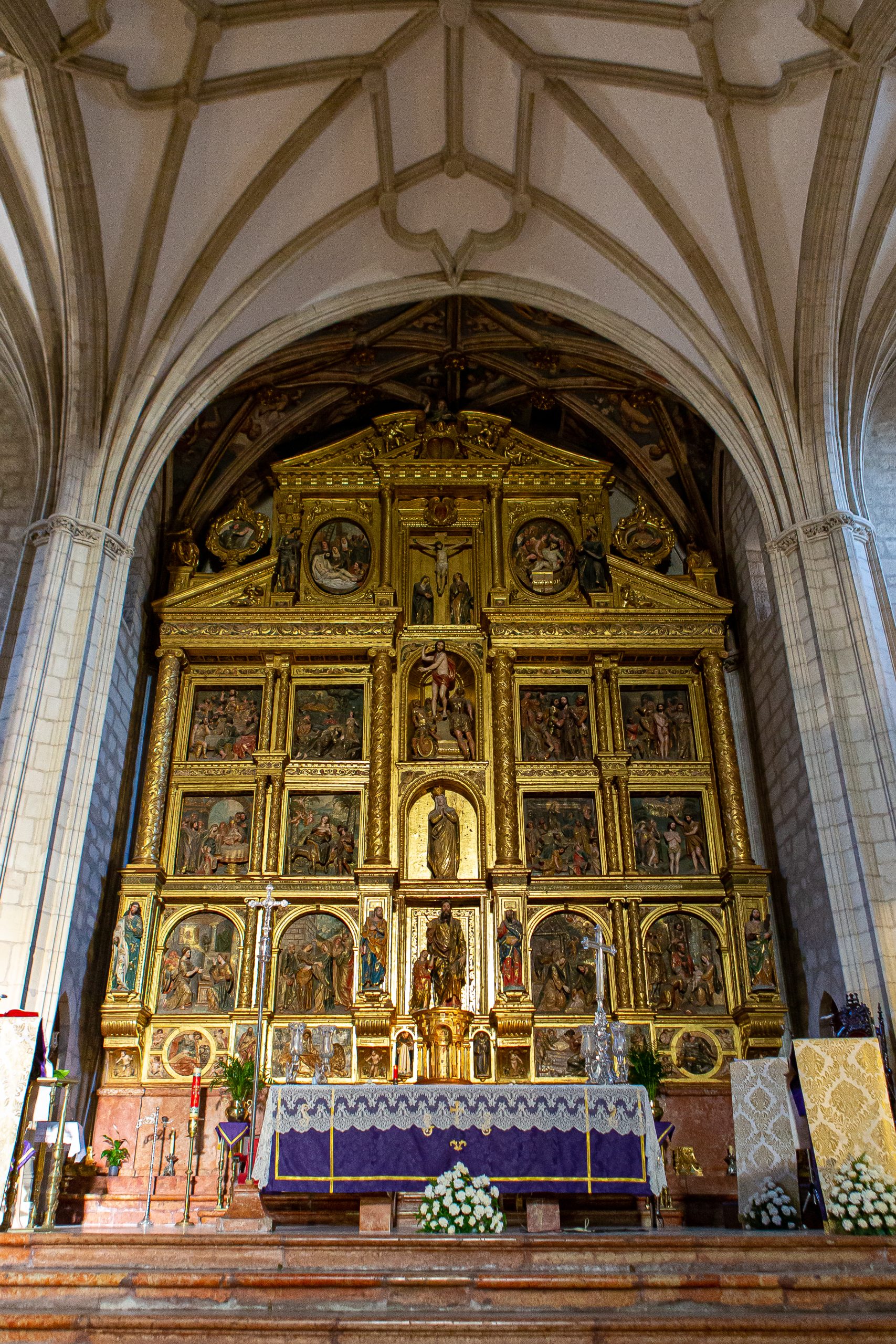


Major Parish Church of Saint Matthew the Apostle
The Major Parish Church of St. Matthew the Apostle is considered the cathedral of the Subbética region of Córdoba. This church reflects the artistic principles of the Gothic-Mudejar and Renaissance styles. This was the site of the town’s former synagogue and, later, its mosque, until it was adapted for Christian worship in 1240 following the conquest of the then town of Lucena by the forces of Ferdinand III. It was dedicated to this Evangelist because the surrender took place on his feast day.
The actual church began in 1498 with the chancel,, together with the sacristy doorway and the exterior doorway of Our Lady of the Umbría. The remainder of the building is Renaissance in style and consists of three aisles with large piers supporting pointed arches of Mudejar inspiration, together with a main façade showing clear Classical influences.
Inside, the principal highlights is the Mannerist high altarpiece whose architectural structure was created by Jerónimo Hernández and whose sculptural figures were carved by Juan Bautista Vázquez the Elder. In addition, the church contains several smaller altarpieces and chapels housing the images that begin their Holy Week penitential processions from this church.
Also of particular note is the magnificent Chapel of the Sagrario, built between 1740 and 1772 by the Confraternity of the Blessed Sacrament, following the designs of the local architect Leonardo Antonio de Castro. It is considered one of the jewels of Córdoba’s Baroque heritage and one of the finest sculptural work of the Andalusian Baroque.
The confraternities and brotherhoods with canonical seat here are the Brotherhood of Our Father Jesus in His Triumphal Entry into Jerusalem; the Confraternity of the Most Holy Christ of the Humiliation and Our Lady of Sorrows (“Servitas”); the Pious, Humble and Fervent Brotherhood and Confraternity of the Most Holy Christ of Love and Mary Most of Peace (“Campanitas”); the Confraternity and Brotherhood of Mourning Drummers of the Most Holy Christ of Health and Mercy (Christ of Silence); The Brotherhood of Nazarenes of Our Father Jesus of Charity and Our Lady of Sorrows; and the Venerable and Illustrious Archconfraternity of the Most Holy Sacrament (not affiliated to the Agrupación de Cofradías).
In the Great Passion Procession, the following processional cortèges depart from this church:
- Our Father Jesus on His Triumphal Entry into Jerusalem
- Our Father Jesus of Charity
- Most Holy Christ of the Humiliation
- Our Father Jesus of the Crucifixion
- Most Holy Christ of Health and Mercy – Silence
Parish Church of Santo Domingo de Guzmán
The Parish Church of Santo Domingo de Guzmán is one of the five parish churches in the municipality.
Ancient convent of the Minims, also known as the Victorians, built on the site of a hermitage dedicated to Saint Francis of Paola, which had been errected in fulfilment of 1680. Once the hermitage was completed in 1690, it remained as oratory until the religious settled in adjoining houses purchased by the town, founding a hospice, where the Convent of Saint Francis of Paola would later be built.
Only the doorway of the ancient hermitage survives, while the rest of the church was built in 1730 to the designs of Brother Juan Rodríguez de Ocampo. The stucco decoration of the crossing and the magnificent Baroque altarpiece, attributed to Francisco José Guerrero, are particularly noteworthy.
Also noteworthy are numerous works of art, such as the image of Christ of the Blood, of colonial origin and made of maize pith and acacia wood; the statue of Saint Joseph, from the Granada workshop of José de Mora; and the image of Saint Mark, attributed to the sculptor José de Medina. The ancient Convent of Saint Francis of Paola, adjoining the church, was secularized in the 19th century, housing state offices, schools, a Civil Guard barracks, and currently a hotel.
The confraternities and brotherhoods with canonical seat in the same are the Royal Confraternity of Our Father Jesus in His Agony Praying in the Garden, Blessed Virgin Mary of the Star, and Saint Innocent the Martyr, the Brotherhood of Nazarenes of the Most Holy Christ of the Blood and Blessed Virgin Mary of the Greatest Pain, the Parish Grouping of Our Lady of Sorrows (not grouped), and the Brotherhood of Saint Joseph the Artisan.
In the Great Passion Procession, the following processional cortèges depart from this church:
- Our Father Jesus in His Agony Praying in the Garden
- Our Lady of Greatest Sorrow

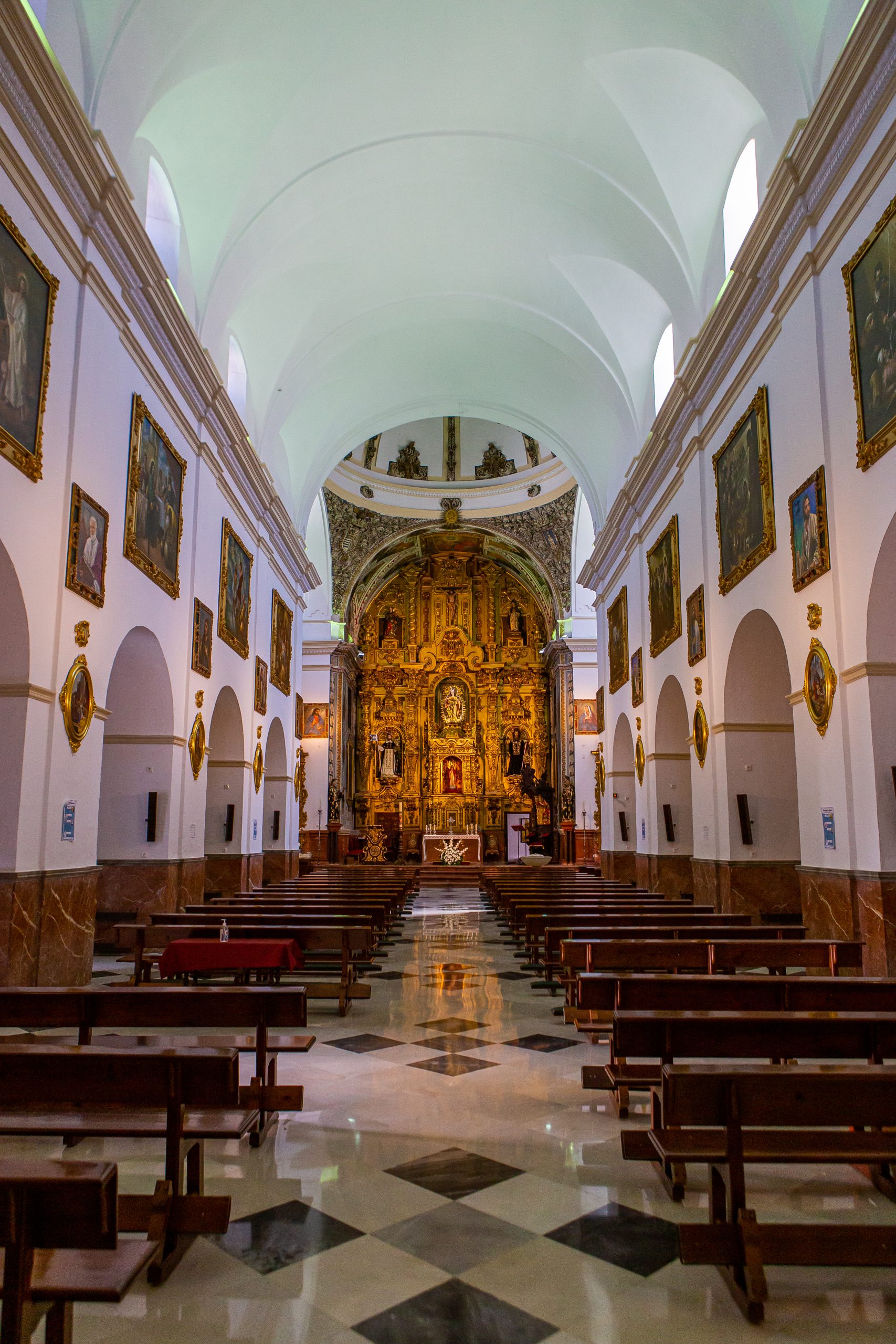


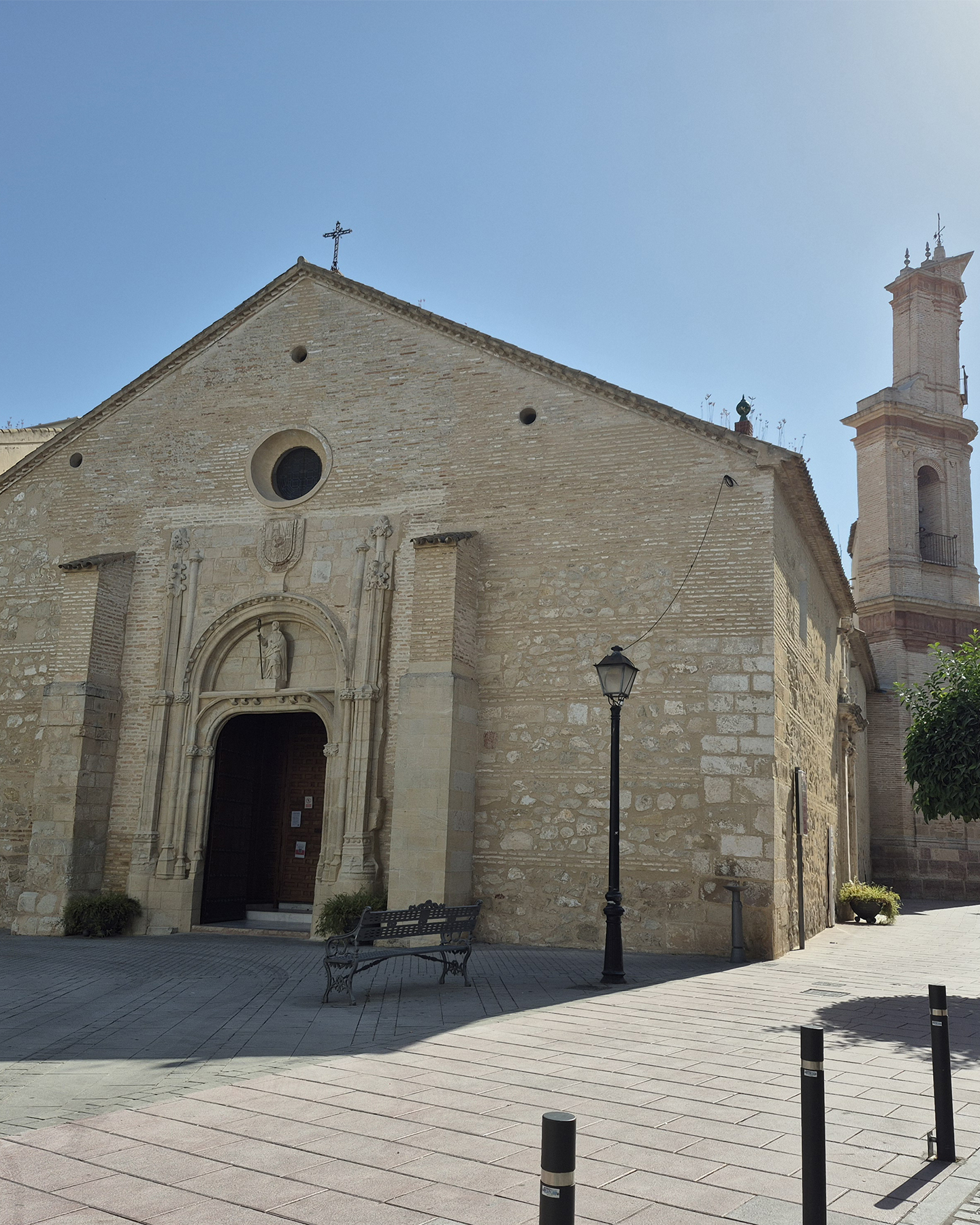
Parish Church of Saint James the Apostle
The Parish Church of St. James the Apostle is one of the five parish churches in the town.
The Parish Church of Santiago, built in the Gothic-Mudejar style, was commenced in 1503 by testamentary provision of García Méndez de Sotomayor, the Commander of the Order of Santiago and uncle of the then Lord of Lucena, Diego Fernández de Córdova.
It has traditionally been regarded as the former Jewish synagogue, a mistaken assumption, as neither its architectural syle nor its location ―outside the walled enclosure of Jewish Lucena― supports such an identification. It is possible that materials from the recently demolished old Church of St. Matthew were reused in its construction. That earlier church is the site where the former synagogue and later mosque may in fact have stood. Until it was established as a parish in 1891, it served as an auxiliary church of St. Matthew’s Parish.
The Mudejar character of its architecture was completely masked by the extensive alterations made to the building, whose structure had been severely weakened by the great earthquake of 1755. At the end of the 18th century, the bell tower was removed and replaced by the angular bell gable that the church bears today.
The church, with its rectangular ground plan, comprises three aisles separated by octagonal pillars supporting pointed brick arches framed by an alfiz, and is roofed with a reconstructed coffered timber ceiling based on the original design.
The brotherhoods and fraternities with canonical seat there are the Brotherhood and Confraternity of Our Father Jesus of the Column and Mary Most Holy of Peace and Hope, the Confraternity of Our Father Jesus Fallen and Our Lady of Health, the Brotherhood of Our Lady of Solitude, the Confraternity of Saint James the Apostle, the Confraternity of Saint Teresa of Jesus, and the Parish Association Our Lady of Candelaria (not affiliated).
In the Great Passion Procession, the following processional cortèges depart from this church:
- Our Father Jesus at the Column
- Our Father Jesus of Humility (whose canonical seat is the Parish Church of Our Lady of Mount Carmel, where its processional route concludes)
- Our Father Jesus Fallen
Conventual Church Mother of God of the Reverend Fransciscan Fathers
Although the church was founded in 1558, its present appearance dates from the works carried out in 1620 by the Málaga master builder Francisco de Lucena, on the site of an earlier medieval hermitage. Following the exclaustration of its community after the Ecclesiastical Confiscations, the convent was converted into the Municipal Boathouse and later into tenement housing. After the property was purchased in 1886 by the distinguished Lucena benefactor Don Francisco de Paula Cortés, it was returned to the Franciscan Order, which has occupied it ever since.
A simple Mannierist façade leads into a spacious church with a Latin cross plan, side chapels, and a tall, light-filled hemispherical dome rising above the crossing. The high altar is dominated by a fine Solomonic Baroque altarpiece, crafted by José Matías Sánchez to a design by Leonardo Antonio de Castro. Also of note are the smaller altarpieces and a collection of sculpture of considerable artistic interest, including several images attributed to Pedro de Mena and the image of Our Lady of Sorrows, a Pietà sculpted in 1800 by Blas Molner. The adjoining convent is arranged around a fine,, large square courtyard comprising two cloisters, an upper and a lower. The lower cloister features arcades supported by Doric columns, while the upper is carried on Ionic columns. At its centre stands a monumental fountain with a mixtilinear plan and a double-tiered Baroque pedestal, dating from the early 17th century. The lower cloister has recently undergone restoration works, following significant deterioration caused by the passage of time.
This temple is the canonical seat of the Franciscan Confraternity of the Passion and of the Franciscan Confraternity of Our Father Jesus Resurrected and Our Lady of the Angels.
In the Great Passion Procession, the following processional cortèges depart from this church:
- Our Father Jesus of the Valley (its canonical seat is the Parish Church of the Holy Family)
- Our Lady of Sorrows – Stone Virgin
- Our Lady of Solitude (whose canonical seat is the Parish Church of Saint Jaimes the Apostle, where its processional route concludes)
- Our Father Jesus Resurrected


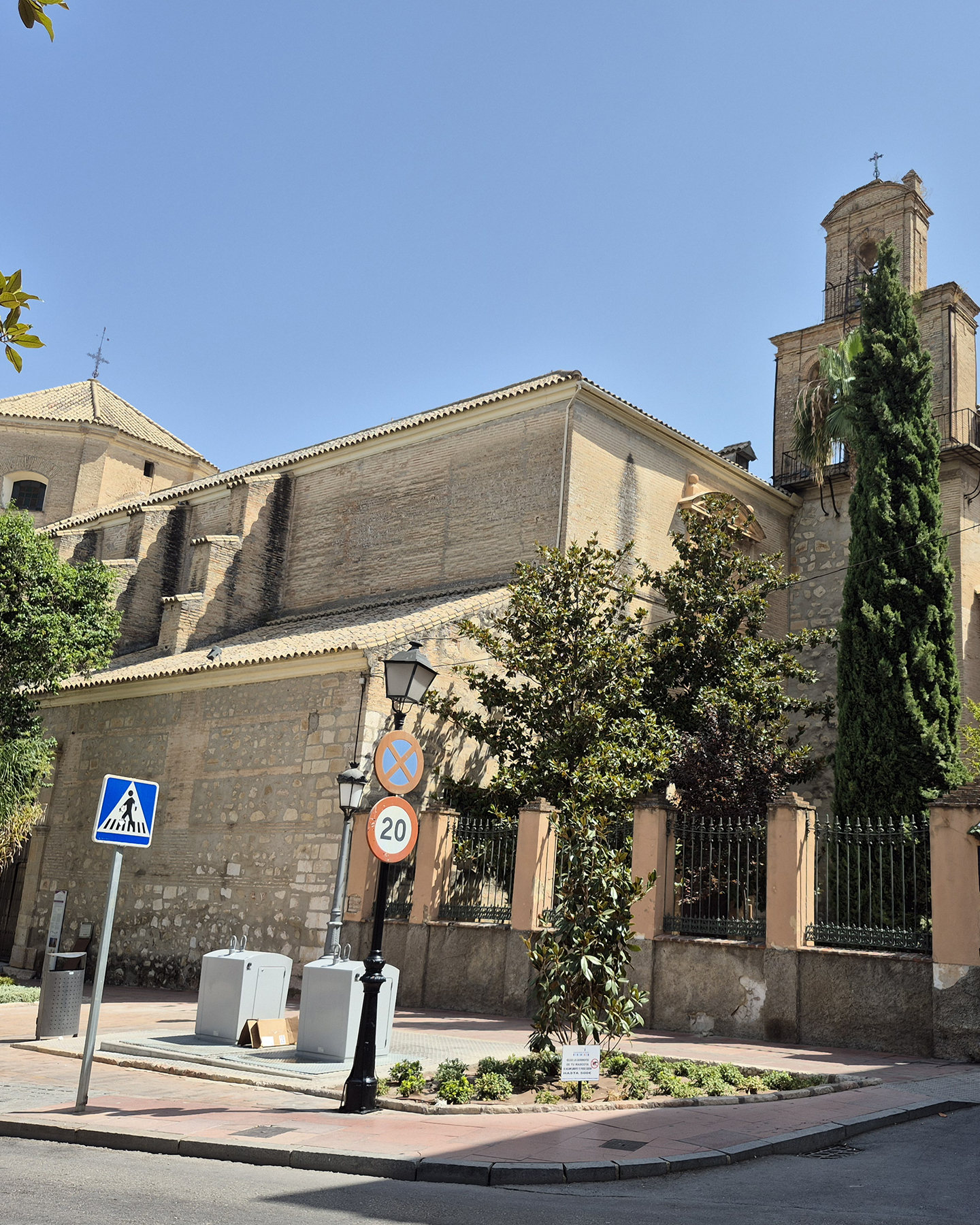


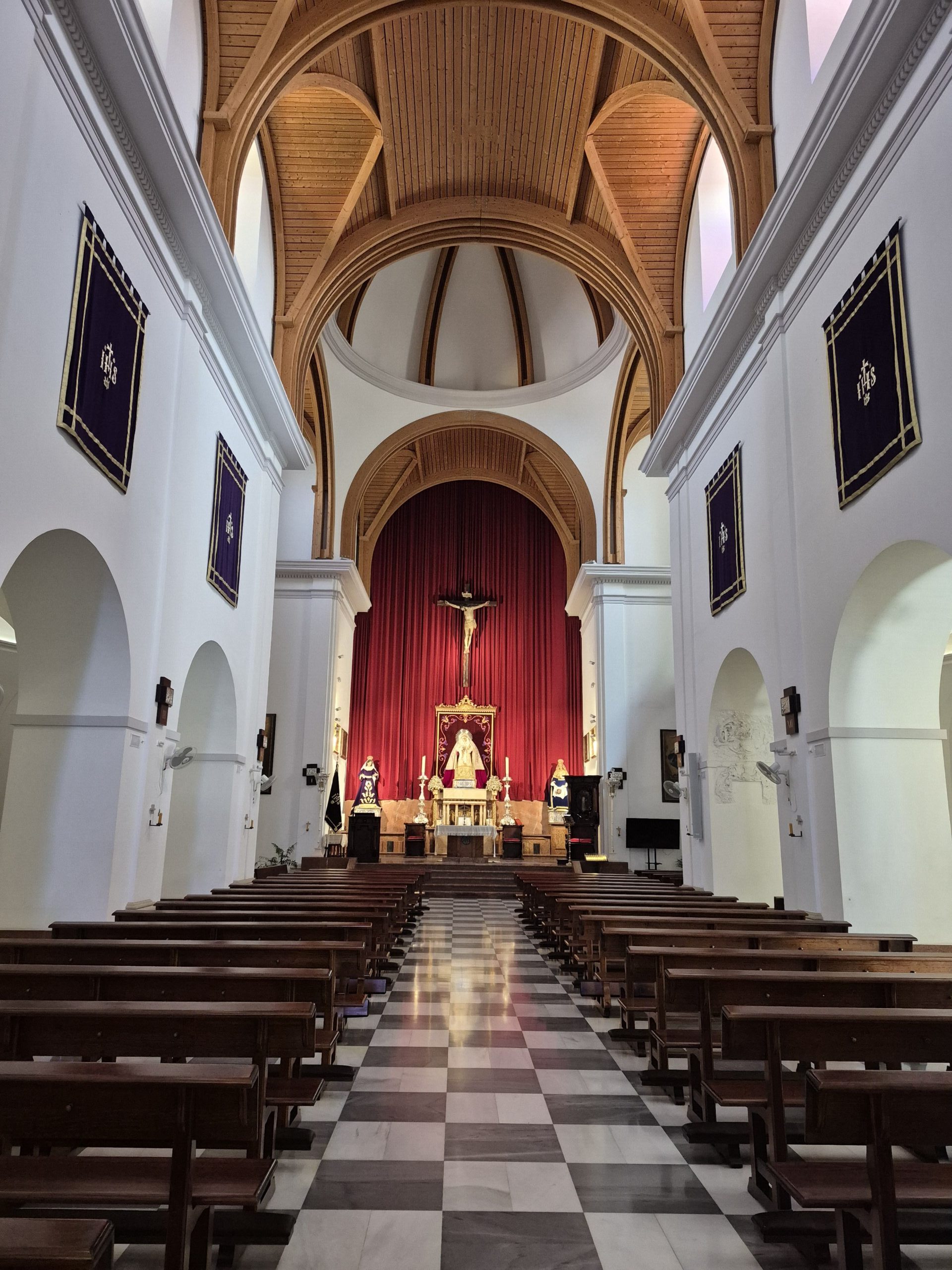
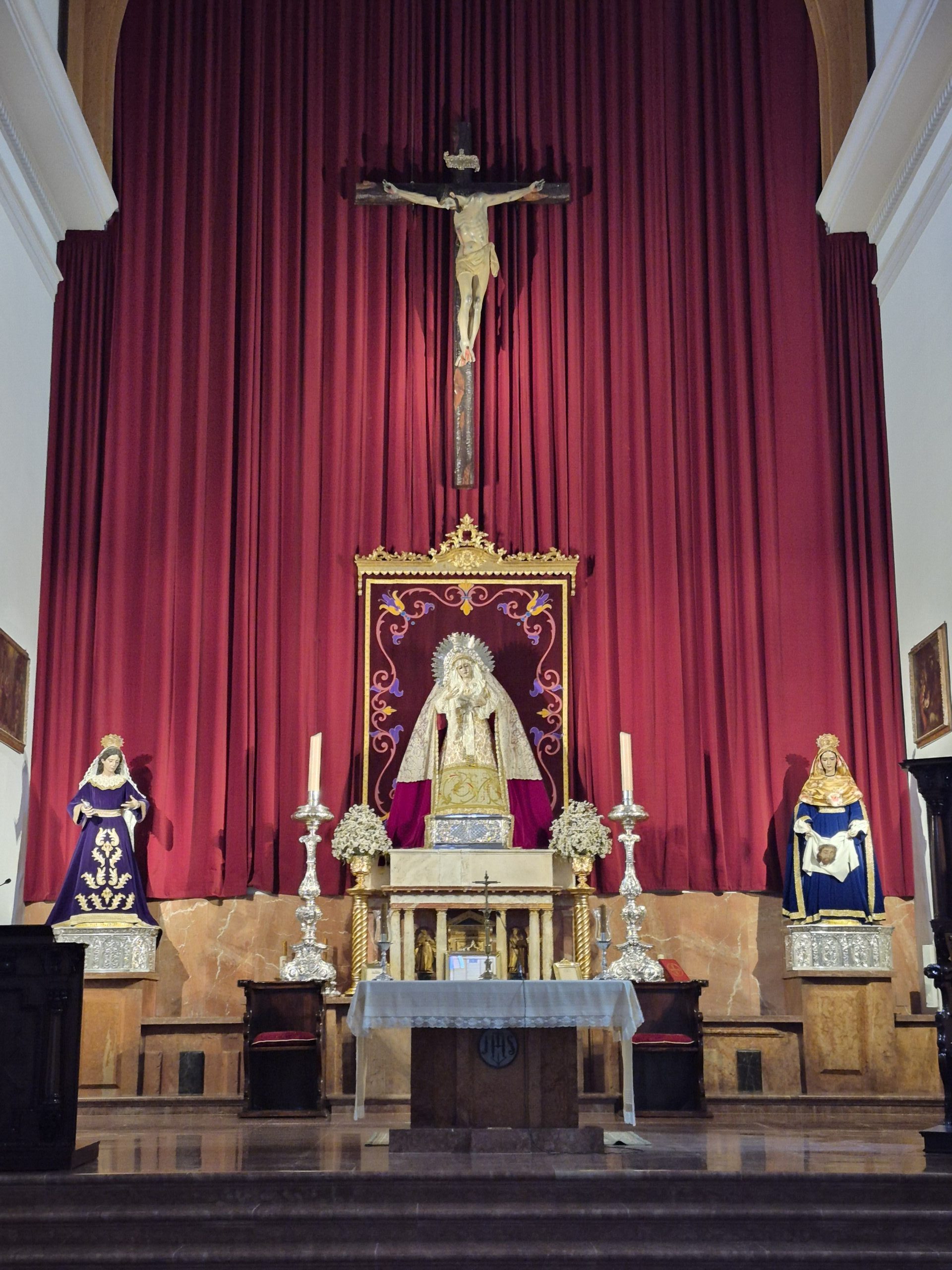
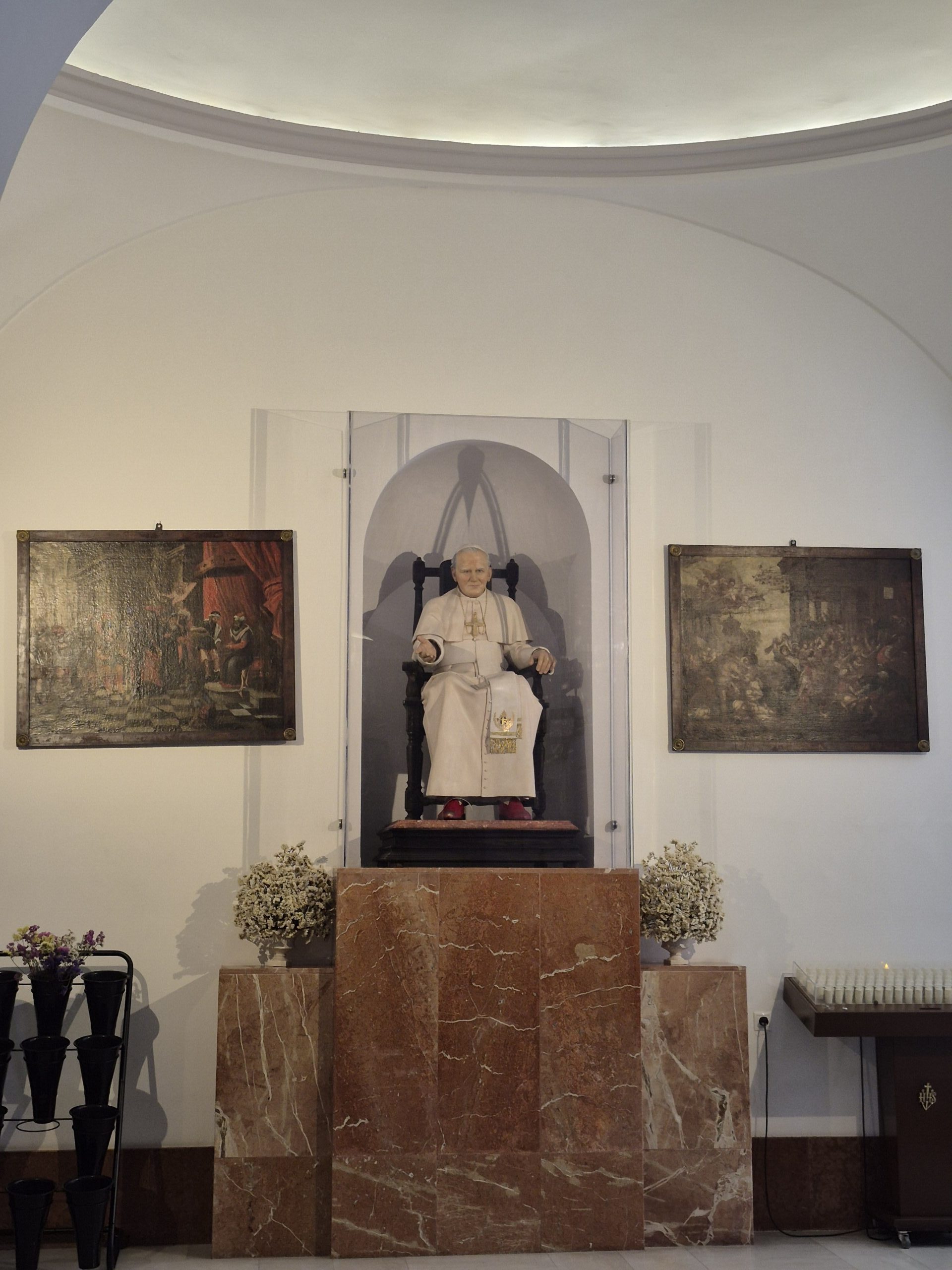

Church of St. Peter the Martyr of Verona
It is known from documents of the period that this church was handed over to the Dominican friars in 1575 and that, at that time, it was known as the Hermitage of Saint Catherine of Siena, in honour of what is now San Pedro Street, which in the 16th century still bore the saint’s name. It was on this date that the Dominican convent was founded by Don Diego Fernández de Córdova and his wife Ana Enríquez de Mendoza; over time, it lost its original name and came to be known as the Church of St. Peter the Martyr of Verona, the Dominican saint after whom this main street in Lucena is now named.
Among the many factors to which the deterioration of the Church of St. Peter Martyr has been attributed, one of the most significant was the exclaustration of the religious orders in 1835, which compelled the Dominicans to close their convent churches. The church, adjoining the friars’ residence ―now the Casa de los Mora― was then closed to the public and began to fall into disrepair.
Following the collapse in 1866, caused by the poor state of repair of the church, only the outer walls, the bell gable and two doorways remained: those of St. Peter and Our Lady of the Rosary, both Mannerist in style and dating from around 1630. The former, however, features Baroque elements added in 1721 under the direction of Leonardo Antonio de Castro, who is also credited with designning the high altarpiece in polychrome jasper that once stood in the church and has since dissapeared.
After numerous unsuccessful attemps at reconstruction, the foundation stone for the typological reconstruction of the church was laid in 2006. The project was financed entirely by the Venerable Archconfraternity of Our Father Jesus the Nazarene, a testament to the people of Lucena’s deep devotion to the image of Our Father, and was carried out by the Lucena-based firm Roldán Arquitectos. On 15th March 2014, the then Bishop of Córdoba, Don Demetrio Fernández, blessed the building and it was opened for worship.
The church has a Latin cross plan, in which the central nave, with its timber vaulting, and the crossing are the most prominent features. Similarly, the project has enabled the restoration of the main façade, the refurbishment of the blind triforia above the side aisles and the creation of a columbarium area, presided over by a sculpture of St. John Paul II by the local artist Francisco Javier López del Espino.
In 1599, the Venerable Archconfraternity of Our Father Jesus the Nazarene was founded in this church. It remains active today and, together with the Royal Confraternity of Mary Most Holy of Araceli, is the confraternity with the largest membership. Moreover, it was in this same church that the image of Our Father Jesus was originally housed, although it was later transferred to the adjoining chapel built for its veneration.
At the present, the Church of St. Peter Martyr of Verona houses the images of Our Lady of Socorro, St. Veronica, St. Mary Magdalene, St. John the Evangelist, St. John Paul II, and the Christ of Mercy (Camisitos). The latter, which came from the Convent of the Discalced Carmelites Nuns, whose community recently left the town of Lucena, presides over the high altar. They all belong to the Venerable Archconfraternity of Our Father Jesus the Nazarene.
In the Great Passion Procession, the following processional cortèges depart from this church:
- Holy Burial of Our Lord Jesus Christ
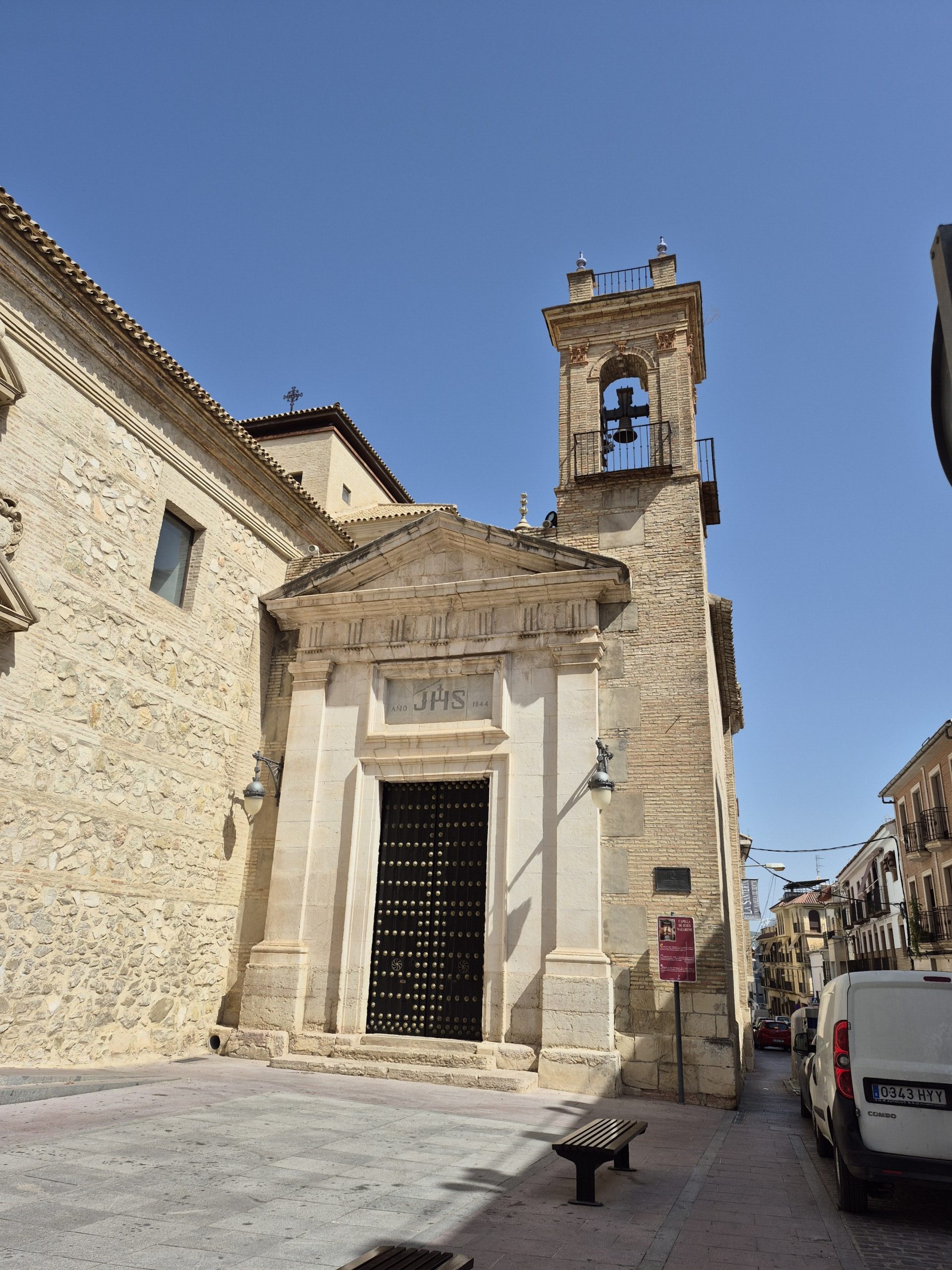
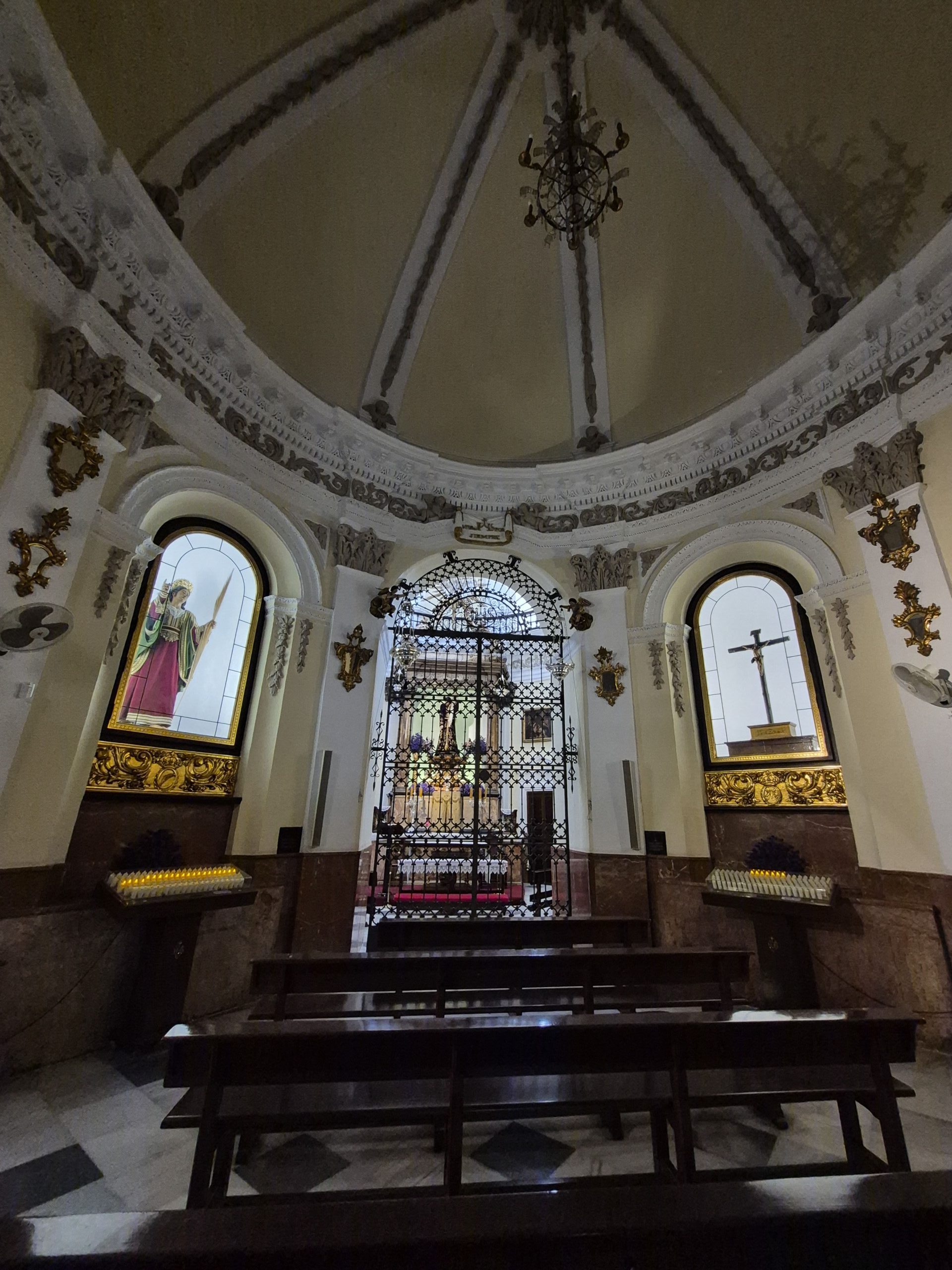
Chapel of Our Father Jesus the Nazarene
This chapel, adjoining the Church of St. Peter Martyr, began to be built in 1758 under the patronage of Antonio Rafael de Mora Saavedra, on land belonging to the Venerable Archconfraternity of Our Father Jesus the Nazarene adjacent to the church. It was completed in 1803. Subsequently, in 1844, due to the poor condition into which the Church of St. Peter Martyr had fallen, Pedro Orellana enlarged the chapel so that the acts of worship dedicated to Our Father Jesus could be held there.
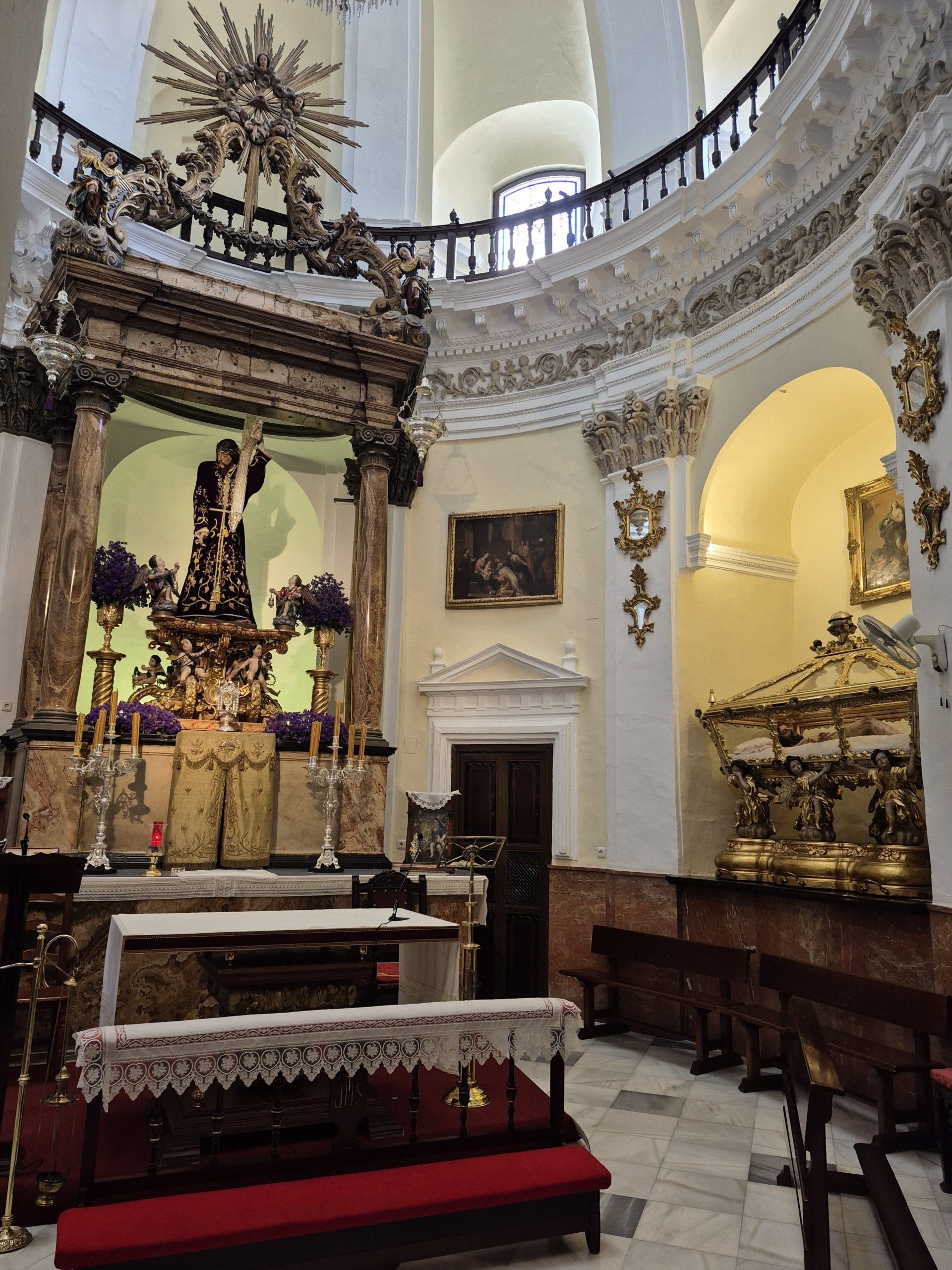
The principal and oldest part of the chapel serves as the “camarín” (little chapel) of the titular image, forming a circular space in the Neoclassical style. Inside, it contains a baldachin that enshrines the image of Our Father Jesus the Nazarene. The second part of the chapel was created around 1838, coinciding with the closure of the Church of St. Peter Martyr, and follows an architectural layout similar to that of the “camarín”, except for its shallow dome with very flat radial bands. It should also be noted that, in 1975, as part of improvement works to the chapel, the crypt beneath it was opened and adapted for use as a meeting room.
Among its sculptural treasures, particular prominence is given to the image of Our Father Jesus the Nazarene, created in the 16th century, and displaying Gothic features, and to the bier of the Holy Burial, made by Pedro de Mena y Gutiérrez in 1769, which contains a recumbent Christ sculpted by Miguel de Verdiguier in 1774.
In the Great Passion Procession, the following processional cortèges depart from this church:
- Our Father Jesus the Nazarene


Chapel of the Philippians
In 1867, the deed of foundation for the College of the Philippians Nuns was executed inthe houses acquired for that purpose by Doña Clara Cortés Jurado, which were to be run by the Congregation of the Piarist Sisters, Daughters of Mary It was in 1871 that the building was formally occupied, and in 1885 the construction of the church, with ists clear Neoclassical influences, was completed.
Initially, the Piarist Sisters, also known as the Mothers of the Pious Schools and followers of St. Joseph Calasanz, established themselves there. Later, in the mid-20th century, the Congregation of Philippians Nuns Missionary Sisters of Education, followers of St. Philip Neri, took up residence in the complex. Both congregations also ran for many years the school located behind the church, on the site where a nursery school now stands, adjoining the former Nueva Aurora Residence, the latter having been established in the premises of the former convent. At the beginning of the present century, the Lucena Piarist foundation was transferred to Cabra, and responsibility for the school was entrusted to the Congregation of Phillipians Nuns.
Its façade is notably austerer, consisting of a large brick elevation with a stone doorway and an oculus above. The whole composition is crowned by a split straight pediment, at the centre of which rises a single-stage bell gable with two bell openings. Inside, the church has a longitudinal layout and is covered by a barrel vault. Of particular note is its high altarpieces, which originally came from the now-lost Conventual Church of St. Anne. This altarpiece is arranged in two tiers, combining painted and sculptural elements. Dating from around 1700, it displays the influence of Leonardo Antonio de Castro in its paintings and of Francisco Hurtado Izquierdo in its architectural design. There are two niches housing the images of St. Joseph Calasanz and St. Philip Neri, reflecting the history of the church.
In the year 2008, the restoration works of the temple began, a project founded by the Sacramental Brotherhood of Nazarenes of the Sacred Encounter of Our Father Jesus of Goodness, Blessed Mary of Divine Consolation, Saint John the Evangelist, and Saint Philip Neri, which was completed in 2011. It is, in fact, this brotherhood that has its canonical seat in this church.
In the Great Passion Procession, the following processional cortèges depart from this church:
- Our Father Jesus of Goodness
Trinitarian Hermitage of God the Father
This hermitage was built in 1718, originally under the dedication of the Holy Spirit, to the design of Leonardo Antonio de Castro and under the patronage of the Bruna y Ahumada family, whose coats of arms are displayed on the pendentives of its interior dome. Its construction was undertaken at the initiative of the Confraternity of the Most Holy Trinity. It appears to have been completed by at least 1735.
The single-nave church, divided into five bays and featuring a dome over the antechancel, also presents a austere façade of ashlar stone and brick, crowned by a pediment and a bell gable. The high altarpiece reflects the influence of Leonardo Antonio de Castro and was created by Francisco José Guerrero in 1762.
Also of particular note are its magnificent ensemble of mural paintings featuring phytomorphic motifs, together with a votive painting of the Annunciation, also the work of Leonardo Antonio de Castro. Among the church’s sculptural works, particular prominence is given to the sculptural group of the Sacred Washing of the Feet, by Pedro de Mana, and the image of Our Lady of the Star (Nuestra Señora de La Estrella), the work of José Verdiguier.
In 1989, the Confraternity of the Holy Faith, Our Father Jesus in the Sacred Washing of the Feet, and Our Father Jesus the Prisoner was moved to the Hermitage of God the Father, completely restoring it and making it their canonical seat.
In the Great Passion Procession, the following processional cortèges depart from this church:
- Our Father Jesus in the Sacred Washing of the Feet


Parish Church of Our Lady of Mount Carmel
In 1599, Phillip III informed the corregidor of Antequera of the wish of Doña Ana Enríquez de Mendoza, Counterss of Prades, to foiund a monastery of Discalced Carmelites in Lucena, due to its large population and the limited religious infrastructure available there. Following the enquiries conducted by the Major of Antequera, the project was approved by the Town Council and the local residents.
Construction began in 1600, and the convent was formally established on 19th March 1601, under the patronage of St. Joseph. Initially, the friars occupied temporary houses until, in 1605, the first Mass was celebrated in the new church. The foundation was promoted by the theologian Juan Benítez de Blancaso and generously endowed by Doña Ana Enríquez, who donated land, and orchad, and irrigation water rights.
Between 1620 and 1640, the church was enlarged with the support of the Duke of Segorbe and Cardona. Since 1608, it has been the seat of the Confraternity of Our Lady of Mount Carmel. Following the exclaustration of the religious community and the sale of ecclesiastical property in the nineteenth century, the convent disappeared, leaving only the library building, which was later converted into the sacristy and the parish house. The orchard passed into private ownership, although its original boundary wall has been preserved.
Architecturally, the present Parish Church of Our Lady of Mount Carmel, situated on a rise overlooking the traditional Barrera district, is a clear example of the architectural transition from Mannerism to the Baroque, as well as of the significant influence of the Herrerian style on the architecture of the first half of the 17th century. Its plan follow the Latin cross, with side chapels interconnected by passageways. Above the crossing rises a hemispherical dome, frescoed with phytomorphic motifs and a large central rosette, all supported on pendentives decorated with the heraldic coats or arms of the Houses of Comares and Segorbe and Cardona.
Its interior is dominated by the high altarpiece, which may be considered contemporary with the church’s main façade, whose decorative elements in the Escorial style are echoed in its structure. Its interior also houses an important collection of paintings, some of which display a marked influence of Zurbarán, and have been tentatively attributed to Bartolomé de Ayala.
It is the canonical seat of the Venerable and Illustrious Archconfraternity of Our Lady of Mount Carmel, which houses images associated with both the Passion and the Glory, as well as of the Brotherhood of Our Lady of El Rocío of Lucena and the Parish Association of Our Lady of the O (not affiliated).
In the Great Passion Procession, the following processional cortèges conclude their processional route at this church:
- Our Father Jesus of Humility
Retrieved from: Artistic and Monumental Catalogue of the Province of Córdoba (Various authors – 1987), Notes for the history of the Lucena brotherhoods (Francisco López Salamanca – 2022) and Tourism Delegation of the Lucena City Council

