Confraternity of Our Lady of the Valley and Saint Martha

Popular Name:
Our Lady of the Valley and Saint Martha
Foundation:
1575
Canonical Seat:
Parish Church of the Holy Family
Imagery:
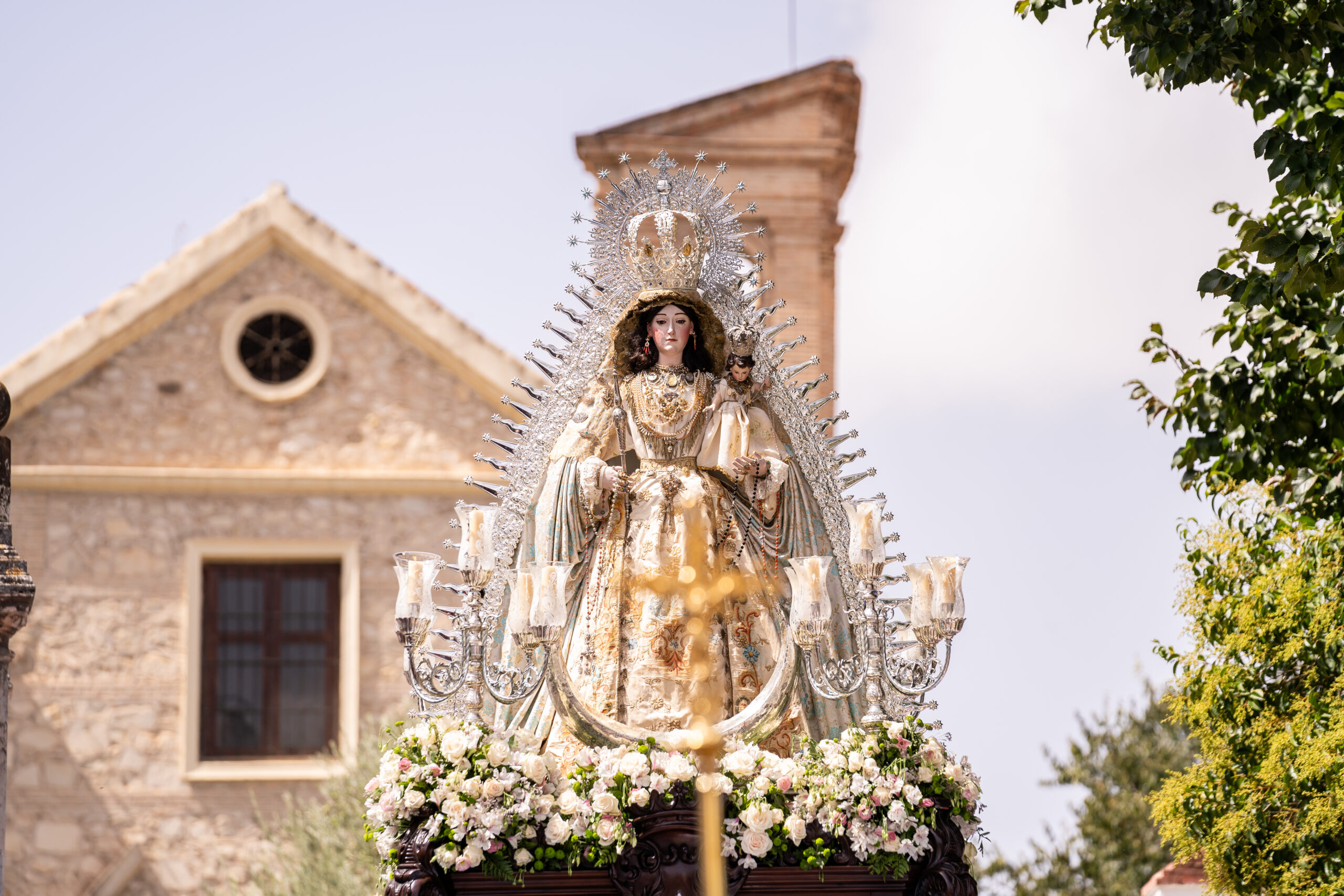
- Our Lady of the Valley (Anonymous carving from the first third of the 17th century) – Throne carried by 26 santeros
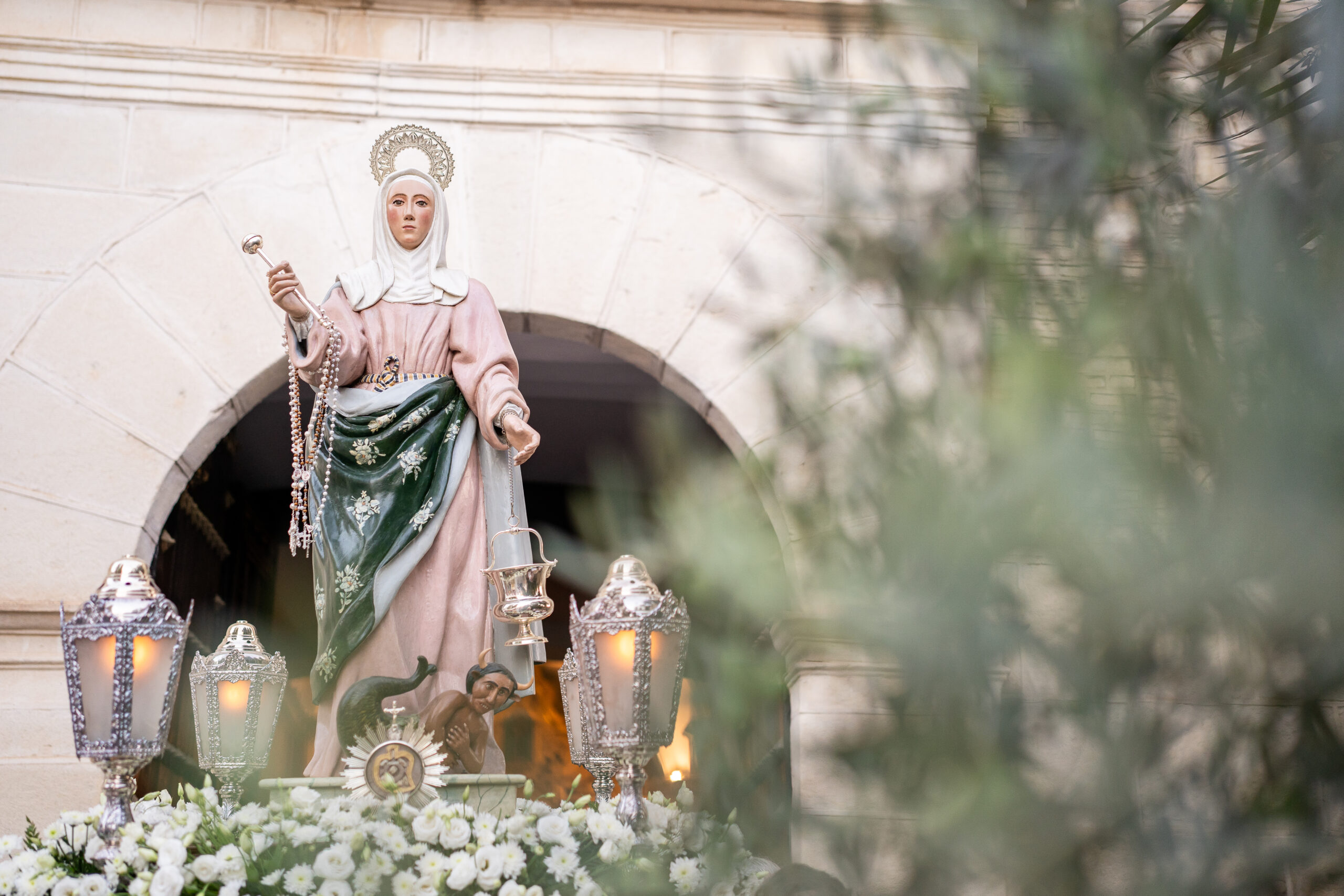
- Saint Martha of Bethany (Anonymous carving from the 17th-18th centuries) – Carried by women of the parish.
Hermano Mayor:
José Antonio Bermúdez Criado
Procession Departure:
- Our Lady of the Valley: the Saturday before or after the Feast of the Nativity of the Virgin Mary (8 September)
- Saint Martha of Bethany: a date close to her feast day (29 July)
Number of Brothers:
No updated data available
Santeros' Tunic:
White, with a blue capirote
Devotion to Our Lady of the Valley has its roots in the early centuries of Lucena’s modern history. Tradition attributes the founding of the hermitage to Fernando Alonso del Valle, at a date before 1537, on the rise overlooking the city from the west, which would eventually give its name to the whole surrounding area. Already in the 16th century there are documentary references to both the temple and the confraternity itself, which must have been established before 1575 and consolidated in the following decades with important works of expansion and embellishment.
During the 17th and 18th centuries, the brotherhood experienced a period of growth linked to the expansion of the church, the construction of the Virgin’s camarín, and the making of the main altarpiece, commissioned in 1760 to Juan Abundo de Burgos. The arrival of the Alcantarine Franciscan friars revitalized the devotion and gave the confraternity a marked guild character, especially linked to the guild of Lucena’s scribes. In 1702, Pope Clement XI granted indulgences to the confraternity members.
After the decline suffered by much of Lucena’s confraternity world during the 19th century, devotion to Our Lady of the Valley remained alive thanks to the work carried out at the old convent and residence linked to the Servants of Mary and later to the Little Sisters of the Abandoned Elderly, with solemn acts of worship held annually in honor of the titular image.
The confraternity was refounded in 1981 by a group of devoted local residents led by Vicente Espejo Prieto, with the support of parish priest Jerónimo Durán Baena and the Jesús Abandonado residence. That same year, the image once again processed through the streets of the neighborhood, coinciding with the September royal fair, thus recovering a tradition deeply rooted among the residents of El Valle.
Over the following decades, various governing boards kept the corporation alive despite economic and organizational difficulties. Among the most notable milestones of this new stage are the addition of Saint Martha as co-titular, the celebration in 2005 of the 25th anniversary of the refoundation, the creation of new liturgical items, and the organization of extraordinary acts of worship and cultural events.
In 2009 the brotherhood obtained definitive approval of its statutes and was admitted as a full member of the Agrupación de Cofradías de Lucena. Shortly afterward, the old hermitage was restored and, in 2011, converted into the seat of the new Parish of the Holy Family, remaining the canonical seat of the corporation.
In recent years, the confraternity has continued to expand its heritage and consolidate its acts of worship, also carrying out important conservation work on the titular images. In 2016 the image of Saint Martha was restored, and in 2020 that of Our Lady of the Valley, returned to worship on the eve of her feast day.
The brotherhood currently celebrates its main acts of worship with a solemn religious service, hand-kissing ceremony and processional parade, keeping alive one of the city’s most historic and popular Marian devotions.
*Documentary source: Notas para la historia de las cofradías lucentinas (Francisco López Salamanca – 2022), Programa Oficial de la Semana Santa de Lucena 2026, and documentation provided by the confraternity itself.
*Photographs: Jesús Cañete Fernández.

