Author: Manuel Guerrero Cabrera, professor and writer
(Article published in the 2023 edition of Torralbo magazine)
On 25th February, the day after several villages in Cuba rose up against Spain, Lucena’s celebrated flamenco guitarist Paco de Lucena performed at the Salle Erad in Paris, achieving yet another great triumph. While the fighting intesified on the island, Carnival was celebrated in Lucena without interruption, with dances held at the Círculo Lucentino and the Café Universal, while a studiantina’ organised by the festival committee paraded through the streets performing its songs.
The Goverment had already dispatched a contingent of soldiers to Cuba by the time Holy Week began, on Palm Sunday, 7th April. Processions took place, as announced in the 27th March edition of the ‘Diario Córdoba’, with the processional departures of the Archconfraternities of Our Lady of Mount Carmel, the Vera Cruz, and Our Father Jesus the Nazarene:
This year, the Venerable Archconfraternity of Jesus the Nazarene will unveil a magnificent canopy of silver and embroidered velvet, while the sacred image will be dressed in a robe embroidered in gold, the fabrick for which has been donated by a distinguished lady.
The same newspaper also gave advance notice of the preparations being made for the festivities in honour of Our Lady of Araceli in May, the full programme of which appeared in the 1st May edition:
On 4th May, at 8.00 a.m,, the Charanga de Cazadores of Catalonia will perform a diana through the streets; at 12 p.m., there will be a peal of bells, fireworks, and the opening of an exhibition of industrial and artistic works, «women’s handicrafts», plants, flowers, and birds, once again accompanied by the brass band; at 6.00 p.m., Solemn Vespers and the Salve will be held at the Parish Church of Saint Matthew the Apostle, sung by the Choir of Córdoba Cathedral under the direction of Don Juan A. Gómez Navarro; at 9.00 p.m., there will be a «general Venetian illumination» and musical performances in Alfonso XII Square (Plaza Nueva), San Agustín Square, the Coso, and Saint Michael’s Square, together with evening festivities in the latter and along Las Torres Street; and at 11.00 p.m., a fireworks display by the Lucena firm Molero Hermanos will take place in the Coso. Incidentally, ‘Venetian illumination’ consisted of decorating lanterns fitted with coloured glass or paper panels, containing a candel inside ―later replaced by an electric bulb following the arrival of electricity.
On 5th May, at dawn, there will be a peal of bells and fireworks. At 9.00 a.m., a sung mass was celebrated by the Choir of Córdoba Cathedral, with the sermon praising «the glories and greatness of Our Mother and Patroness, the Most Holy Mary of Araceli», delivered by the Very Illustrious Don Julián Galán, Canon of Jaén Cathedral. The services was attended by the parish churches, public bodies, the Town Council, and other authorities, together with the Catalan brass band. From 1.00 to 3.00 p.m., a number or young ladies will distribute charitable gifts of bread to the poor at the Church of Saint Dominic, the Civil Guard barracks, the San Francisco de Paula school, the Duke’s palace, and the cooperage of Don Gabriel de Lara. At 5.00 p.m., the processional cortège of Mary Most Holy of Araceli took places, accompanied by the brotherhoods, guilds, the Town Council, and other bodies. Particularly striking is the fact that the cortège included seventeen poor children «clothed in charity in identical outfits», made by the ladies of the theatre. At 9.00 p.m., the Venetian illumination in Alfonso XII Square was lit, and a literary competition took place at the Teatro Principal; from 10.00p.m. until midnight, the ‘Charanga’ provided musical entertainment, and at midnight, a ball was held at the Círculo Lucentino.
On 6th May, from 4.00 p.m. onwards, there was music and traditional games, including the ‘cucaña’, in Alfonso XII Square; and at 9.00 p.m., the Venetian illumination was once again lit, followed by a performance at the Teatro Principal (main theatre).
During that same month, new members were elected to the Town Council, and on 1st July the Marquess of Campo de Aras, leader of the Conservative Party, took office as a Mayor and President, together with the other members of the municipal corporation.
Yet beneath the celebrations and everyday life, the war in Cuba remained an ever-present reality, as men from Lucena, like those in many other towns, were being called up for military service. Obviously, this event dominated the news, but Lucena also made national headlines for two tragic incidents: the death of the pharmacist Elías Bañales Gómez after a container of sulphuric acid burst, and that of the fourteen-year-old farm labourer Manuel Arroyo, who fell from a threshing sledge and was run over by it.
Our Lady of Araceli remained in Lucena until 3rd November.. On that day, a mass was held at 10.00 a.m., officiated by the Reverend Parish Priest of Santo Domingo, Baltasar Moner, who had previously served as Guardian of the Convent of the Franciscan Fathers; and at 2.30 p.m., the Patroness departed for her recently restored sanctuary, with the whole of Lucena bidding her farewell on the outskirts of the town.
Curiously, her departure left the people of the town with a profound sense of sadness and unease, as many remarked that it was ill-timed for the Virgin to leave during the «Cuban separatist war», when they could no longer have Our Lady of Araceli so close at hand to pray for their sons and husbands who were fighting in it. Likewise, there was a widespread feeling that it would have been appropiate to hold special prayers to Our Mother, asking for the war to come to an end. As it is well known, the war came to an end in 1898, after the United States entered the conflict in support of the Cuban cause, resulting in Spain’s defeat.
In the book Andalucía y la repatriación de los soldados del 98, edited by Patricio Hidalgo Nuchera, the names of several men from Lucena who were repatriated after the end of the war are listed. The list also includes those repatriated from the Philippines, whose names had previously been published in the Diario de Córdoba, between 1898 and 1899: Cristóbal Suárez Fernández, Andrés López, José Castro, Cristóbal Navarro Hernández, Antonio Gómez Margal, Felipe Corral Gómez, Vicente Garrido López, Antonio Delgado Gusin, Francisco Chamoda Pineda, José Villa Molina, José Cano Jiménez, Emilio Barreros de la Cruz, Pedro Calzado Lozano and Bernardo Criado Hurtado, among others, as there are several for whom the place is not specified.
Probably, many of these men from Lucena experienced both Holy Week and the festivities in honour of Our Lady of Araceli in 1895 before departing for the war, leaving behind their homeland and the life they had known.
BIBLIOGRAPHY AND PRESS
HIDALGO NUCHERA, Patricio (2010): Andalucía y la repatriación de los soldados del 98. Sevilla, Fundación Pública Andaluza Centro de Estudios Andaluces, Junta de Andalucía, pp. 77-82.
Diario de Córdoba (27-3-1895, 1-5-1895, 17-5-1895, 9-7-1895, 10-7-1895)
El Movimiento Católico (6-11-1895)
La correspondencia de España (25-2-1895, 21-8-1895)
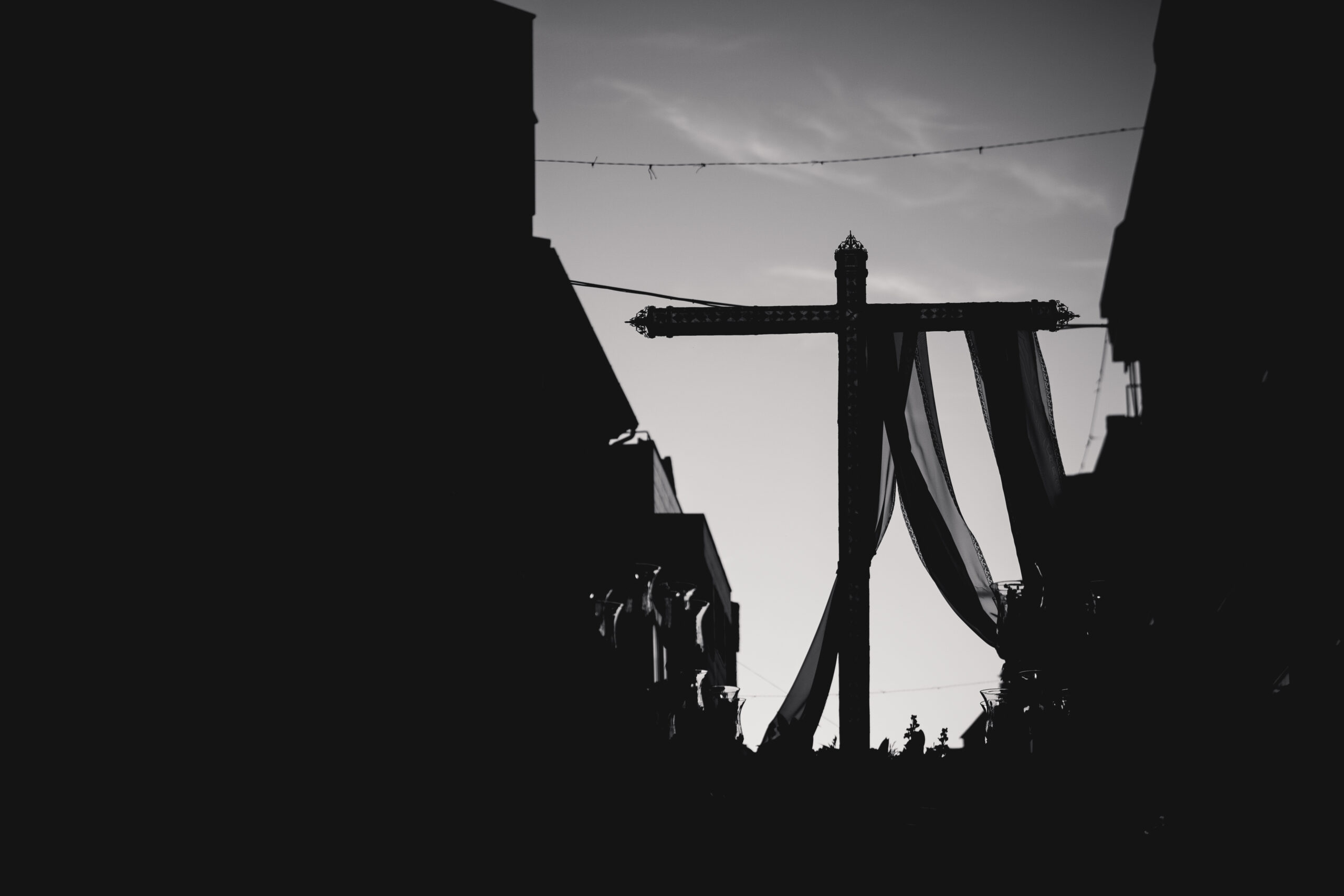
Photograph of the article: Jesús Cañete Fernández

